Fridge Troubleshooting Assistant
Answer the questions below to identify the likely cause of your cooling issue and get an estimated repair cost.
Fill out the checklist on the left to find your fridge problem.
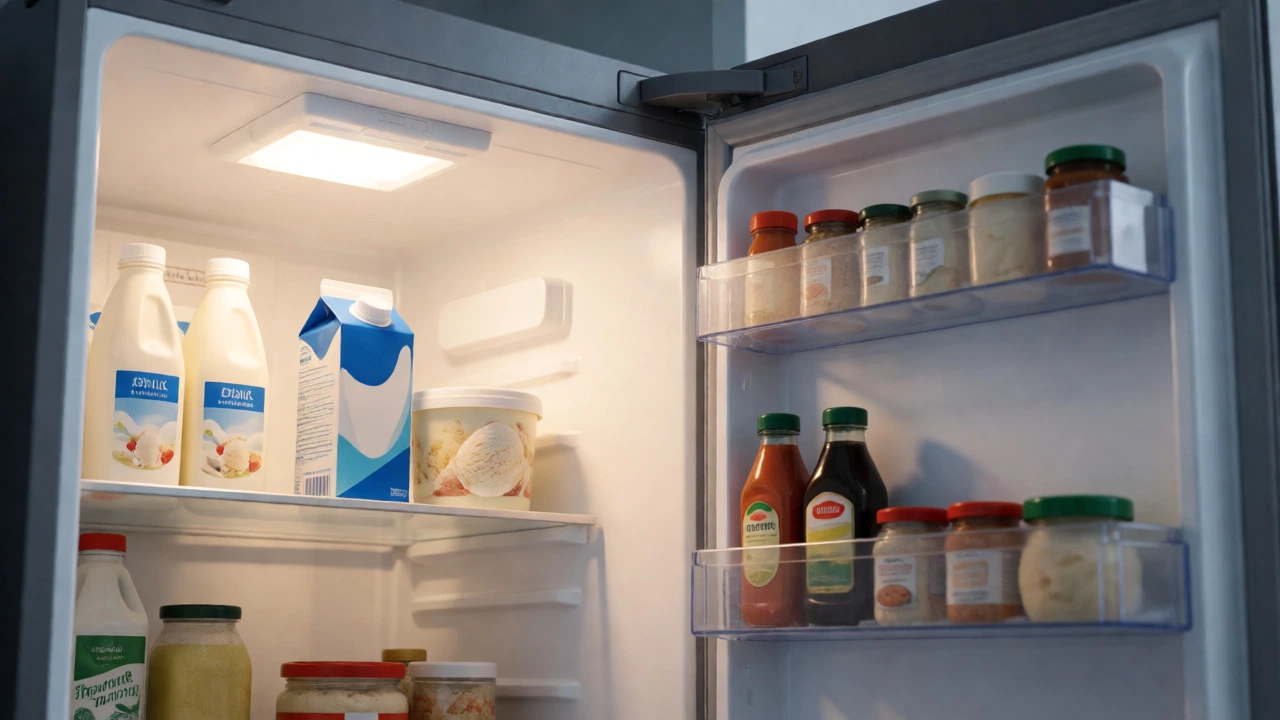
You open the door, and the interior light glows warmly. The shelves are stocked, the digital display might even be ticking away the seconds, but your milk is warm and your ice cream has turned into soup. It’s a frustrating paradox: why is my fridge not cooling but the light is on? This specific combination of symptoms tells us something important. It means your refrigerator is getting power. The control board is alive, the lights work, and the user interface functions. But the actual mechanical process of removing heat from the box has stalled.
Before you call a technician or start shopping for a new appliance, you can likely diagnose the issue yourself. Most refrigerators fail to cool while the light stays on due to one of five common culprits: dirty condenser coils, a failed evaporator fan, a faulty condenser fan, a broken compressor relay, or a clogged defrost system. Here is how to identify which one is causing your problem and what you can do about it.
Check the Basics First: Settings and Airflow
It sounds too simple to be true, but many "dead" fridges are just confused ones. Start with the easiest fixes. Ensure the temperature control isn't accidentally set to "Off" or the highest number (which usually means the coldest setting, but some older models vary). Check if the door seals are tight. If cold air leaks out, the compressor works overtime but never reaches the target temperature, making it seem like it's not cooling at all.
Next, look inside. Is the fridge packed too tightly? Refrigerators need space between items for cold air to circulate. If you've stuffed boxes against the back wall vents, you're blocking airflow. Rearrange your groceries so there's an inch or two of clearance around the vents. Also, check that nothing is pressing against the thermostat sensor inside the compartment. Sometimes a bag of frozen peas sitting right on the sensor can trick the fridge into thinking it's colder than it actually is, shutting off the cooling cycle prematurely.
Clean the Condenser Coils
If the basics are fine, the next most common issue is overheating caused by dirty components. Your fridge works by pumping heat out of the box and releasing it outside. This happens at the condenser coils. Depending on your model, these coils are either located under the fridge behind a kickplate or on the back panel near the floor.
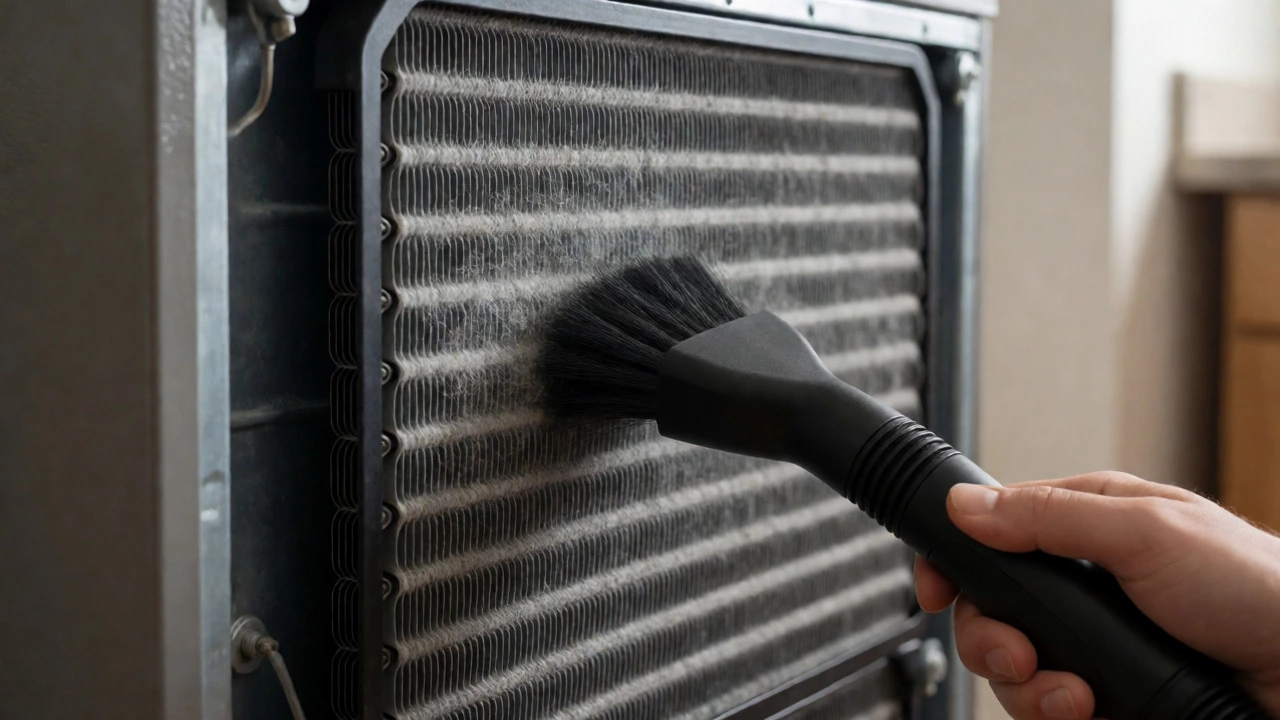
Over time, dust, pet hair, and kitchen grime accumulate on these coils. When they get coated in this insulating layer of dirt, they can't release heat efficiently. The compressor gets hot and may shut down to protect itself, or it runs continuously without ever cooling the interior effectively. You can see if this is the problem by pulling the fridge away from the wall and inspecting the coils. If they look like fuzzy gray blankets, they need cleaning.
To fix this, unplug the fridge. Use a coil brush or a vacuum cleaner with a brush attachment to gently remove the debris. Be careful not to bend the thin fins of the coils. Once clean, push the fridge back, leaving a few inches of space behind it for airflow, and plug it in. Give it 24 hours to see if temperatures drop. In our experience in Vancouver homes with high humidity, this single step solves nearly 30% of non-cooling complaints.
Listen for the Evaporator Fan Motor
The evaporator fan is the heart of your fridge's internal cooling system. Located behind the back panel inside the freezer compartment, its job is to blow cold air over the evaporator coils and then circulate that chilled air throughout both the freezer and the fridge sections. If this fan stops working, the coils might still get cold, but the air won't move. The result? The freezer might stay somewhat cold, but the fresh food section will warm up rapidly because no cold air is reaching it.
How do you know if it's dead? Open the freezer door and press the door switch (or hold it closed) to simulate the door being shut. Listen closely. You should hear a gentle hum or whirring sound. If you hear silence, or worse, a grinding or rattling noise, the fan motor is likely seized or burned out. Ice buildup can also jam the fan blades. If you see frost accumulating around the fan area, you have a defrost issue (more on that below). If the fan is silent and there's no ice, the motor itself has probably failed and needs replacement.
Inspect the Condenser Fan Motor
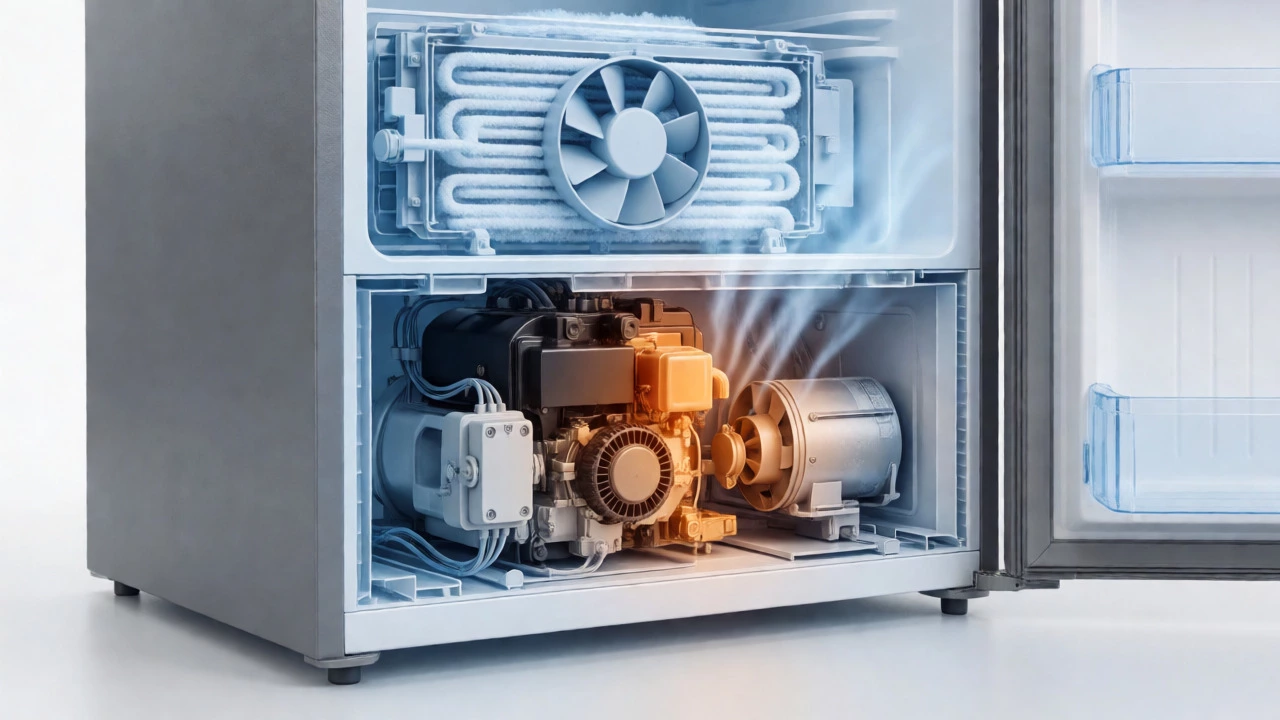
While the evaporator fan cools the inside, the condenser fan cools the compressor and the condenser coils. This fan is located underneath the fridge, usually near the compressor. Its role is critical: it pulls ambient air across the hot condenser coils to dissipate heat. If this fan fails, the compressor overheats and shuts down repeatedly, or runs continuously without achieving proper cooling efficiency.
To test this, pull the fridge away from the wall again. With the fridge running, look at the bottom rear. You should see a fan spinning. If the compressor is humming but the fan is stationary, the condenser fan motor is faulty. You can try spinning the blade manually with a pencil (while unplugged!) to see if it moves freely. If it feels stiff or gritty, the bearings are worn out. Replacement motors are relatively inexpensive and easy to install for DIYers with basic screwdriver skills.
Diagnose the Compressor and Relay Issues
The compressor is the engine of your refrigerator. It pumps refrigerant through the system. If the compressor doesn't run, nothing else matters. But here's the tricky part: sometimes the compressor tries to start but fails, leading to a clicking sound followed by silence. This is often due to a faulty start relay or overload protector attached to the side of the compressor.
Unplug the fridge and locate the compressor-a black, cylindrical metal object at the bottom back. Attached to its side is a small plastic box containing the relay. Shake this relay gently. If you hear a rattle inside, the internal starter is broken, and the relay needs replacing. This is a cheap part (often under $20) and a very common failure point. If the relay looks fine, touch the compressor carefully after it has been running for a bit. If it's scorching hot, the compressor itself may be seizing up. A clicking noise every few minutes is a classic sign of a struggling compressor trying to restart.
Defrost System Failures: The Silent Killer
Modern fridges are "frost-free," meaning they automatically melt ice off the evaporator coils several times a day. This system relies on three parts: the defrost heater, the defrost thermostat, and the defrost timer (or electronic control board). If any of these fail, ice builds up on the evaporator coils until they become solid blocks of ice. Once encased in ice, the coils can't absorb heat, and the fans can't blow air through them. The result is a fridge that runs constantly but produces zero cooling.
You can spot this issue by looking for excessive frost inside the freezer, particularly on the back wall or ceiling. If you see thick ice, the defrost system has failed. You can perform a temporary fix by manually defrosting the unit: unplug it, leave the doors open, and let it melt completely (this can take 24 hours). If cooling returns temporarily but stops again after a week or two, you definitely have a defrost component failure. Replacing the defrost heater or thermostat is a standard repair, though accessing them requires removing the interior back panel.
When to Call a Professional
Most of the issues above-dirty coils, fan motors, relays, and defrost heaters-are manageable for handy homeowners. However, some problems require specialized tools and certifications. If you suspect a refrigerant leak (indicated by oil stains around the copper lines or a complete lack of cooling despite everything else working), you need a pro. Handling refrigerants requires EPA certification in Canada and specialized gauges. Similarly, if the main control board is malfunctioning-sending wrong signals to the compressors and fans-it's often easier and more reliable to replace the board than to troubleshoot individual traces on it.
| Symptom | Likely Cause | DIY Difficulty | Estimated Part Cost (CAD) |
|---|---|---|---|
| Fan silent when door closed | Evaporator Fan Motor | Moderate | $50 - $120 |
| Compressor hot/clicking | Start Relay/Overload | Easy | $15 - $30 |
| Excessive frost in freezer | Defrost Heater/Thermostat | Moderate | $20 - $60 |
| Coils covered in dust | Poor Heat Dissipation | Very Easy | $0 (Cleaning) |
| No fan noise under fridge | Condenser Fan Motor | Easy | $40 - $90 |
Frequently Asked Questions
Why is my freezer cold but my fridge is warm?
This is almost always a blocked air damper or a failed evaporator fan. The freezer generates the cold, but the fan or damper controls how much of that cold air flows into the fresh food compartment. If the fan is dead or the damper is stuck closed, the fridge warms up while the freezer stays cold.
Can I reset my refrigerator to fix cooling issues?
Yes, a hard reset can help clear minor electronic glitches. Unplug the fridge for 5-10 minutes, then plug it back in. This resets the control board. However, if a mechanical part like a fan or compressor is broken, a reset will only provide temporary relief or no change at all.
Is it worth repairing an old fridge that isn't cooling?
If the fridge is under 10 years old and the issue is a simple part like a fan or relay (costing under $100), yes. If the compressor has failed or the unit is over 15 years old, the cost of repair often approaches the price of a new, energy-efficient model, making replacement the smarter financial choice.
How long does it take for a fridge to cool after fixing it?
After performing repairs like cleaning coils or replacing a fan, allow the fridge to run for at least 24 hours before judging the results. It takes time for the thermal mass of the food and shelves to reach the correct temperature. Do not open the door frequently during this period.
What does a clicking noise mean in my fridge?
A rhythmic clicking usually indicates the compressor is trying to start but failing. This points to a bad start relay or a locked-up compressor. If the click happens once when you close the door, it's likely just the damper motor moving, which is normal.