Oven Repair vs. Replace Calculator
Enter Your Details
Enter values to see if you should fix or buy new.
You walk into the kitchen to make dinner, turn the dial, and hear nothing but silence. The heating element is dead, or worse, the display is flashing a cryptic error code you’ve never seen before. Your stomach growls, and suddenly you’re facing a dilemma that costs more than just your appetite: do you call a technician to fix this thing, or do you buy a brand new one?
This is the classic home repair crossroads. On one side, you have the immediate expense of a service call and parts. On the other, there’s the hefty price tag of a new appliance, installation fees, and the hassle of moving heavy equipment. In Vancouver, where labor rates for skilled trades are on the rise in 2026, this decision isn’t just about the sticker price-it’s about long-term value, energy efficiency, and peace of mind.
The Golden Rule: The 50% Threshold
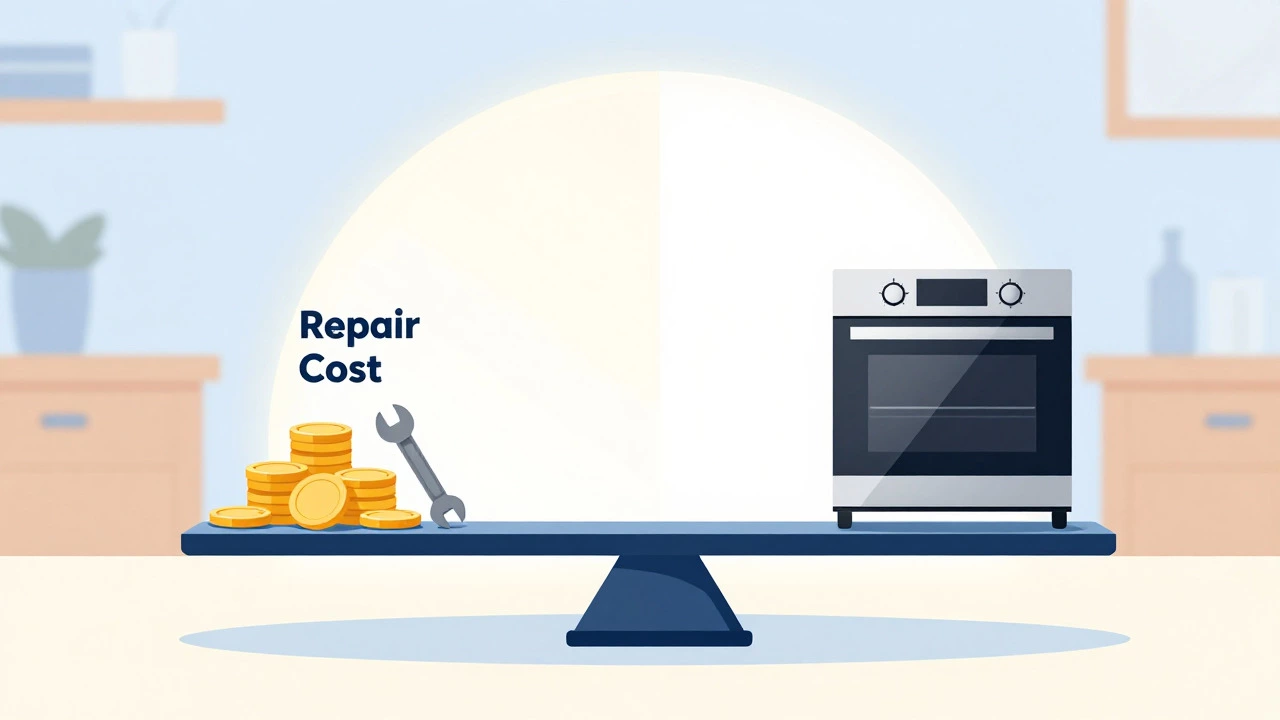
If you want a quick answer without digging through spreadsheets, use the 50% rule. This is the industry standard heuristic used by most appliance technicians. If the cost to repair your oven is less than 50% of the cost of replacing it with a comparable new model, you should generally repair it. If the repair bill hits or exceeds that halfway mark, it’s usually smarter to replace the unit.
Why 50%? Because appliances depreciate rapidly. A $1,200 oven might only be worth $600 to a buyer if you try to sell it used, but its functional value drops even faster as technology improves. Spending $700 to fix a ten-year-old oven means you’re investing heavily into an asset that has little remaining lifespan. Conversely, spending $150 to fix a three-year-old oven buys you many more years of reliable service.
| Scenario | Repair Cost Estimate | New Oven Cost (Mid-Range) | Recommendation |
|---|---|---|---|
| Minor Electrical Fix (e.g., thermal fuse, door switch) | $150 - $300 | $800 - $1,200 | Repair |
| Heating Element Replacement | $200 - $400 | $800 - $1,200 | Repair |
| Control Board Failure | $400 - $700+ | $800 - $1,200 | Replace |
| Gas Valve Assembly | $350 - $600 | $900 - $1,500 | Replace (if old) |
Keep in mind that these numbers include both parts and labor. In major metropolitan areas like Vancouver, the hourly rate for a certified appliance technician typically ranges from $90 to $130 per hour, plus a diagnostic fee that often gets waived if you proceed with the repair. Always ask for a written estimate before authorizing any work.
Age Matters More Than You Think
The age of your oven is the single biggest factor in this equation. Appliance lifespans aren’t infinite; they follow a predictable curve. Most conventional electric ovens last between 10 and 15 years. Gas ovens tend to live a bit longer, sometimes reaching 15 to 20 years, provided they receive regular maintenance.
If your oven is under five years old, lean heavily toward repair. Modern appliances are built to last, and early failures are often covered under warranty. Even if the warranty has expired, the core components-like the chassis and insulation-are likely still in good shape. A simple part swap can extend its life significantly.
However, if your oven is over ten years old, start looking at replacement options. Older models lack the energy efficiency standards we see today. An oven from 2015 uses significantly more electricity or gas than a 2026 Energy Star-rated model. Over time, those higher utility bills add up. Plus, older ovens often suffer from "creep" issues, where multiple small problems emerge simultaneously because the internal wiring and seals are degrading together.
Diagnosing the Problem: Is It Worth Fixing?
Before you call anyone, take a moment to identify what’s actually wrong. Some issues are red flags that suggest replacement is better, while others are minor annoyances easily fixed.
- Inconsistent Heating: If one side of the oven cooks faster than the other, it could be a bad heating element or a faulty thermostat. Elements are cheap ($20-$50) and easy to replace. Thermostats are trickier but still repairable.
- Display Errors: Codes like F9, E0, or F5 usually point to electronic control board issues. These boards are expensive ($150-$300 for the part alone) and complex to diagnose. If your oven is older, this is often the nail in the coffin.
- Door Seal Issues: A cracked or warped gasket lets heat escape. This is a cheap fix ($30-$60 for the part), but if the door itself is misaligned due to worn hinges, the structural integrity of the oven might be compromised.
- Gas Smells or Pilot Light Failures: For gas ovens, safety is paramount. If you smell gas or the pilot light won’t stay lit, check the thermocouple first. If that’s fine, the gas valve might be failing. Gas repairs require licensed professionals, adding to the cost.
If you find yourself needing to replace the main control board, the heating elements, AND the door seal all within a year, stop. That’s not a repair situation; that’s a retirement party for your oven.
Hidden Costs of Replacement
When calculating whether to replace, don’t just look at the retail price of the new oven. There are hidden costs that can sneak up on you.
Installation Fees: Unless you’re handy with electrical or gas lines, you’ll need a pro to install the new unit. Electric ovens plug into a 240-volt outlet, which is straightforward if the outlet exists. Gas ovens require a licensed plumber or gas fitter to connect the line and test for leaks. In Vancouver, expect to pay $100-$200 for professional installation.
Modifications: Newer ovens often come with different dimensions or venting requirements. If you’re switching from gas to electric (or vice versa), you might need to upgrade your circuit breaker or run new gas lines. These home improvement projects can cost hundreds, if not thousands, of dollars.
Disposal: Hauling away a heavy, broken oven isn’t fun. Many retailers offer haul-away services for a fee ($50-$100), or you can drop it off at a local recycling center. Don’t forget to factor this into your budget.
Energy Efficiency and Long-Term Savings
This is where the math gets interesting. A new oven isn’t just a convenience; it’s an investment in lower utility bills. Modern ovens use convection fans, better insulation, and precise temperature controls to cook food faster and use less energy.
According to data from Natural Resources Canada, upgrading from an inefficient model to a high-efficiency one can save you anywhere from 10% to 20% on your cooking-related energy usage. If you bake frequently, those savings accumulate. Over five years, you might save $100-$200 on your hydro or gas bill. While that doesn’t cover the full cost of a new oven, it does offset the initial investment.
Additionally, newer ovens often feature self-cleaning cycles that are more effective and safer than older models. They also have better temperature accuracy, meaning fewer burnt dinners and wasted food. Food waste is a real cost, too. If your old oven runs hot or cold, you’re likely throwing away meals more often than you think.
Warranty and Peace of Mind
One of the biggest advantages of buying new is the warranty. Most major brands offer a one-year parts and labor warranty, with some extending coverage to two or five years for specific components like the compressor (in fridges) or heating elements. This means if something breaks in the first year, you’re not paying out of pocket.
Repairs, on the other hand, usually come with a 90-day warranty on parts and labor. After that, you’re on your own. If you repair a ten-year-old oven today, and the same issue comes back in six months, you’ll pay again. With a new oven, that second repair would likely be free.
Consider your risk tolerance. Are you comfortable with the possibility of another breakdown next month? Or do you prefer the certainty of a fresh start? For families who rely on their oven daily for school lunches and weeknight dinners, that peace of mind is priceless.
Environmental Impact
Let’s talk about the planet. Repairing an oven keeps e-waste out of landfills. Manufacturing a new appliance requires mining raw materials, transporting them across the globe, and assembling them in factories that consume significant energy. Every repaired oven is a small victory for sustainability.
However, if your old oven is highly inefficient, keeping it running might actually harm the environment more than replacing it. The extra energy it consumes over its remaining lifespan could outweigh the carbon footprint of manufacturing a new, efficient model. It’s a trade-off, but one worth considering if eco-friendliness is a priority for you.
If you decide to replace, look for brands with strong environmental commitments. Some manufacturers offer take-back programs where they recycle the old unit responsibly. Check with local Vancouver recycling centers to see if they accept large appliances for dismantling and material recovery.
Decision Tree: What Should You Do?
To simplify this process, here’s a quick checklist to guide your final decision:
- Check the Age: Is the oven older than 10 years? If yes, lean toward replacement.
- Get a Quote: Call a reputable technician for a diagnostic. Ask for a total estimated cost including parts and labor.
- Compare Prices: Research the cost of a comparable new oven. Include installation and disposal fees.
- Apply the 50% Rule: Is the repair cost less than half the price of a new oven? If yes, repair. If no, replace.
- Consider Frequency: Has this oven needed repairs in the last two years? Frequent breakdowns signal impending failure.
- Assess Needs: Do you need features your current oven lacks (convection, smart connectivity, larger capacity)? If so, replacement makes sense regardless of repair cost.
Remember, there’s no one-size-fits-all answer. Your personal circumstances, budget, and cooking habits play a huge role. But by following these steps, you’ll make an informed choice that saves you money and stress in the long run.
How much does it cost to repair an oven in Vancouver?
In Vancouver, typical oven repair costs range from $150 to $400 for minor issues like heating elements or door switches. Major repairs involving control boards or gas valves can cost between $400 and $700, including labor and parts. Diagnostic fees usually range from $75 to $100 but are often waived if you proceed with the repair.
What is the average lifespan of an oven?
The average lifespan of an electric oven is 10 to 15 years, while gas ovens can last 15 to 20 years with proper maintenance. Lifespan depends on usage frequency, brand quality, and how well the appliance is cared for. Regular cleaning and prompt attention to small issues can extend its life.
Is it cheaper to fix a broken oven or buy a new one?
It depends on the repair cost relative to the price of a new oven. Use the 50% rule: if the repair costs less than half the price of a comparable new oven, fixing it is usually cheaper. If the repair exceeds 50%, or if the oven is over 10 years old, replacing it is often more cost-effective in the long run due to energy savings and warranty coverage.
Can I replace an oven myself?
Yes, if you are comfortable with basic electrical or gas connections. Electric ovens plug into a 240-volt outlet, which is relatively straightforward. Gas ovens require connecting a gas line, which must be done carefully to prevent leaks and should ideally be inspected by a licensed professional. Always ensure power or gas is turned off before starting.
What are signs my oven needs replacement instead of repair?
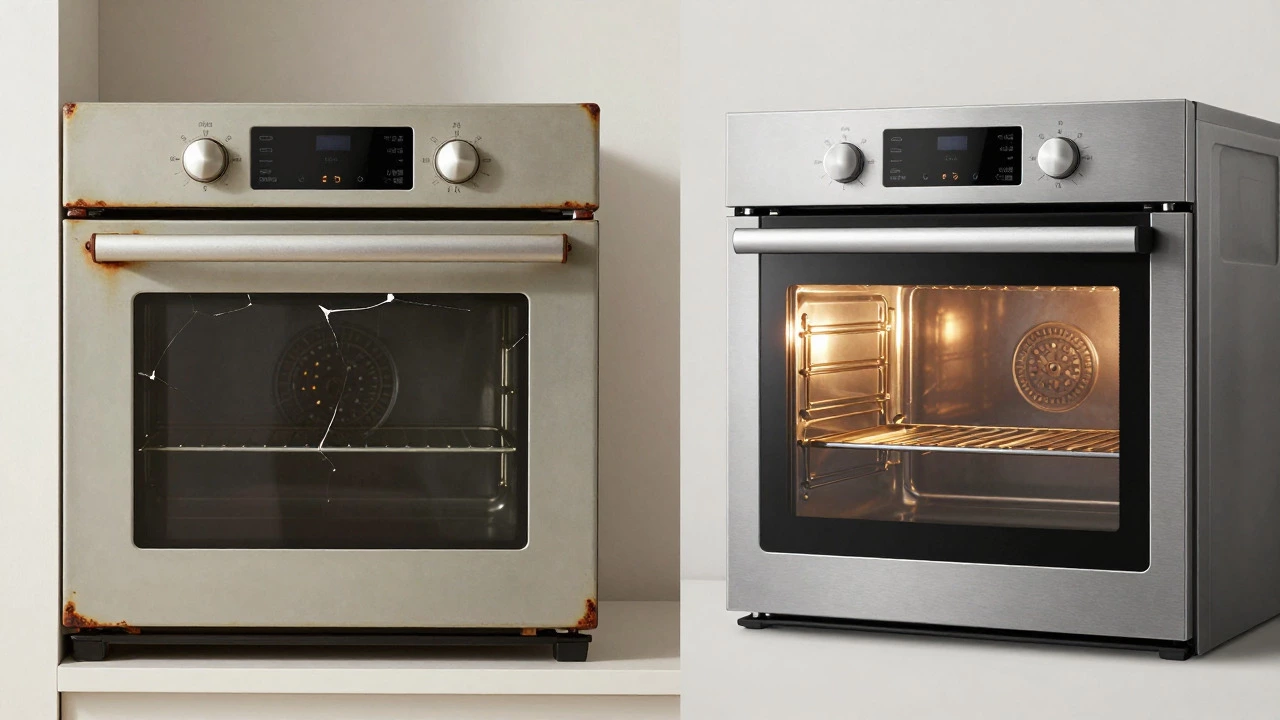
Signs include frequent breakdowns, inconsistent heating despite repairs, visible rust or damage to the interior/exterior, outdated features, and high energy bills. If the oven is over 10 years old and requires a major component replacement like the control board, replacement is usually the better option.