Water Heater Repair vs. Replace Calculator
Unit Details
Cost Estimates
*These are general averages; actual costs vary by region.*
Repair Cost Estimate
Replacement Cost
$1,500 - $2,500
Projected Lifespan Left
There is nothing quite as shocking as stepping into a cold shower after a long day. It happens to the best of us. But when your water heater is a home appliance that heats and stores water for domestic use stops working, it’s rarely because the unit just gave up out of nowhere. Usually, there is a specific component that has worn out or failed. Knowing where these failures happen can save you hundreds of dollars in emergency service calls.
Most water heaters fail not because they are old, but because specific parts degrade over time due to heat, pressure, and mineral deposits. The good news is that many of these failure points are predictable. If you know what to look for, you can often catch the issue before it turns into a flooded basement or a complete system shutdown.
The Silent Killer: Sediment Buildup at the Bottom
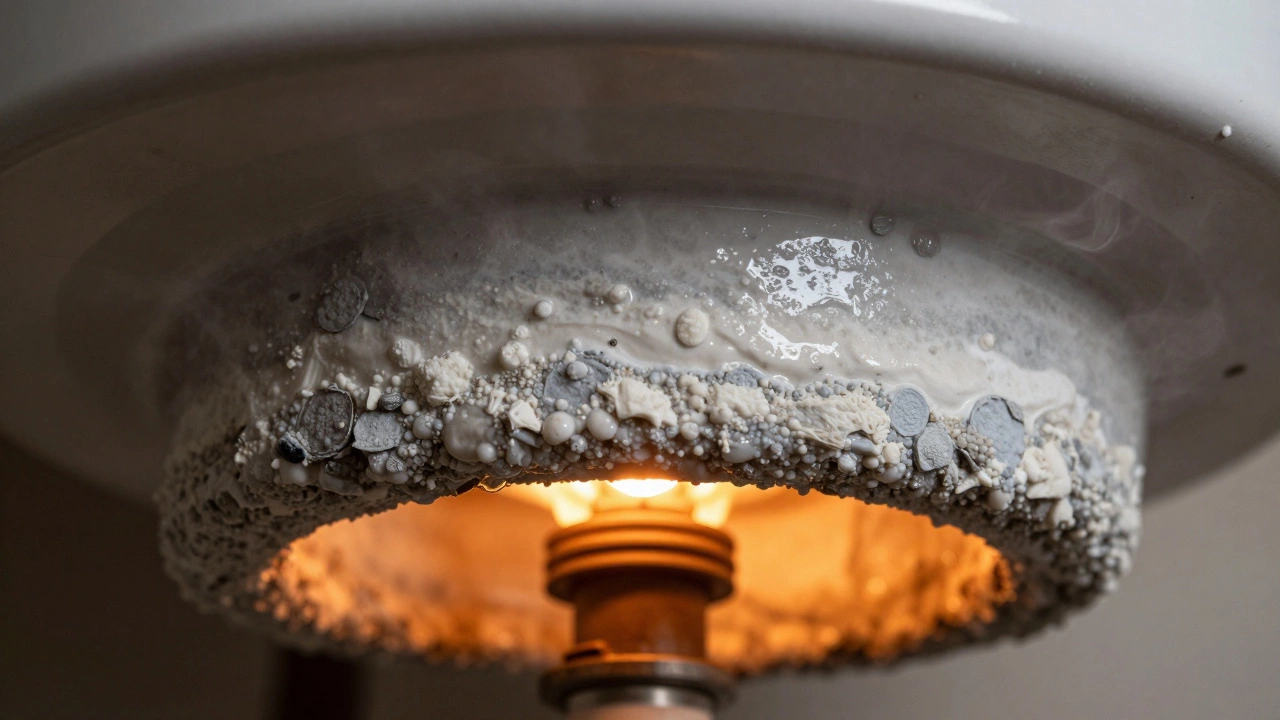
If I had to pick one single reason why water heaters die prematurely, it would be sediment. This isn't a mechanical part breaking; it's a chemistry problem. In areas with hard water-which includes much of Canada and the US-minerals like calcium and magnesium dissolve in the water supply. When that water enters your tank and gets heated, those minerals precipitate out and settle at the bottom.
This layer of sediment acts as an insulator. Think of it like putting a thick wool blanket between your stove burner and your pot. The heating element or gas burner still works, but the heat can't transfer efficiently to the water. Instead, the metal tank surface gets incredibly hot. Over time, this localized overheating weakens the steel lining of the tank. Eventually, the steel cracks from the thermal stress, leading to leaks that are impossible to fix other than replacing the entire unit.
- The Symptom: You hear popping, rumbling, or cracking noises coming from the tank during heating cycles.
- The Fix: Annual flushing. Drain a few gallons from the bottom valve until the water runs clear. If the sediment is hardened, you may need a professional flush.
- The Prevention: Install a whole-house water softener if your local water hardness exceeds 7 grains per gallon.
The Sacrificial Hero: The Anode Rod
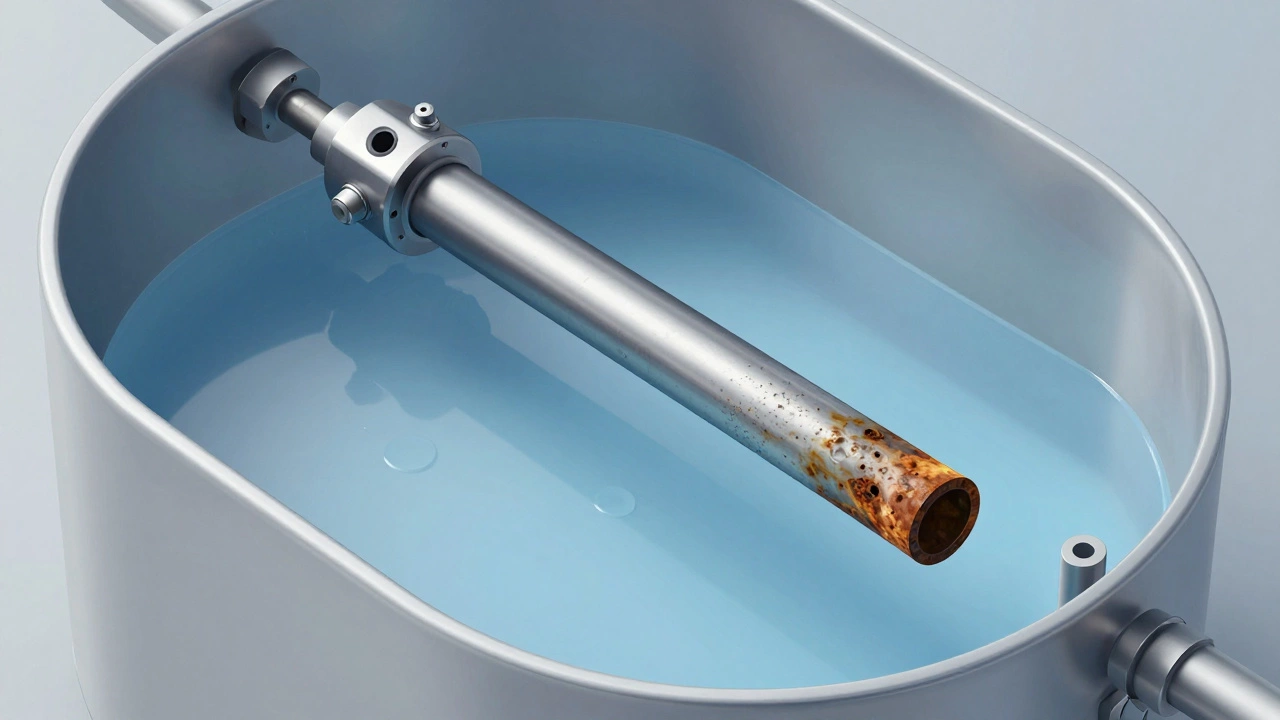
Inside every traditional tank water heater is a metal rod called the anode rod is a sacrificial metal component designed to corrode instead of the tank. Its job is simple but critical: it attracts corrosive elements in the water so that the steel tank doesn’t rust. It takes the bullet for the tank. Once the anode rod is completely consumed, the corrosion starts attacking the tank itself.
Most people never check their anode rod. Manufacturers typically recommend inspection every three to five years. By the time a tank reaches eight or ten years old, that rod is often nothing more than a slimy string of metal sludge. Replacing an anode rod costs about $50 to $100 in parts and labor. Replacing a leaking tank costs $1,200 to $2,500. It is the highest ROI maintenance task you can perform on your home.
In Vancouver and other coastal cities with high chloride levels in the water, the anode rod degrades even faster. If you live in a hard water area, consider upgrading to an aluminum-zinc anode rod, which lasts longer than standard magnesium rods.
Temperature and Pressure Relief (T&P) Valve Malfunctions
The temperature and pressure relief valve is a safety device that releases water if internal pressure or temperature exceeds safe limits is the most important safety feature on your water heater. If the thermostat fails and the water boils inside the tank, the pressure builds up rapidly. Without the T&P valve, the tank could explode. With a functioning valve, steam and hot water vent safely outside.
However, T&P valves do fail. They can stick shut due to mineral deposits, or they can leak continuously if the spring mechanism wears out. A dripping T&P valve is a warning sign. It means the pressure inside the tank is too high, or the valve itself is defective. Ignoring a leaking T&P valve is dangerous. It suggests that either your city water pressure is too high (over 80 PSI) or the expansion tank in your closed plumbing system has failed.
To test it, lift the lever on the valve briefly. You should hear a rush of water and then silence when you release it. If it continues to drip after releasing, replace the valve immediately. These valves are inexpensive, usually under $30, but they must meet local building codes for certification.
Thermostat and Heating Element Failures
If your water heater is electric, the two most common failure points are the thermostats and the heating elements. Electric tanks have two elements: an upper one for quick recovery and a lower one for maintaining temperature. Each has its own thermostat.
When the upper thermostat fails, the water never gets hot because the lower element never receives power. When the lower thermostat fails, you might get hot water initially, but it won't stay hot once the initial supply is used up. The heating elements themselves can also burn out due to sediment buildup. Remember that insulation effect? The element gets superheated because it can't transfer heat to the water, causing the coil to break.
For gas water heaters, the issue is often the thermocouple is a sensor that detects the pilot light flame to keep the gas valve open. If the thermocouple is dirty or misaligned, the gas valve shuts off for safety, and you lose hot water. Cleaning or realigning the thermocouple is a quick fix that many homeowners can do themselves.
| Component | Failure Cause | Average Lifespan | Repair Cost Range |
|---|---|---|---|
| Anode Rod | Corrosion/Consumption | 4-6 Years | $50 - $150 |
| T&P Valve | Mineral Sticking/Spring Wear | 5-10 Years | $30 - $80 |
| Heating Element | Burnout/Sediment | 3-7 Years | $100 - $250 |
| Thermocouple | Dirt/Misalignment | 5-10 Years | $20 - $60 |
| Internal Tank | Rust/Cracking | 8-12 Years | Not Repairable |
Valve Leaks and Gasket Degradation
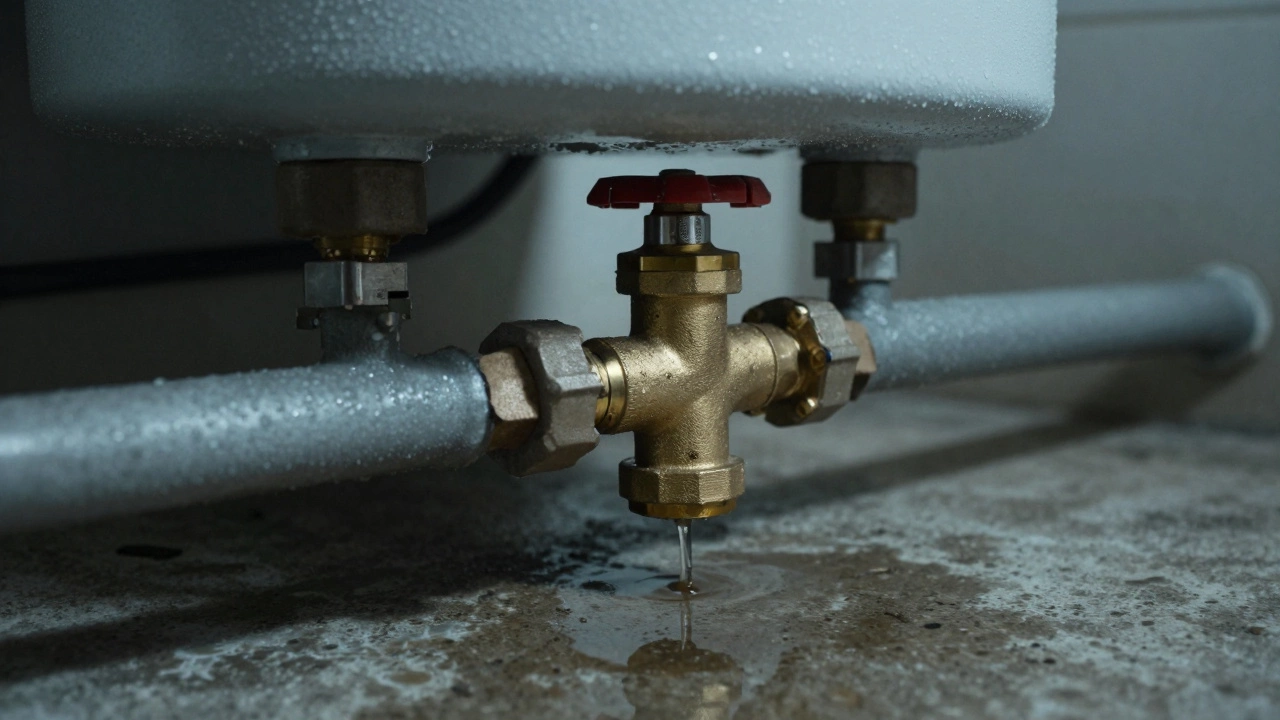
Sometimes the tank itself is fine, but the connections around it are failing. The drain valve at the bottom and the cold water inlet valve are subject to constant vibration and thermal expansion. The rubber gaskets inside these valves dry out and crack over time.
A small drip from the drain valve is annoying but manageable. However, if the valve handle itself is loose or the stem leaks, the entire valve assembly needs replacement. Similarly, the dip tube-the plastic tube that directs incoming cold water to the bottom of the tank-can disintegrate. If the dip tube breaks, cold water mixes with hot water at the top, causing lukewarm showers and increased energy bills. This is a cheap part, but diagnosing it requires removing the cold water line.
When Is Repair No Longer Worth It?
Knowing where things fail helps you decide whether to repair or replace. If the failure is in a peripheral component like the thermostat, T&P valve, or anode rod, repair is almost always worth it. These parts are accessible and inexpensive.
However, if the leak is coming from the center of the tank or from the welds connecting the pipes to the tank, the internal steel has failed. No amount of sealant or patching will fix a cracked tank. At that point, the cost of labor to remove the old unit and install a new one outweighs any benefit of trying to extend its life. Additionally, if your unit is over 10 years old and experiencing frequent electrical or gas control issues, the efficiency loss alone justifies the upgrade to a newer, higher-efficiency model.
How do I know if my water heater is dying?
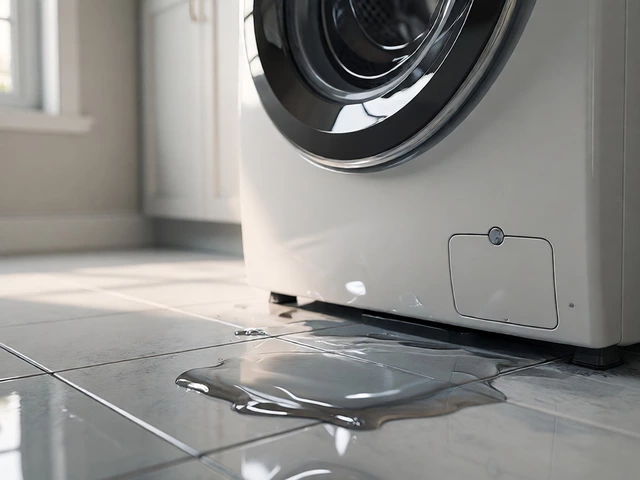
Look for rust-colored water, consistent rumbling noises, puddles around the base of the unit, or a significant drop in hot water capacity. If the water looks brownish, the internal lining is likely compromised.
Can I replace the anode rod myself?
Yes, but you must turn off the power (electric) or gas (gas) and shut off the cold water supply first. You also need to drain some water from the tank to relieve pressure. It requires a large wrench and care to avoid stripping the threads.
Why is my T&P valve leaking constantly?
It could be a faulty valve, but it often indicates excessive pressure in your home's plumbing system. Check your static water pressure with a gauge. If it is above 80 PSI, you need a pressure-reducing valve installed on your main line.
How often should I flush my water heater?
Once a year is ideal. In areas with very hard water, you may need to flush it twice a year to prevent sediment buildup that leads to element burnout and tank corrosion.
Is it cheaper to repair or replace a 12-year-old water heater?
If the tank itself is leaking, replacement is the only option. If it is a minor component like a thermostat, repair is cheaper short-term, but given the age, investing in a new, more efficient unit is often better for long-term savings.