Kitchen Extractor Fan Motor Replacement Cost Calculator
This calculator estimates how much you could save by replacing your kitchen extractor fan motor yourself rather than hiring a professional. Based on information from the article, professional repairs typically cost $150-$250, while replacement motors range from $30-$80.
Your Savings Estimate
By replacing your motor yourself, you could save:
Based on your inputs:
Your replacement motor costs: $0.00
Professional repair would cost: $0.00
Important: Always check motor compatibility before replacing. Using an incompatible motor can cause overheating, damage to your fan, or fire hazards. Ensure voltage, amperage, RPM, mounting style, and wiring match your original motor.
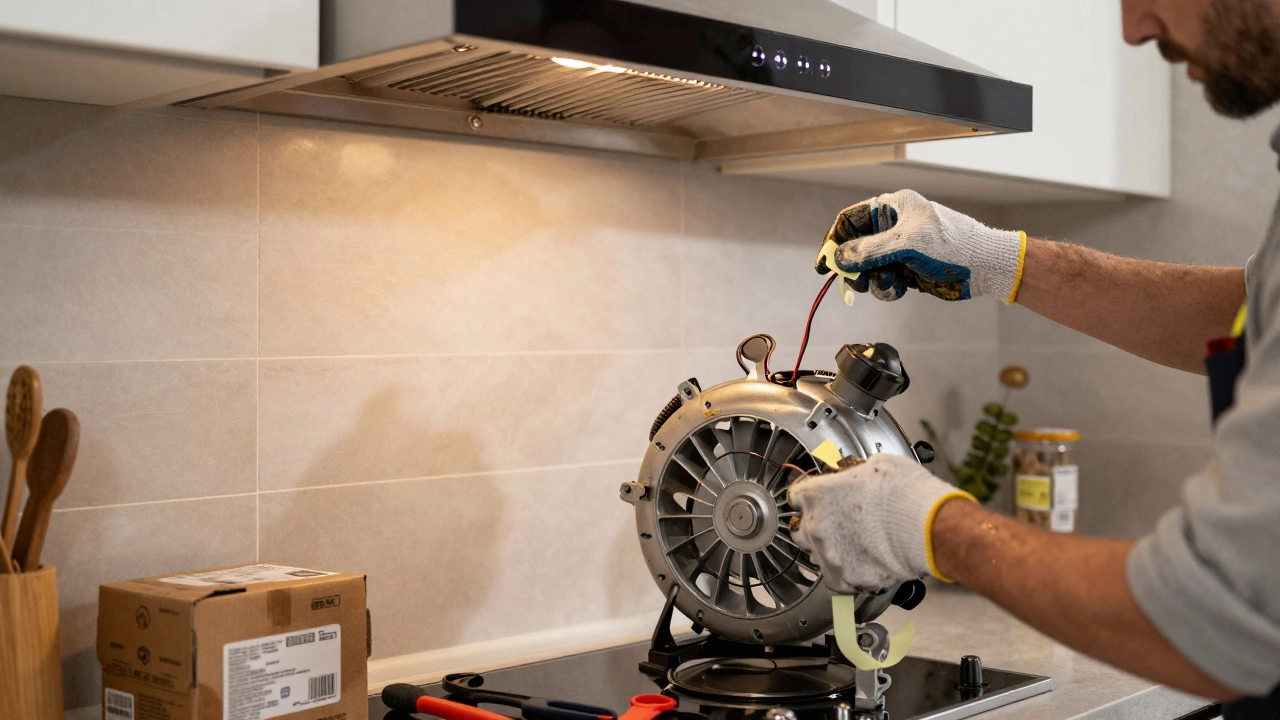
When your kitchen extractor fan starts making grinding noises, stops pulling air, or just hums without spinning, it’s not just annoying-it’s a safety issue. Grease and smoke don’t disappear on their own. If the motor is dead, no amount of cleaning will fix it. Replacing the motor is often cheaper than buying a whole new range hood, and it’s doable with basic tools if you take it step by step.
First, confirm it’s the motor
Before you order a new motor, rule out simpler problems. The fan might be clogged with grease, the capacitor could be bad, or the switch might be faulty. Unplug the unit. Remove the grease filters and wipe down the inside. If it still doesn’t spin after cleaning, turn the blades by hand. If they feel stiff or stuck, grease buildup is likely the culprit. If they spin freely but the fan won’t start when powered, the motor or capacitor is the issue.
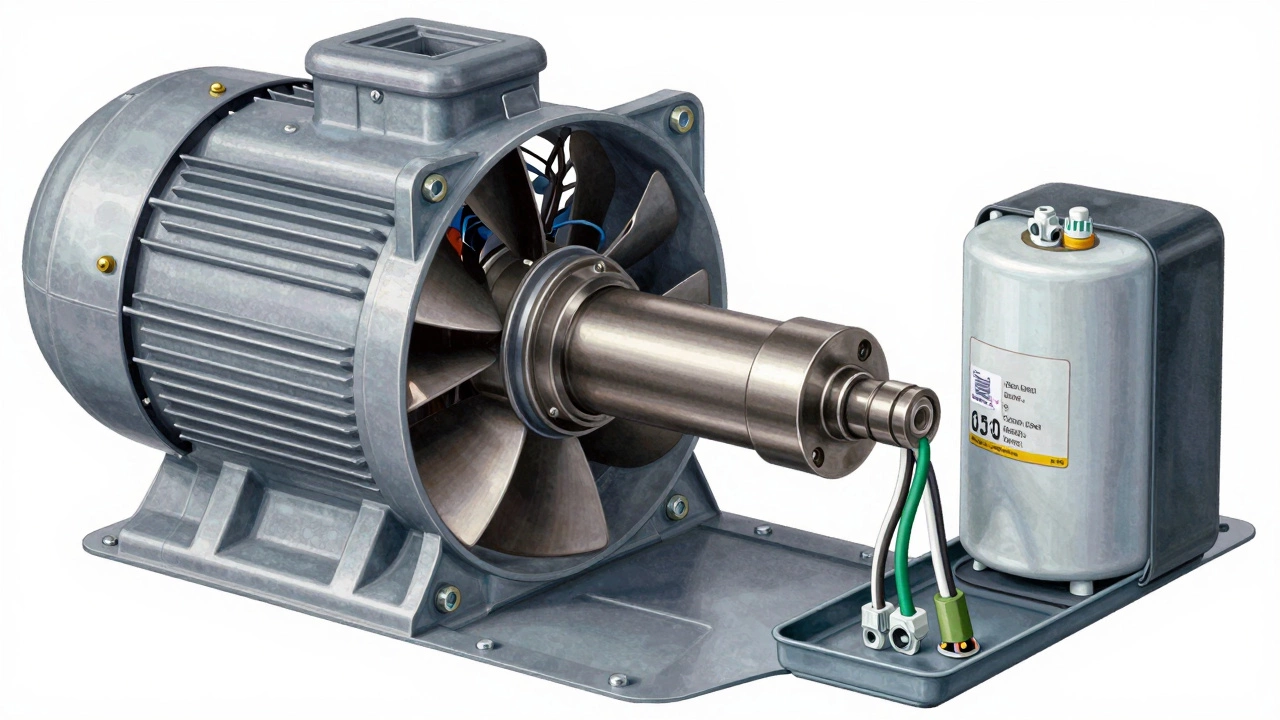
Check the capacitor-it’s a small cylindrical component usually near the motor. If it’s swollen, leaking, or smells burnt, replace it. Capacitors cost under $10 and are easy to swap. If replacing the capacitor doesn’t fix it, the motor is almost certainly dead.
Find the right replacement motor
You can’t just buy any motor. It has to match the voltage, RPM, mounting style, and wiring. Start by locating the model number on your extractor fan. It’s usually on a sticker inside the housing, near the motor, or on the back of the unit. Write it down.
Search online using the model number + "motor replacement". Manufacturer sites like Broan, Zephyr, or Vent-A-Hood often sell exact replacements. If you can’t find it there, try appliance parts sites like Repair Clinic or Appliance Parts Pros. They let you search by model number and show you photos of the exact motor.
Pay attention to these specs:
- Voltage: Most kitchen fans use 120V AC. Double-check this.
- Amperage: Should match within ±0.2A of the original.
- RPM: 2000-3000 RPM is standard. Lower RPM means less suction.
- Mounting: Is it bolted on? Clip-in? Does it have a mounting bracket?
- Wiring: How many wires? What colors? Match the connector type.
Don’t guess. A motor with the wrong RPM can overheat or not move enough air. A mismatched plug can fry your circuit. If you’re unsure, take a photo of the old motor and ask at a local appliance repair shop.
Gather your tools
You don’t need fancy gear. Here’s what you’ll need:
- Phillips and flathead screwdrivers
- Needle-nose pliers
- Wire strippers (or a utility knife)
- Electrical tape or wire nuts
- Flashlight
- Masking tape (to label wires)
- Work gloves
- Trash bag (for grease and old parts)
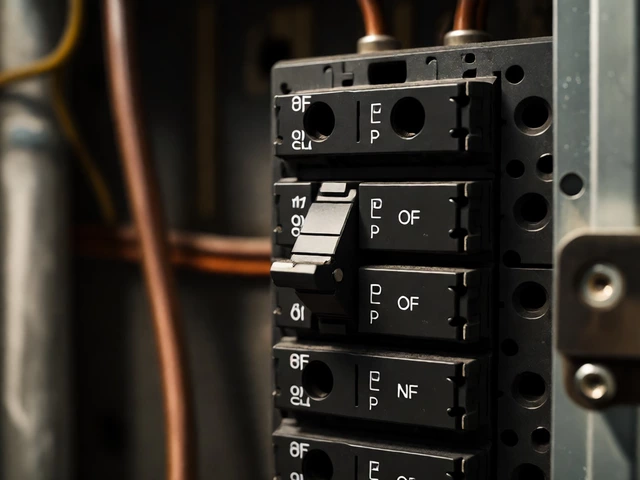
Turn off the circuit breaker for the kitchen hood. This isn’t optional. Even if the switch is off, the wires behind the unit could still be live.
Remove the old motor
Start by taking off the grease filters and the bottom panel. Most units snap or screw off. Once you have access, locate the motor. It’s usually mounted on the side or back, near the fan blade.
Disconnect the wiring. Use masking tape to label each wire before you unplug it. Note the colors: black (hot), white (neutral), green or bare (ground). If the connector is plug-in, just pull it out. If wires are twisted together, untwist them and cut them close to the old motor. Leave about 4 inches of wire to work with.
Remove the mounting screws. Some motors have a metal bracket that holds them in place. Others are held by clips. If it’s stuck, gently wiggle it. Don’t force it-you might break the housing. Once it’s free, pull it out.
Check the fan blade. Is it cracked or bent? If so, replace it too. The new motor may not come with a blade. If yours is in good shape, carefully slide it off the old motor shaft and onto the new one. Use a wrench on the shaft to hold it steady while you unscrew the blade.
Install the new motor
Attach the fan blade to the new motor shaft. Tighten the screw securely but don’t strip it. Then, connect the wires. Match the colors: black to black, white to white, green to green. If the new motor has a different connector, strip the ends of the wires and twist them together. Secure each connection with a wire nut, then wrap it with electrical tape.
Mount the motor. Slide it into place and secure it with the screws or clips you removed earlier. Make sure it’s snug and doesn’t wobble. If the motor hangs at an angle, the fan blade will rub against the housing and wear out fast.
Reconnect the power wires to the unit’s main harness. If you cut the wires earlier, use the same length of wire and splice them with wire nuts. Don’t leave bare wire exposed.
Test it before reassembling
Turn the breaker back on. Plug the unit in (if it’s hardwired, just flip the breaker). Turn the fan on. Listen. It should spin up smoothly without grinding or squealing. If it hums but doesn’t turn, the capacitor might be bad again-or the blade is rubbing. Turn it off immediately.
If it runs quietly and pulls air, you’re good. Turn it off again. Reinstall the bottom panel, grease filters, and any other covers. Double-check that all screws are tight and no wires are pinched.
What to watch out for
Don’t skip the safety steps. I’ve seen people get shocked because they thought the switch was enough. Always turn off the breaker.
Also, don’t reuse old wire nuts or tape. They can loosen over time. Use new ones.
If the fan still doesn’t work after replacement, check the wall switch. A faulty switch can mimic a dead motor. Test it with a multimeter if you have one. If you don’t, swap it with a known working switch from another room.
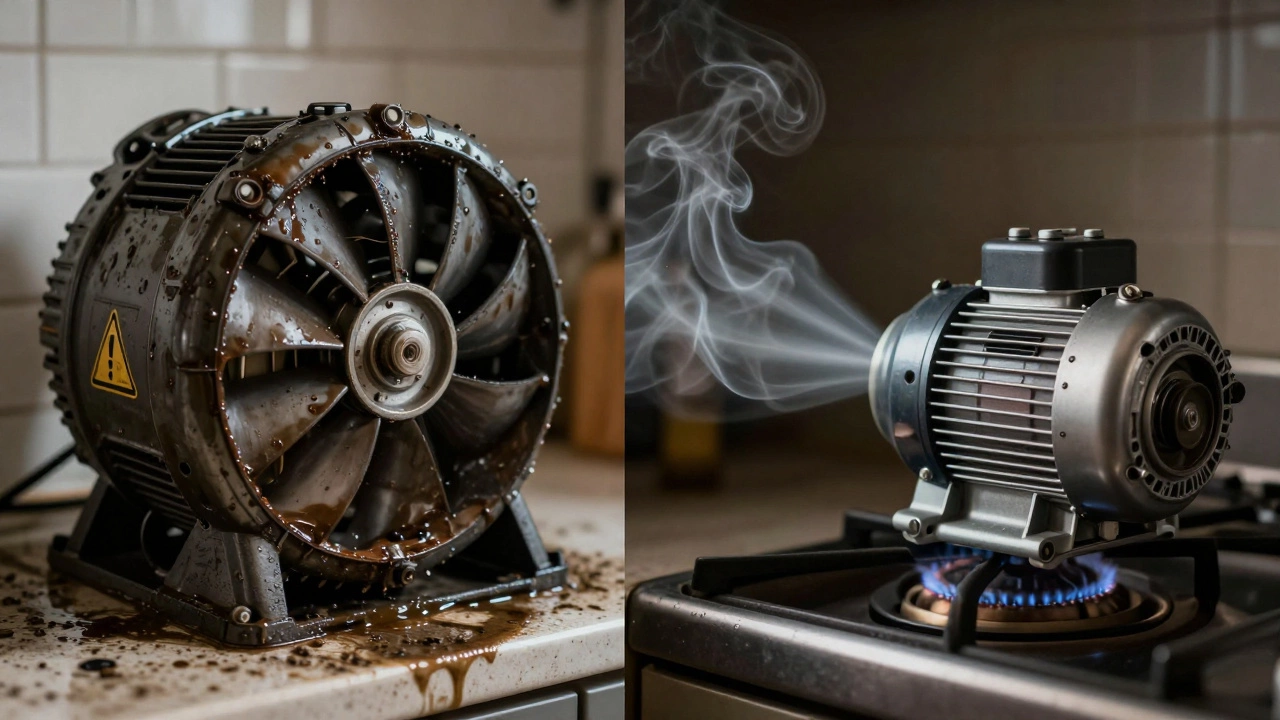
And if the motor dies again within a year, you likely have a ventilation problem. Blocked ducts, long exhaust runs, or no outside venting can overheat the motor. Make sure your ductwork is clean and goes straight to the outside-no sharp bends or long horizontal runs.
When to call a pro
You can replace the motor yourself if you’re comfortable with basic wiring. But if you’re unsure about electrical connections, or if your hood is hardwired into the ceiling without a plug, it’s safer to hire an electrician. They can also check your ductwork and ensure your vent meets code.
Also, if your hood is over 15 years old, consider replacing the whole unit. Newer models are quieter, more efficient, and have better filters. A new hood with a built-in motor costs $200-$500, but it comes with a warranty and lasts 10+ years.
How long does it take?
For someone doing it for the first time, expect 60-90 minutes. Experienced DIYers can do it in 30 minutes. The longest part is usually finding the right motor and waiting for delivery.
Most replacement motors arrive in 2-3 days. If you need it faster, check local appliance parts stores. Some carry common models on the shelf.
Cost comparison
Replacing the motor costs $30-$80 for the part. Labor at a repair shop runs $150-$250. Doing it yourself saves you 60-80%. That’s real money when you’re replacing a part that lasts 10 years.
And if you do it right, your kitchen will be free of smoke and grease again-without buying a whole new hood.
Can I replace the extractor fan motor without turning off the breaker?
No. Even if the fan switch is off, the wires behind the unit may still be live. Turning off the breaker is the only way to be sure you’re not at risk of electrocution. It takes 10 seconds and could save your life.
What if the new motor doesn’t match the old one exactly?
Don’t install it. Motors must match in voltage, amperage, RPM, and mounting. A motor with higher RPM can overheat the system. One with lower RPM won’t pull air properly. Even if it fits, it won’t work right-and could damage your ductwork or wiring. Always match the specs.
Do I need to replace the fan blade too?
Only if it’s cracked, bent, or covered in hardened grease. If the blade spins freely and looks intact, you can reuse it. Just slide it off the old motor shaft and onto the new one. Make sure the screw is tight so it doesn’t come loose while running.
Why does my new motor hum but not spin?
A humming motor usually means the capacitor is bad or the blade is stuck. First, check if the blade spins freely by hand. If it does, the capacitor is likely the issue. Most extractor fans use a start capacitor. Replace it with one of the same microfarad rating (usually marked on the old one). If the blade is stuck, grease buildup is the culprit-clean it thoroughly.
Can I use a universal motor for my kitchen fan?
Universal motors are designed for power tools, not ventilation. They run too fast, are too loud, and lack the right torque profile. They also don’t have the safety certifications needed for kitchen use. Always use a motor made specifically for range hoods. It’s not worth the risk.