Pressure Cooker Leak Diagnostic Tool
Leak Symptom Assessment
Select the primary symptom you're experiencing to identify the most likely cause of your pressure cooker leak.
Your Leak Diagnosis
Safety Alert: If you experience excessive steam, unusual noises, or pressure buildup problems, stop using the cooker immediately. Do not continue cooking if the leak is severe.
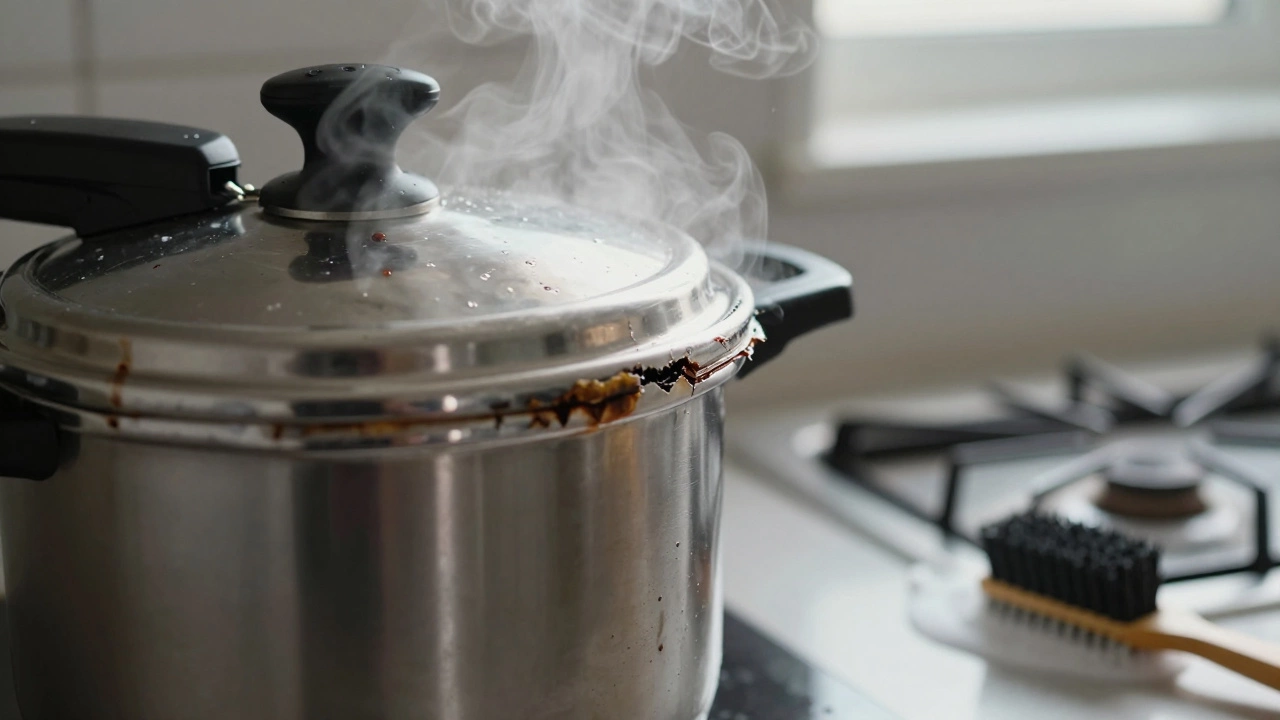
Ever opened your pressure cooker after a long wait, only to find your food still raw? Or worse - heard a loud hiss, saw steam shooting everywhere, and panicked? You’re not alone. Pressure cookers are supposed to make cooking faster and easier, but when they stop working right, they become frustrating - and sometimes dangerous. The most common problem? Leaking steam.
It sounds simple, but a leak isn’t just about wasted steam. It means your pressure cooker can’t build or hold the pressure it needs to cook food properly. That’s why your chicken takes two hours instead of 20. That’s why your beans are still crunchy. And if the leak is bad enough, it can trigger safety shutoffs or even damage the unit over time.
Why Does Steam Leak? The Top 5 Causes
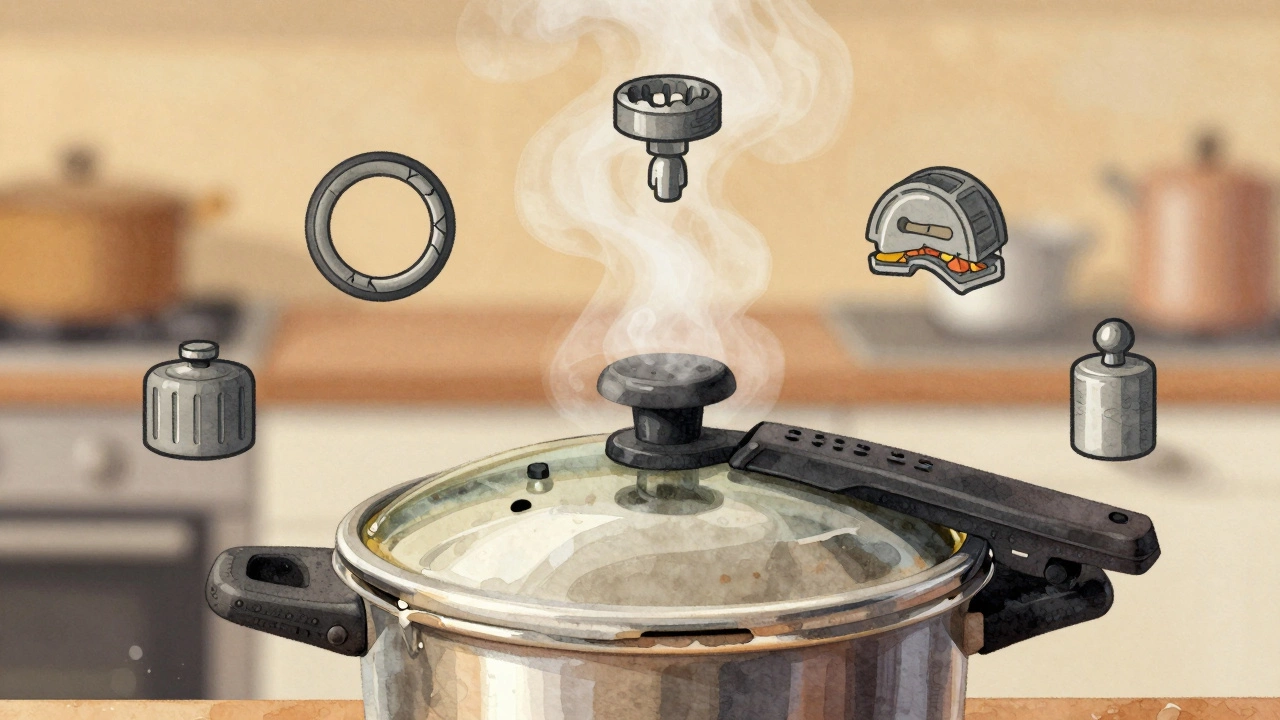
Not all leaks are the same. Here’s what’s usually going on inside your cooker:
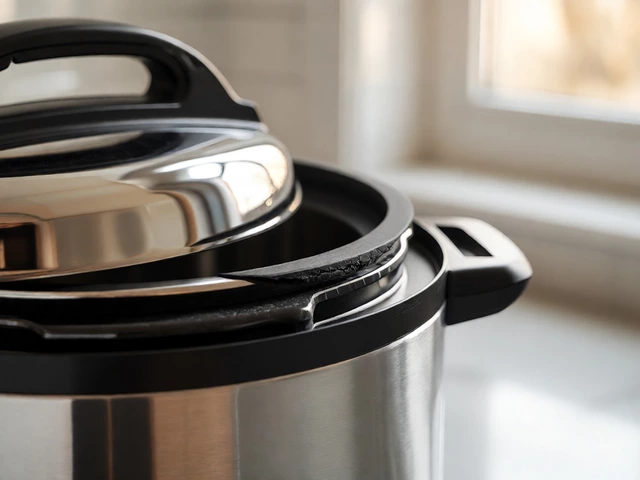
- Worn or misaligned sealing ring - This rubber or silicone gasket sits around the lid and creates an airtight seal. Over time, it hardens, cracks, or gets stretched out. Even a small tear or gap will let steam escape. Many people replace it too late - it should be swapped every 12 to 18 months, even if it looks fine.
- Dirty or damaged lid seal groove - Food particles, grease, or dried starch build up in the channel where the sealing ring sits. If the groove isn’t clean, the ring can’t sit flush. A quick scrub with a toothbrush and warm soapy water fixes this 80% of the time.
- Warped or misaligned lid - Dropping the cooker or using excessive force when closing it can bend the lid or its hinge. If the lid doesn’t sit flat, steam escapes from the edges. Try placing the lid on a flat surface and rolling a glass over it - if it wobbles, it’s warped.
- Faulty pressure valve or vent - The valve that releases excess steam can get clogged with food debris. If it’s stuck open, pressure can’t build. If it’s stuck closed, pressure builds too high - and that’s a safety risk. Most modern cookers have a removable valve. Take it apart, rinse under running water, and check for blockages.
- Loose or damaged pressure regulator - On stovetop models, the weight that sits on the vent can become loose or corroded. If it doesn’t seal properly, steam escapes. Replace it if it’s rusted or doesn’t click into place.
How to Test for a Leak
You don’t need a professional to find the leak. Here’s a simple method:
- Fill the cooker with 2 cups of water - no food, no oil.
- Lock the lid and set it on medium heat.
- Wait until you hear the first steady hiss - that’s when pressure starts building.
- Turn off the heat and let it cool slightly.
- Lightly run your hand around the lid’s edge, the valve, and the handle base. If you feel steam, that’s your leak.
Pro tip: Never use soap or cleaner on the sealing ring. It can break down the material. Just rinse with water and air-dry.
What Happens If You Ignore It?
Some people think a small leak is harmless. It’s not. Here’s what you risk:
- Longer cooking times - Without proper pressure, food won’t cook evenly. You’re wasting time and energy.
- Food safety issues - Undercooked beans, meat, or grains can harbor bacteria like Clostridium perfringens. Pressure cookers are great for killing pathogens - if they work right.
- Damage to the cooker - Constant steam exposure can corrode the metal around the lid seal, leading to permanent warping.
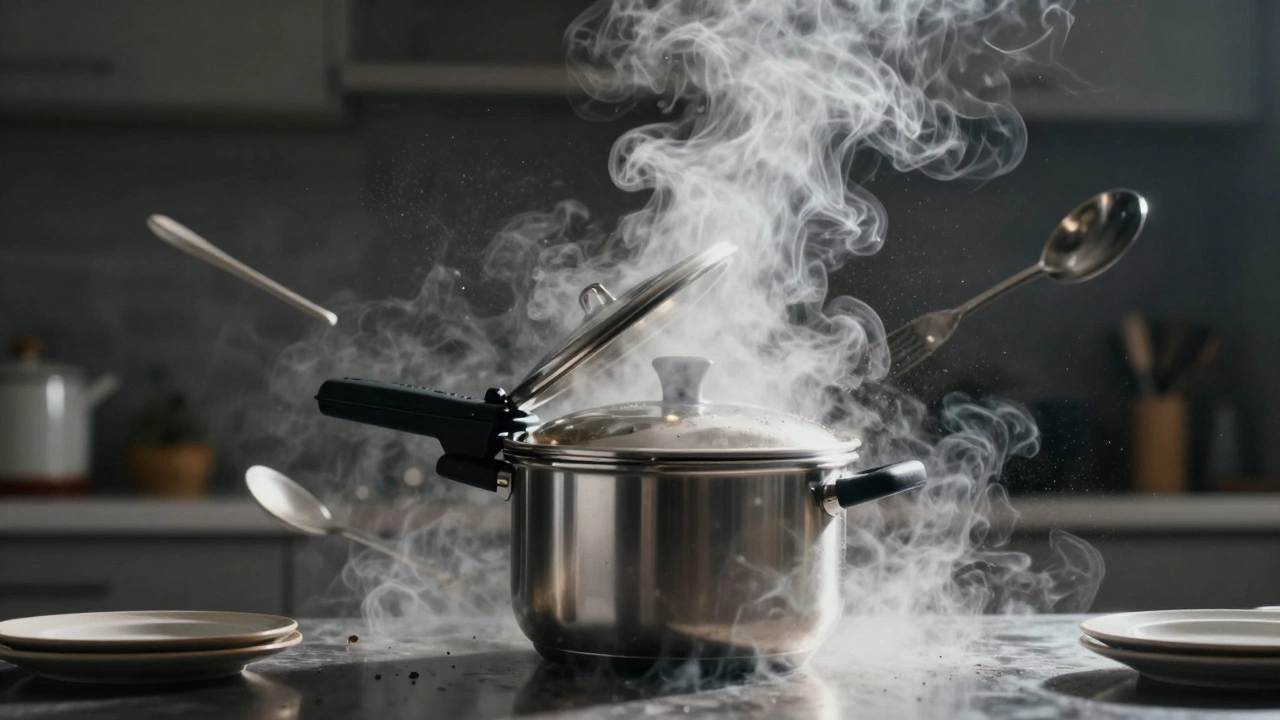
- Safety hazards - If pressure builds too high because the valve is blocked, the cooker can rupture. Modern units have backup safety valves, but older models don’t.
One user in Vancouver reported a 10-year-old pressure cooker that exploded during use - not because of a defect, but because the sealing ring had been replaced with a generic one that didn’t fit right. The lid flew off and hit the ceiling. No one was hurt, but the kitchen was a mess.
How to Prevent Problems Before They Start
Most pressure cooker failures are preventable. Here’s how:
- Replace the sealing ring every year - even if it looks okay. Silicone degrades with heat and time.
- Always clean the lid groove after each use. Use a damp cloth or soft brush. Don’t use metal tools.
- Don’t force the lid. It should drop into place with a light press. If you have to twist or slam it, something’s wrong.
- Use the right amount of liquid. Too little and it won’t build pressure. Too much and it can clog the valve.
- Check the pressure valve after every 5 uses. Remove it, rinse, and inspect for debris.
Also, avoid cheap aftermarket parts. Your cooker’s brand name matters. A Presto ring won’t work right in a Fagor. The fit has to be exact.
When to Call a Pro
You can fix 9 out of 10 leaks yourself. But if you’ve tried all the fixes above and it still leaks - or if the cooker makes strange noises, smells like burning plastic, or won’t release pressure - it’s time to stop using it.
Some internal components, like the pressure regulator assembly or the locking mechanism, aren’t user-serviceable. Tampering with them can void warranties or create dangerous conditions. Take it to a certified appliance repair technician. Most will inspect it for free and give you a quote before doing any work.
What to Look for in a New Pressure Cooker
If it’s time to replace it, here’s what matters most:
- Multi-layer sealing system - Better models have dual seals: one main ring and a backup gasket around the valve.
- Automatic pressure release - Avoid manual valves if you’re not experienced. Modern electric models release pressure safely.
- Sturdy, non-warped lid - Look for stainless steel, not thin aluminum.
- Clear pressure indicator - You should see when pressure is built without guessing.
Brands like Instant Pot, Fagor, and Kuhn Rikon have models with proven reliability over 5+ years. Avoid no-name brands sold on discount sites - they often cut corners on sealing systems.
Pressure cookers are built to last. But they need care. A small leak today can turn into a broken appliance tomorrow. Stay on top of maintenance, and your cooker will keep cooking fast - safely - for years.