Extractor Fan CFM Calculator
Calculate Your Fan's CFM Requirements
Determine the minimum CFM (cubic feet per minute) your extractor fan needs to effectively remove moisture and odors. Based on standards from the article.
Recommended CFM
This is the minimum airflow needed to effectively remove moisture and prevent mold buildup.
Why this matters: Most building codes require at least 50 CFM for bathrooms and 100 CFM for kitchens. Your fan must meet these standards to prevent mold growth and structural damage from moisture buildup.
Key Recommendations from Article:
- Bathrooms: 1 CFM per square foot
- Kitchens: 100 CFM minimum (or 1 CFM per sq ft for heavy cooking)
- Check ductwork before assuming fan failure
- Modern Energy Star fans are 30% more efficient
If your extractor fan is making noise but not pulling air, or if your bathroom still smells like steam after a shower, it’s not just annoying-it’s a risk. Moisture buildup leads to mold, warped drywall, and even structural damage over time. Most people assume their extractor fan is working because it spins. But spinning doesn’t mean it’s doing its job. Here’s how to check if your extractor fan is actually moving air the way it should.
Step 1: Listen for Unusual Sounds
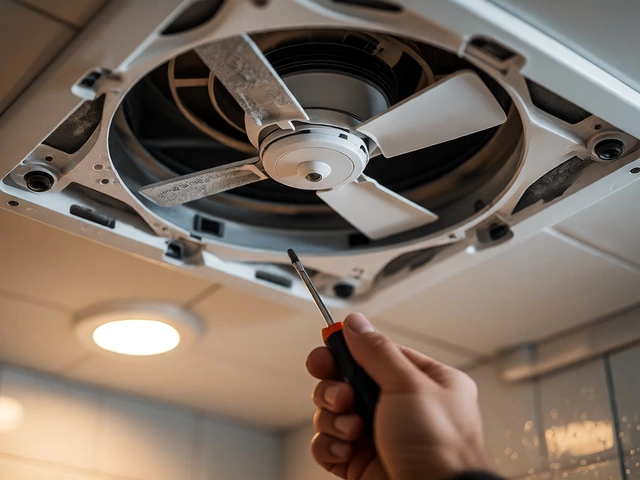
A working extractor fan should hum quietly. If you hear grinding, rattling, or a high-pitched screech, something’s wrong. These sounds often mean the motor bearings are worn out, the blades are loose, or debris is caught in the housing. Turn off the fan, unplug it if possible, and look inside. A quick inspection with a flashlight can reveal hair, dust bunnies, or even a dead spider jamming the blades. Clean it out with a soft brush or vacuum nozzle. If the noise returns after cleaning, the motor might be failing.Step 2: Feel the Airflow
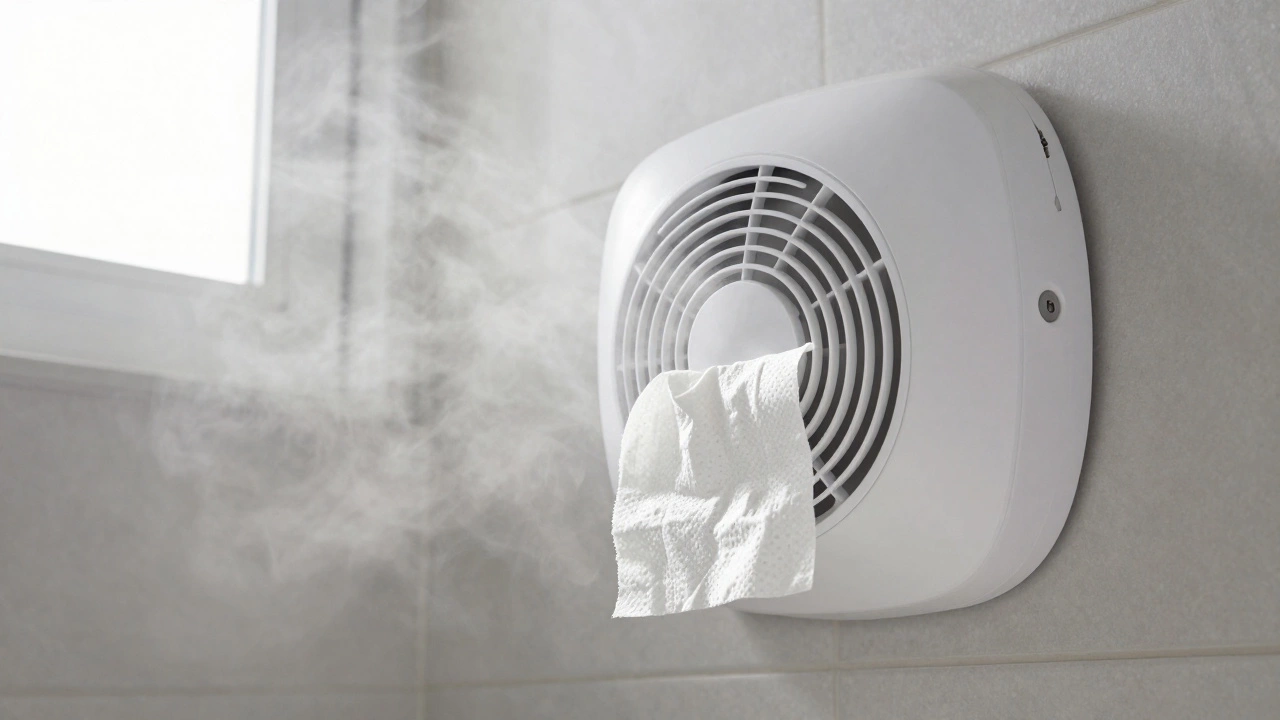
This is the simplest and most reliable test. Turn the fan on and hold your hand near the grille. You should feel a strong, steady pull of air. If the airflow feels weak or uneven, the fan isn’t moving enough air. Try this: hold a piece of toilet paper or a thin tissue against the grille. If it sticks firmly and stays pulled in, the fan is working well. If it flutters or falls, airflow is insufficient. Most building codes require extractor fans to move at least 50 cubic feet per minute (CFM) in bathrooms and 100 CFM in kitchens. Older fans often fall below this, especially if they’re 15+ years old.Step 3: Check the Ductwork
A fan can be perfectly fine, but if the duct is blocked, crushed, or full of lint, air can’t escape. This is a common problem in kitchens where grease builds up inside the duct over time. In bathrooms, the duct often runs through the attic or roof, and birds or rodents may have built nests inside. Go to your attic or roof vent (if safe) and look for blockages. You can also remove the exterior vent cover and check if the flap opens freely when the fan runs. If it doesn’t move, the damper is stuck or clogged. A blocked duct can reduce airflow by up to 70%, even if the fan motor is still running.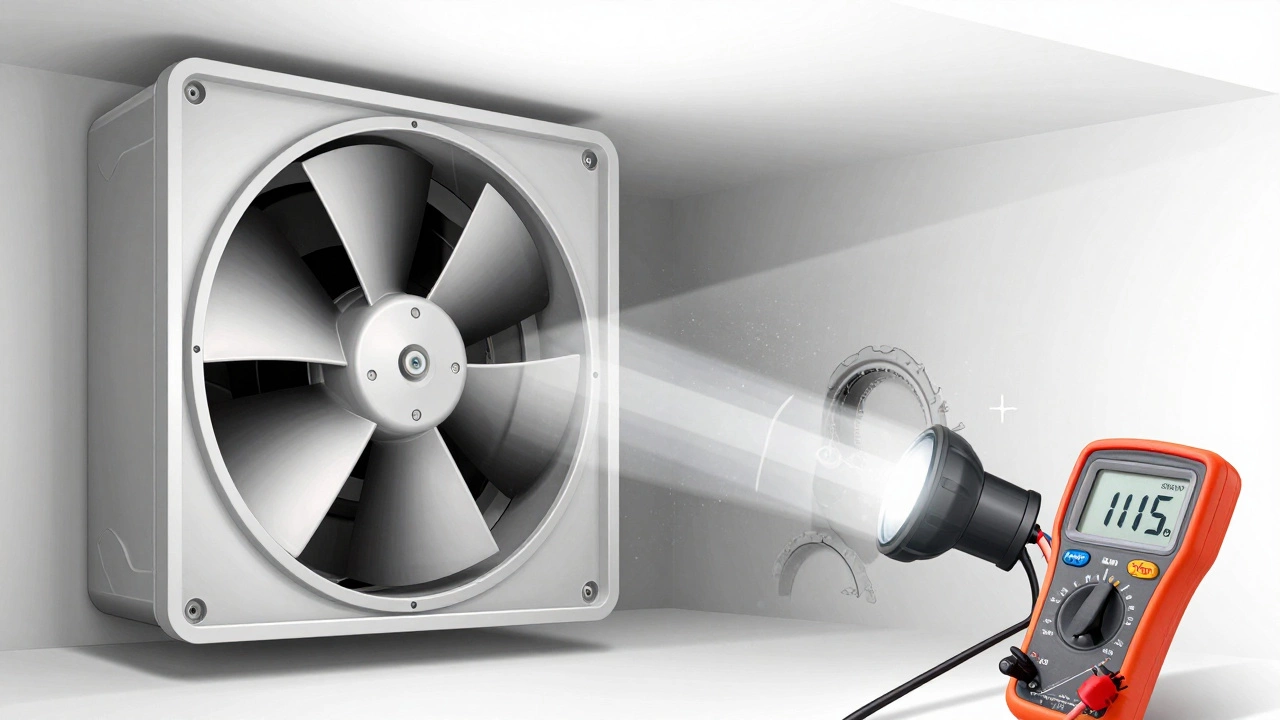
Step 4: Test the Timer or Humidity Sensor
Many modern extractor fans have built-in timers or humidity sensors. If your fan turns on automatically when the bathroom gets steamy but doesn’t shut off after 15-20 minutes, the timer might be faulty. Test it manually: turn the fan on, set the timer for 10 minutes, and see if it turns off on its own. If it doesn’t, the control module needs replacing. Humidity sensors can get dirty or fail. Wipe the sensor with a dry cloth-sometimes that’s all it needs. If it still doesn’t respond to steam, it’s likely broken.Step 5: Measure Voltage at the Fan
If you’re comfortable using a multimeter, check the power supply. Turn off the circuit breaker first. Remove the fan’s cover and locate the wires leading to the motor. Turn the breaker back on, set your multimeter to AC voltage, and test the wires. You should read between 110-120 volts in North America. If you get zero or a very low reading, the problem isn’t the fan-it’s the switch, wiring, or breaker. A tripped GFCI outlet near the bathroom or kitchen can also cut power to the fan without tripping the main breaker. Reset any nearby GFCI outlets and test again.Step 6: Compare Performance to Manufacturer Specs
Look for the fan’s rating label, usually on the side or back of the unit. It will list the CFM (cubic feet per minute) and wattage. A standard bathroom fan should move at least 50 CFM. A 100-square-foot bathroom needs a 50 CFM fan. For larger bathrooms or those with a tub or shower, aim for 1 CFM per square foot. If your fan is rated for 80 CFM but you only feel 30 CFM after cleaning and checking ducts, the motor is losing power. Older fans (pre-2010) often run at 30-40 CFM, even if labeled higher. Upgrading to a modern, Energy Star-rated fan can cut noise and double airflow.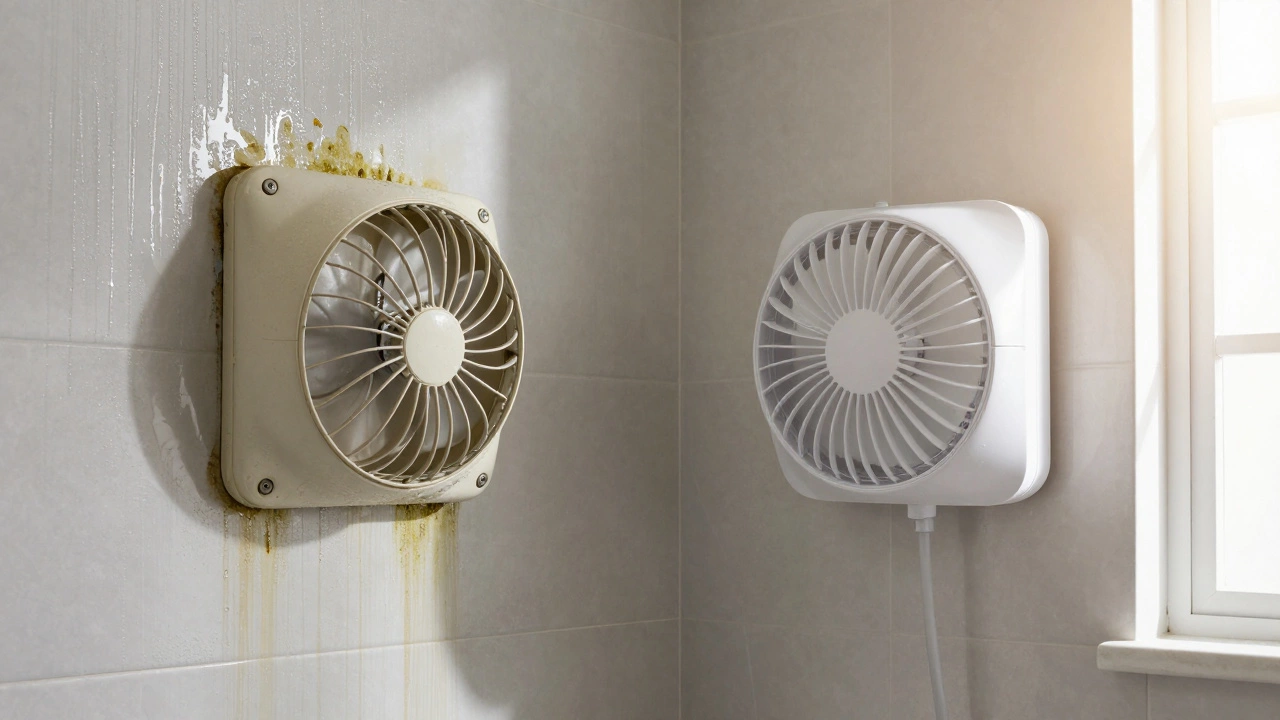
Signs Your Extractor Fan Needs Replacement
You don’t always need to repair. Sometimes replacement is cheaper and more reliable. Replace your fan if:- It’s over 10 years old
- It runs but doesn’t move enough air (less than 50 CFM)
- It makes constant loud noise even after cleaning
- The motor overheats or smells like burning
- It won’t turn on at all, and you’ve checked the power
Modern fans are quieter, more efficient, and often come with built-in LED lighting and smart controls. A new fan costs between $50 and $150, and installation usually takes under an hour. You’ll save money long-term by reducing moisture damage and energy waste.
What Happens If You Ignore a Bad Extractor Fan?
Ignoring a failing extractor fan isn’t just about bad smells. Moisture trapped in walls and ceilings causes mold growth within weeks. Black mold spores can trigger allergies, asthma, and respiratory issues. Wood framing can rot, drywall can sag, and paint will bubble. Insurance companies often deny claims for mold damage if they find you ignored obvious signs of ventilation failure. In Vancouver’s damp climate, this isn’t theoretical-it’s a common cause of home repairs.Quick Checklist: Is Your Extractor Fan Working?
- ✅ Fan spins quietly without grinding or rattling
- ✅ Tissue sticks firmly to the grille when fan is on
- ✅ Airflow feels strong and consistent
- ✅ Exterior vent flap opens when fan runs
- ✅ No visible blockages in duct or vent
- ✅ Fan turns off automatically after timer setting
- ✅ Voltage reads 110-120V at motor wires
- ✅ Fan meets CFM requirements for room size
If you checked all these and still aren’t sure, it’s better to replace the unit than risk long-term damage. A $70 fan is a small price to pay compared to a $5,000 mold remediation job.
Why does my extractor fan run but not remove moisture?
The fan might be running, but if the duct is clogged, crushed, or too long, air can’t escape. Even a 10-foot duct with three bends can reduce airflow by half. Check the duct from the fan to the outside vent. Look for kinks, debris, or nesting material. Clean or replace the duct if needed.
Can I clean my extractor fan myself?
Yes, most extractor fans are easy to clean. Turn off the power, remove the grille, and use a vacuum with a brush attachment to remove dust and hair. Wipe the blades and housing with a damp cloth and mild detergent. Don’t soak the motor. Reassemble and test. Cleaning every 6 months keeps airflow strong and prevents motor strain.
How do I know what CFM my extractor fan needs?
For bathrooms, multiply the room’s square footage by 1. For example, an 8x10 bathroom (80 sq ft) needs at least 80 CFM. For kitchens, use 100 CFM minimum, or 1 CFM per square foot if you cook often. If you have a large range or heavy cooking, go higher. Older fans often undersize-upgrading improves performance and reduces humidity.
My fan turns on but shuts off after 2 minutes. Is that normal?
No. Most fans with timers should run for 15-30 minutes after turning on. If it shuts off too soon, the timer mechanism is faulty. This can be caused by a worn-out relay or a dirty humidity sensor. Try resetting the power or cleaning the sensor. If that doesn’t help, replace the timer module or the whole unit.
Should I replace my extractor fan if it’s noisy but still works?
If the noise is new and sudden, clean it first. If it’s always been loud and you’re over 10 years old, replace it. Modern fans are up to 70% quieter and use 30% less energy. A noisy fan is often a sign of failing bearings or motor stress. Replacing it now prevents a complete breakdown and saves on electricity bills.