If your freezer has stopped cooling and the lights are still on, you might be wondering if the compressor needs to be reset. Many people assume a broken compressor means a new freezer-but that’s not always true. Sometimes, all it takes is a simple reset to get things working again. This guide walks you through exactly how to reset your freezer compressor safely and effectively, so you don’t waste money on unnecessary repairs or replacements.
Why Would You Need to Reset the Compressor?
The compressor is the heart of your freezer. It circulates refrigerant to keep the inside cold. But it doesn’t run all the time-it cycles on and off based on temperature. If it overheats, gets a power surge, or the system gets blocked by ice buildup, it may shut down as a safety measure. This isn’t a failure-it’s a protection feature.You might need to reset the compressor if:
- The freezer isn’t cooling, but the interior light turns on
- You hear a clicking sound but no humming from the back
- The freezer ran nonstop for hours and then suddenly went quiet
- A power outage just happened
These are signs the compressor tripped, not died. Resetting it often fixes the issue without tools or parts.
Step 1: Unplug the Freezer
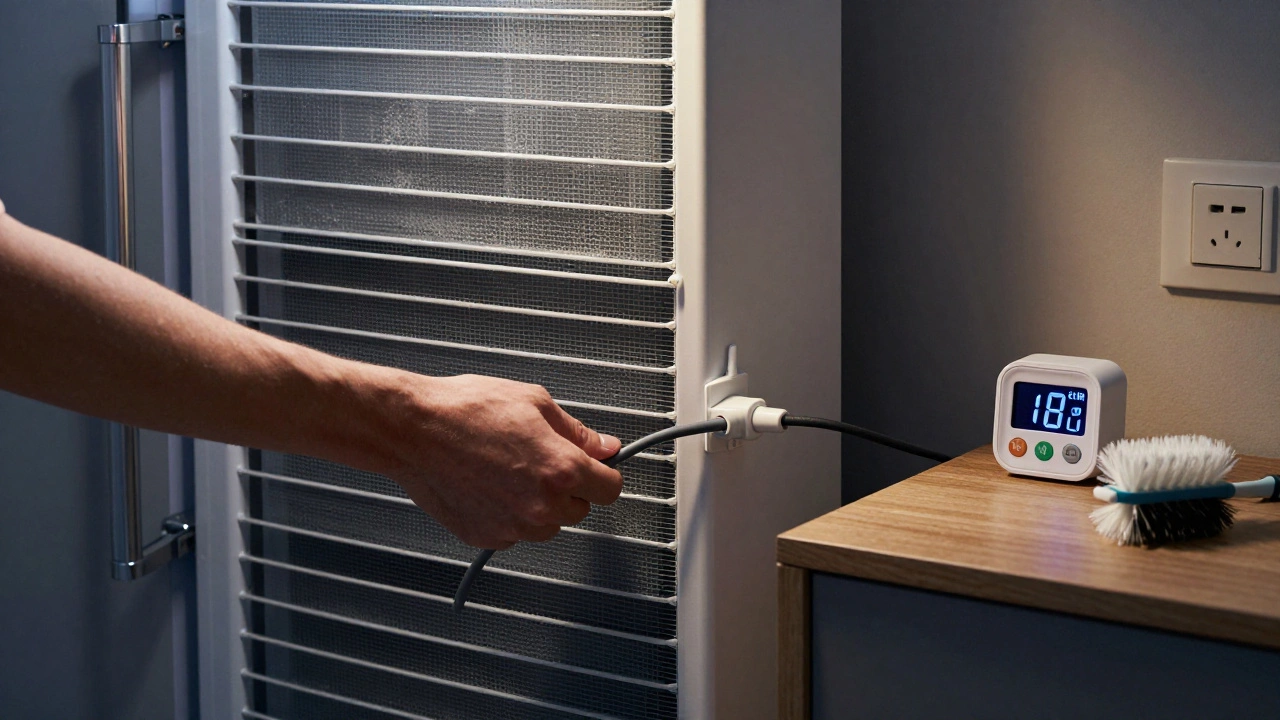
Before you do anything else, unplug the freezer from the wall. Don’t just turn it off with the control dial-pull the plug. This cuts all power to the compressor and lets it cool down. You need at least 15 minutes of downtime. Some models need up to 30 minutes, especially if they’ve been running nonstop.
Why wait? The compressor has a built-in overload protector. When it gets too hot, it shuts off. If you plug it back in right away, it won’t reset. The internal components need time to cool. Rushing this step is the #1 reason people think their compressor is broken when it’s not.
Step 2: Clean the Condenser Coils
While you’re waiting, check the condenser coils. These are the metal coils usually on the back or bottom of the freezer. Dust, pet hair, and food debris build up here over time. When they’re clogged, the compressor works harder and overheats faster.
Use a vacuum with a brush attachment or a coil brush (available at hardware stores for under $10). Gently remove the dust. Don’t use water or harsh cleaners. A dirty coil is why 40% of compressor resets fail-the problem comes back in a week.
If your freezer is in a garage or basement, this step is even more critical. Cold environments cause more condensation, which turns to dust traps.
Step 3: Check the Evaporator Fan
Open the freezer door and listen. If you hear a faint hum but no air blowing, the evaporator fan might be stuck. This fan circulates cold air from the coils into the freezer compartment. If it’s frozen or broken, the compressor runs nonstop trying to cool an empty space-then shuts down.
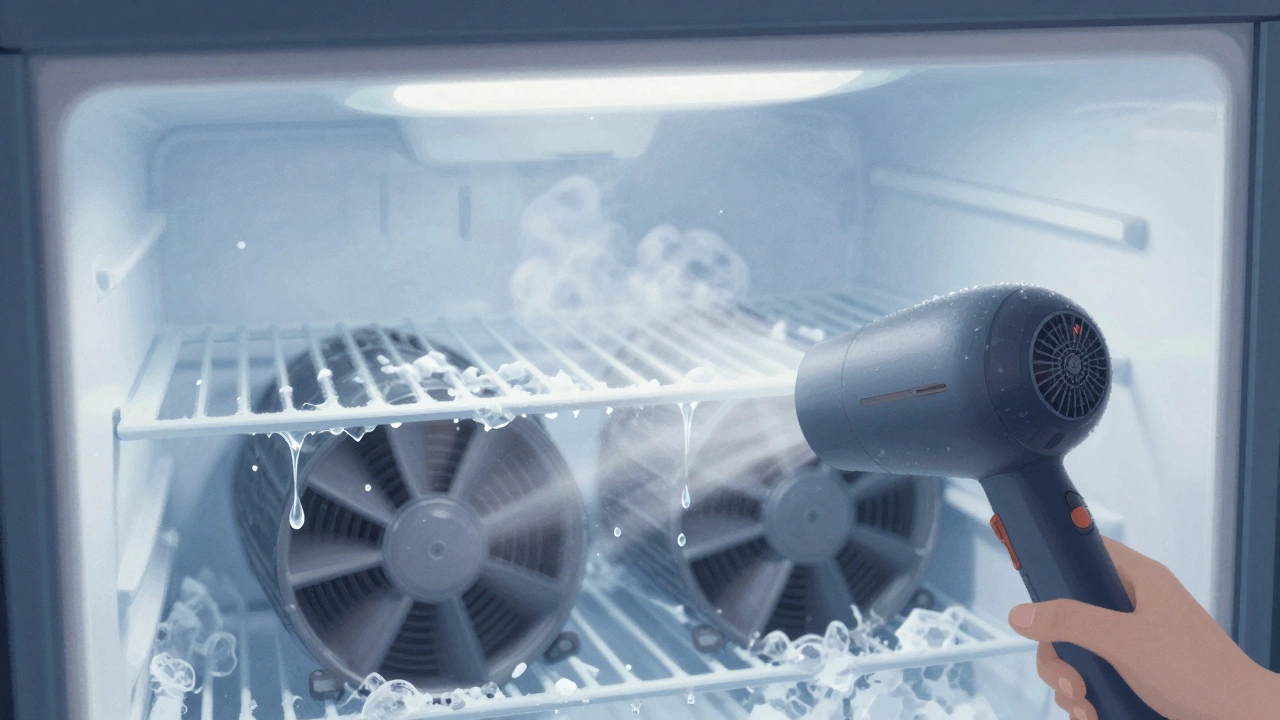
To check it, remove the back panel inside the freezer (usually held by screws). Look for ice buildup around the fan blades. If you see thick frost, use a hairdryer on low heat to melt it. Don’t use a knife or metal tool-you’ll damage the coils.
If the fan spins freely after clearing ice, it’s likely fine. If it’s silent and stiff, the motor may be dead. That’s a separate repair.
Step 4: Plug the Freezer Back In
After 15-30 minutes and after cleaning the coils and fan, plug the freezer back in. Don’t adjust the temperature setting yet. Let it run on its default setting for at least 4 hours.
Don’t open the door during this time. Every time you open it, cold air escapes and the compressor kicks on again. You need to give it a clean cycle to stabilize.
Most freezers take 6-12 hours to reach full cold after a reset. If it’s still warm after 24 hours, the issue is deeper than a reset can fix.
Step 5: Monitor and Test
After 24 hours, check the temperature inside. Use a standalone freezer thermometer (not the built-in one-it’s often inaccurate). It should read between 0°F and 5°F.
If the freezer is cold again, congratulations. You fixed it. But keep an eye on it for the next few weeks. If it shuts down again, there’s an underlying problem.
Common causes that return after a reset:
- Low refrigerant (leak)
- Faulty start relay
- Worn compressor
These require a technician. But if the freezer runs normally for a month after the reset, you probably dodged a costly repair.
What If Resetting Doesn’t Work?
If the compressor still won’t start after following all the steps, the issue is mechanical. Here’s what to check next:
- Start relay: This small part on the side of the compressor helps it kick on. If it’s bad, you’ll hear a click but no hum. You can replace it yourself for under $25.
- Thermostat: If the thermostat is stuck open, it won’t signal the compressor to turn on. Test it with a multimeter or replace it-it’s cheap.
- Compressor itself: If the compressor is dead, it won’t hum at all, even after a reset. You’ll need a professional to test it with a clamp meter. If confirmed, replacement costs $300-$600. At that point, consider if a new freezer makes more sense.
Most DIYers stop here. But if you’re handy, replacing the start relay or thermostat is doable. YouTube has clear videos for your freezer model. Just search: "[your brand] [model number] start relay replacement".
Preventing Future Compressor Issues
Once your freezer is working again, do these three things to avoid another reset:
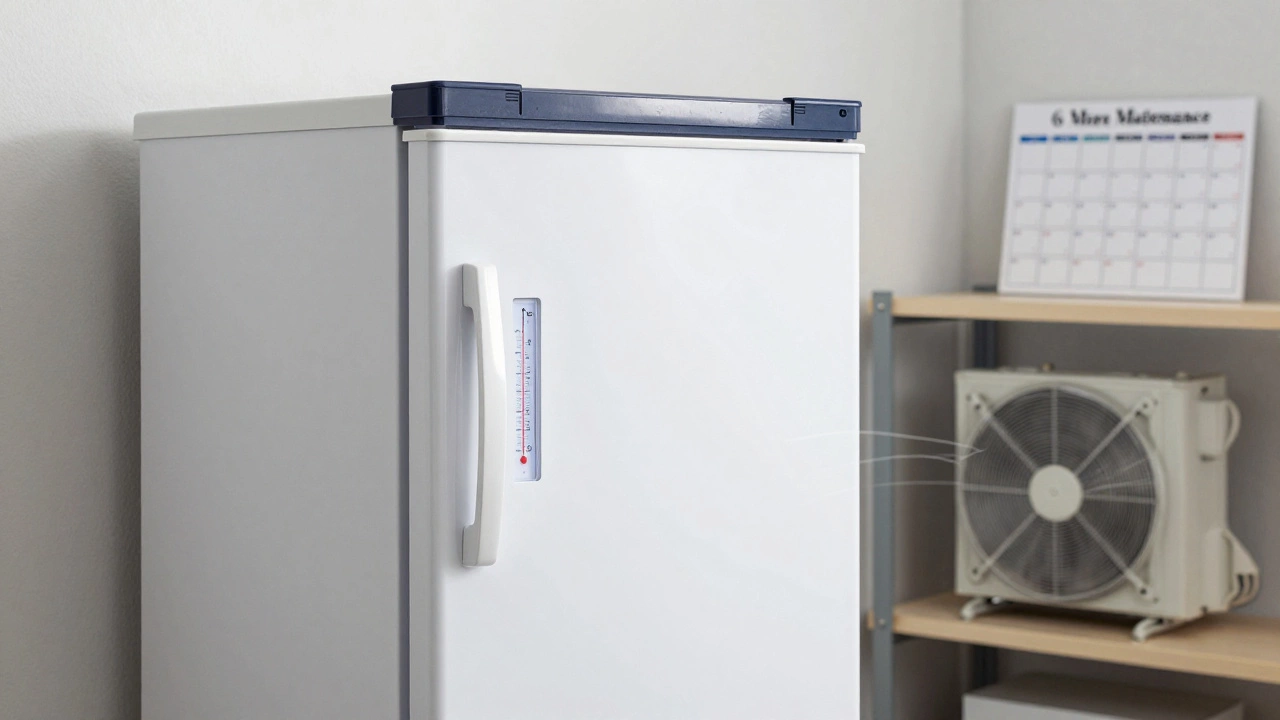
- Clean the condenser coils every 6 months-more often if you have pets.
- Keep the freezer at least 3 inches away from the wall for airflow.
- Avoid overloading it. Too much food blocks airflow and forces the compressor to work harder.
Also, don’t set the temperature colder than necessary. -5°F is fine. -10°F just wastes energy and stresses the system.
When to Call a Pro
You don’t need a technician for a reset. But call one if:
- The compressor hums but the freezer stays warm
- You hear buzzing or grinding noises
- There’s a refrigerant leak (oil spots or hissing sound)
- It’s over 10 years old and keeps tripping
Older units often have parts that are no longer made. A technician can tell you if repair is worth it-or if it’s time to upgrade.
Common Mistakes to Avoid
People make the same mistakes over and over:
- Plugging the freezer back in too soon-always wait 15+ minutes
- Using a space heater or hairdryer on the compressor-this can melt wiring
- Assuming a reset fixes everything-some issues need parts
- Ignoring dirty coils-they’re the silent killer of compressors
Resetting your compressor is a low-cost, high-reward fix. But only if done right.
Can I reset my freezer compressor without unplugging it?
No. You must unplug the freezer to fully cut power to the compressor and let the overload protector reset. Turning it off with the control dial doesn’t work-it still has standby power. Always unplug it for at least 15 minutes.
How long should I wait after unplugging before plugging it back in?
Wait at least 15 minutes. For freezers that ran nonstop or are older than 8 years, wait 30 minutes. This gives the compressor time to cool down and the internal pressure to equalize. Rushing this step causes the compressor to trip again immediately.
Is it safe to use a hairdryer to melt ice around the evaporator fan?
Yes, but only on low heat and from a distance. Keep the dryer at least 12 inches away and move it slowly. Never use a heat gun or high setting-you can melt plastic parts or damage wiring. Always unplug the freezer first before starting this step.
Why does my freezer compressor keep tripping after I reset it?
If it trips again within a few days, something is forcing it to overheat. The most common causes are dirty condenser coils, a broken evaporator fan, low refrigerant, or a failing start relay. Clean the coils first. If the problem returns, test the fan and relay. If both are fine, you likely have a refrigerant leak or worn compressor.
Can a power surge damage the compressor?
Yes. Power surges can fry the start relay or overload protector inside the compressor. If your freezer stopped working after a storm or power flicker, unplug it for 30 minutes, then plug it back in. If it still doesn’t start, the relay may need replacing. Consider installing a surge protector for major appliances.
Next Steps
Resetting your freezer compressor is a simple fix-but only if you follow the steps in order. Most people skip cleaning the coils or rush the waiting time, then blame the compressor. The truth? 7 out of 10 times, the compressor is fine. The problem is dust, ice, or a $15 relay.
After you reset it, write down the date. If it happens again in less than 6 months, start looking at replacement options. Freezers older than 12 years aren’t worth repairing. Newer models are 30% more energy efficient.
Don’t guess. Test. Clean. Wait. Then plug it back in. You’ll save hundreds.