Oven Heating Troubleshooter
Diagnose Your Oven Heating Problem
Follow these steps to identify why your oven isn't heating. This tool is based on the most common causes explained in our repair guide.
Step 1: Check the heating element
Look inside your oven while it's running. Does the bottom element glow red?
Step 2: Check the temperature behavior
When you set the temperature, does your oven heat up but then shut off too early?
Step 3: Check your breaker
Has the oven's double-pole breaker tripped or been reset recently?
Step 4: Oven age
How old is your oven?
If your electric oven is running but not heating, you’re not alone. Thousands of homeowners in Vancouver and beyond face this issue every winter. The oven light turns on, the fan spins, the display works - but when you put in that tray of cookies, nothing happens. No warmth. No browning. Just cold air. It’s frustrating, especially when you’re trying to cook dinner after a long day. The good news? Most of the time, this isn’t a full appliance failure. It’s usually one of five simple, fixable problems.
The Heating Element Is Burned Out
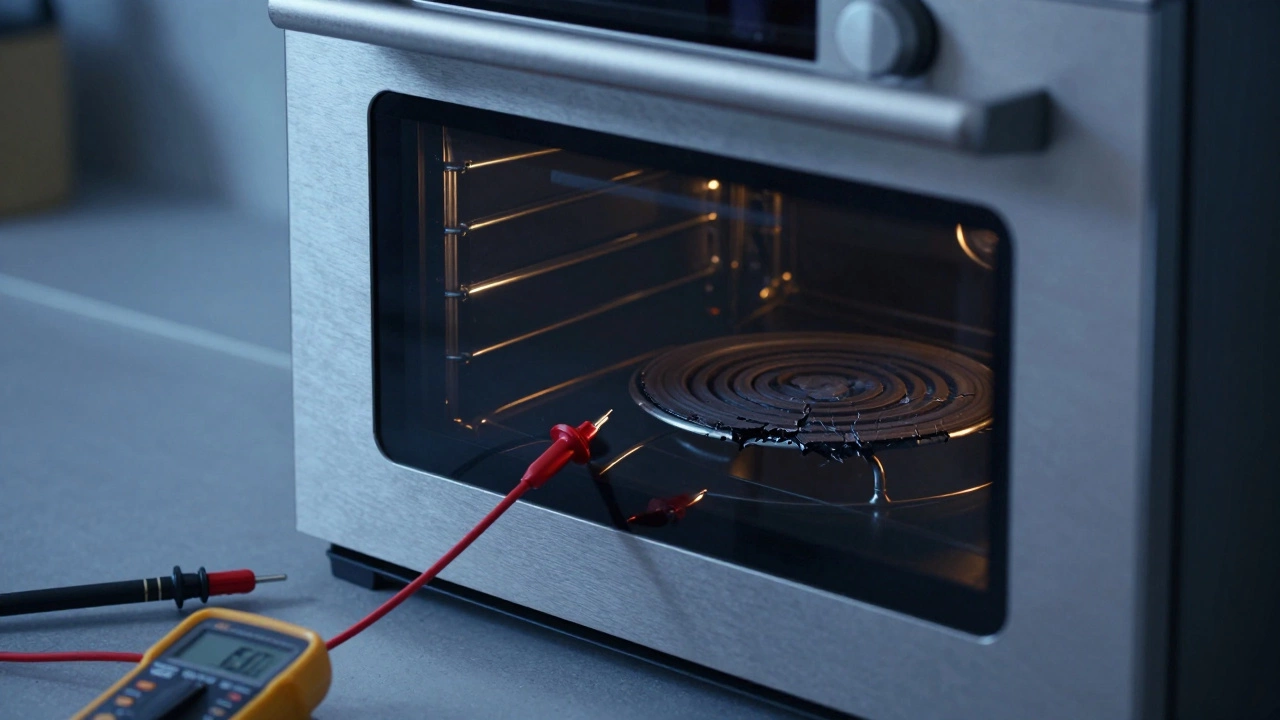
The heating element is the most common culprit. It’s the coiled wire at the bottom (and sometimes top) of your oven that glows red when it’s working. If it’s broken, it won’t glow at all - even if the oven thinks it’s heating. Look closely: if you see blackened spots, cracks, or sagging sections, that element is done. You can’t repair it. You have to replace it.
Most electric ovens use a 240-volt heating element. If you’re comfortable turning off the power and pulling out the oven, you can swap it yourself. Unplug the oven or flip the circuit breaker. Remove the screws holding the element in place, disconnect the wires, and match the old part to a new one. The part number is usually printed on the element itself. Replacement elements cost between $30 and $70. Brands like GE, Whirlpool, and Frigidaire use standard sizes, so finding a match isn’t hard.
The Thermostat or Temperature Sensor Is Faulty
Your oven doesn’t just turn the heating element on and leave it running. It uses a thermostat or temperature sensor to cycle the heat on and off to maintain the set temperature. If that sensor is off by even 25 degrees, your oven might think it’s already hot when it’s not.
Signs of a bad sensor: the oven heats unevenly, takes forever to reach temperature, or shuts off too early. To test it, you need a multimeter. Set it to measure resistance (ohms). Remove the sensor from the oven wall (usually a thin metal probe near the back wall). At room temperature, it should read between 1,000 and 1,100 ohms. If it reads zero or infinity, it’s dead. Replacing the sensor costs $20 to $50 and takes less than 30 minutes. Just make sure you get the right model - sensor designs vary between brands and years.
The Bake Relay or Control Board Has Failed
If both the element and sensor check out, the problem might be deeper: the control board. This is the brain of your oven. It sends power to the heating element when you set the temperature. If the bake relay - a tiny switch on the board - is stuck open, no electricity flows to the element, even if everything else looks fine.
There’s no easy way to test the control board without specialized tools. But if you’ve ruled out the element and sensor, and the oven still won’t heat, it’s likely the board. Replacing it is more expensive - $150 to $300 - and requires removing the oven’s front panel. Some people try resetting the board by turning off power for 10 minutes, but that rarely fixes a hardware failure. If your oven is over 10 years old, this might be a sign it’s time to replace the whole unit.
The Oven Safety Valve or Igniter Isn’t Working (Gas Ovens Only)
Wait - you said electric oven. But if you’re not sure, check the back. Electric ovens have no gas lines. Gas ovens have a small igniter that glows to light the burner. If it’s weak, the gas valve won’t open. But if you’re dealing with an electric oven, this doesn’t apply. Don’t waste time checking gas components. Stick to the electrical parts.
Power Supply Issues
Your oven runs on 240 volts - two separate 120-volt circuits. If one of those circuits trips, the oven’s light and display still work (they use 120V), but the heating element (which needs 240V) won’t turn on. This is a sneaky one. You might think the oven is getting power, but it’s only getting half.
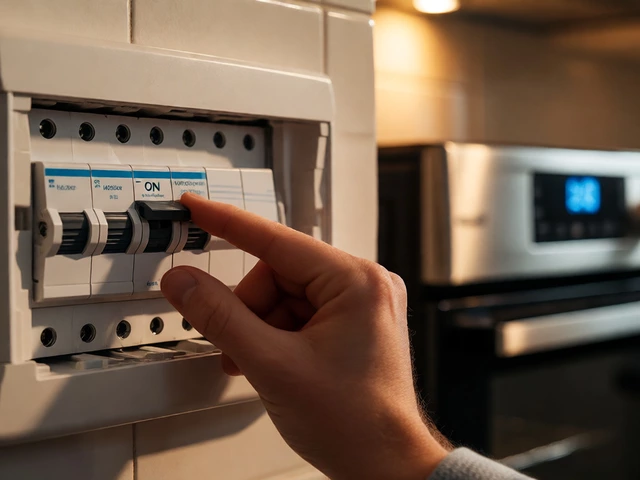
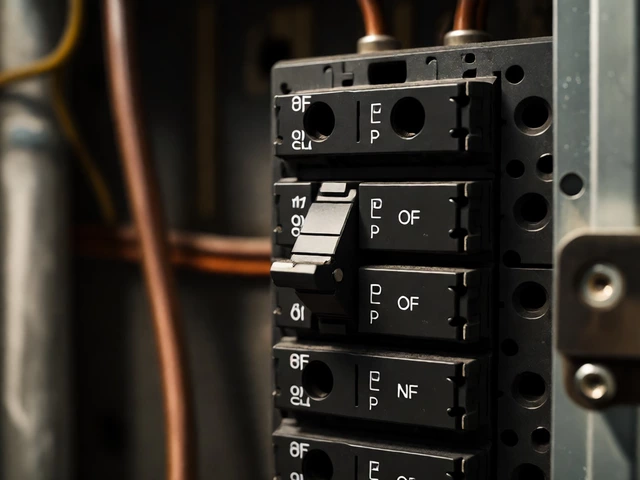
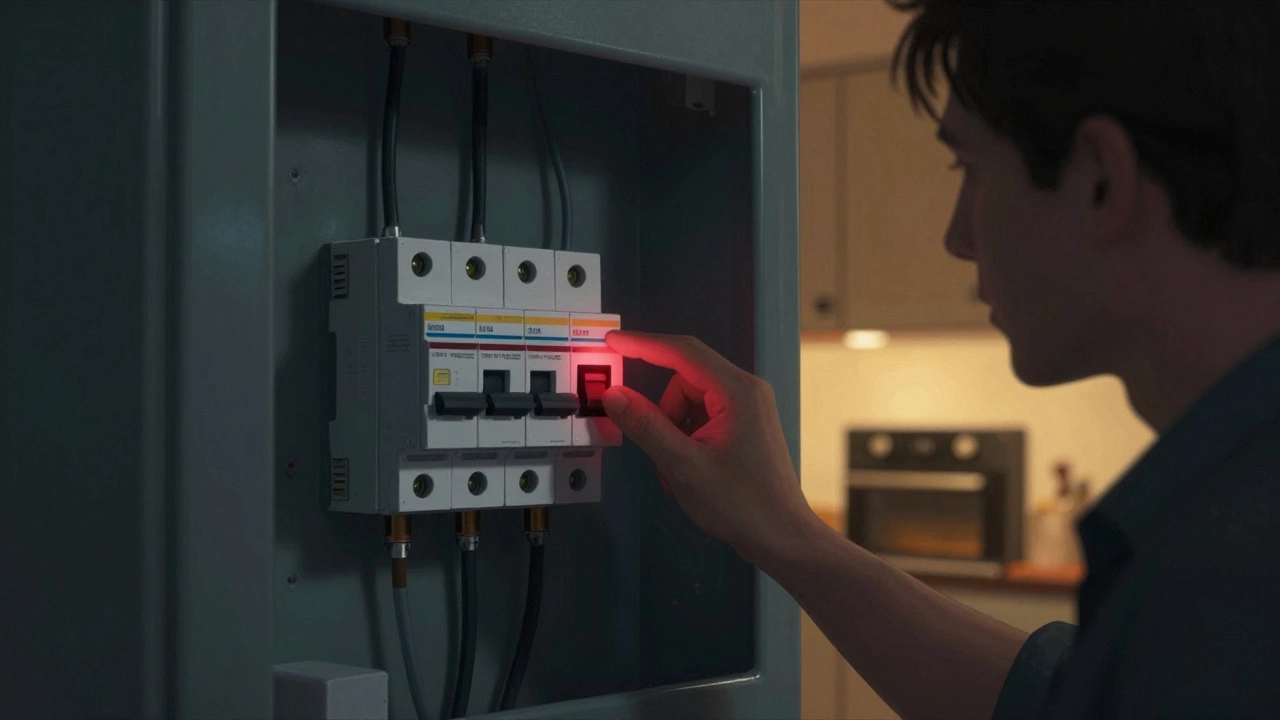
Check your home’s breaker panel. Look for a double-pole breaker labeled “Oven” or “Range.” It should be one big switch that controls both legs. If it’s tripped, it might look like it’s still on - but one side is dead. Flip it fully off, then back on. If it trips again, there’s a short somewhere. If it stays on, test the oven again. If the oven still doesn’t heat, the issue might be a damaged wire in the wall or behind the oven. That’s when you call an electrician.
What to Do Next
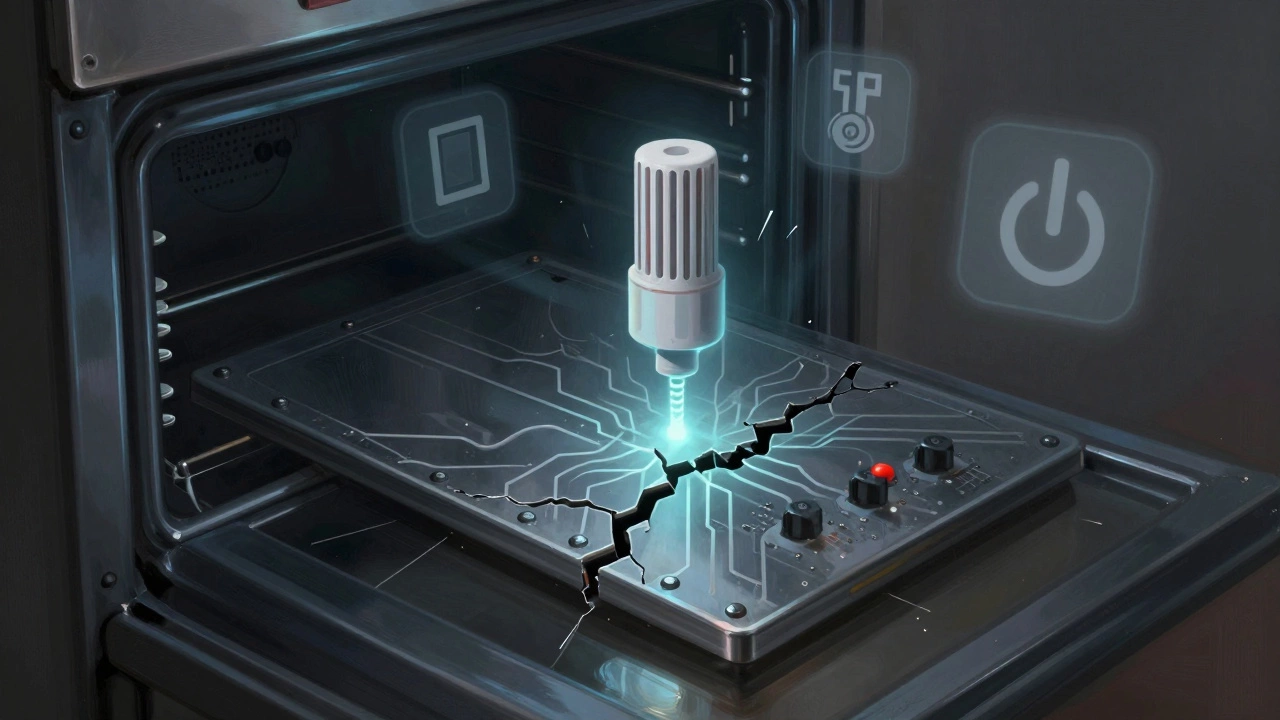
Here’s a quick checklist to follow:
- Turn off power at the breaker.
- Visually inspect the bottom heating element. Is it cracked or blackened?
- If it looks fine, test resistance with a multimeter (1,000-1,100 ohms at room temp).
- Check the double-pole breaker. Flip it off and on.
- If still no heat, test or replace the temperature sensor.
- If all else fails, the control board is likely faulty.
If you’re not comfortable with electrical testing, don’t force it. A licensed appliance technician can diagnose this in under an hour. Most charge $80 to $120 for a service call, and the repair often takes less than 30 minutes.
Don’t ignore this problem. A malfunctioning oven can be a fire hazard if wiring is frayed or a component is overheating. Even if you’re not cooking, it’s worth fixing - especially in Vancouver winters when you rely on your oven to warm the kitchen.
When to Replace Instead of Repair
Here’s a simple rule: if the repair cost is more than half the price of a new oven, walk away. A decent new electric oven costs $500 to $900. So if you’re facing a $400 control board replacement on a 12-year-old unit, it’s time to upgrade. New models are more energy-efficient, have better temperature control, and come with smart features like self-cleaning and Wi-Fi alerts.
Also consider age. Most electric ovens last 13 to 15 years. If yours is older than that, even a simple fix might be a temporary band-aid. Replacing it now saves you from another breakdown next month.
Why does my oven light work but the heating element doesn’t turn on?
The oven light runs on 120 volts, while the heating element needs 240 volts. If one leg of the circuit trips or breaks, the light stays on but the element won’t heat. Check your double-pole breaker and test the wiring behind the oven.
Can a dirty oven stop it from heating?
No, grease or food residue won’t stop the heating element from working. But heavy buildup can insulate the element, making it overheat and fail faster. Clean your oven regularly to extend the life of its parts.
Is it safe to keep using my oven if it’s not heating properly?
It’s risky. A faulty heating element or wiring can overheat nearby components or cause sparks. If the oven is cycling on and off randomly, or you smell burning plastic, stop using it immediately. Unplug it and call a technician.
How do I know if I need a new heating element or a new oven?
If your oven is under 8 years old and only the heating element is broken, replacing it makes sense. If it’s older than 12 years, or if multiple parts are failing (like the thermostat, fan, and element), it’s cheaper and smarter to replace the whole unit. New ovens use 20-30% less energy.
Can a power surge damage my oven’s heating element?
Yes. A surge from lightning or faulty wiring can fry the element or the control board. If your oven stopped heating after a storm or a flicker in the lights, a surge is likely the cause. Consider installing a whole-house surge protector to prevent future damage.