Heat Pump Lifespan Estimator
How Long Will Your Heat Pump Last?
Get a personalized estimate based on your maintenance habits, installation quality, and climate.
Most people don’t think about their heat pump until it stops working. By then, it’s too late to plan. If you’re wondering how long your heat pump will last, you’re not alone. The average lifespan of a heat pump is 15 years. But that number can swing from 10 to 20 years depending on how it’s treated. A unit that gets regular care and is installed properly can easily hit 20. One that’s ignored or poorly set up might give out before 12.
What Affects How Long a Heat Pump Lasts?
Heat pumps aren’t like light bulbs-you can’t just wait for them to burn out. Their life depends on how hard they work and how well they’re looked after. The biggest factors are installation quality, maintenance habits, climate, and usage patterns.
Bad installation is one of the top reasons heat pumps die early. If the ductwork leaks, the refrigerant charge is wrong, or the unit is oversized for the space, it cycles on and off too often. This puts stress on the compressor-the most expensive part. A compressor that starts 10 times a day won’t last as long as one that runs for longer, steadier cycles.
Climate matters too. In places like Florida or Georgia, where heat pumps run year-round for both heating and cooling, they wear out faster than in milder climates like Oregon or Washington. In colder regions, like Minnesota or Maine, heat pumps often need a backup furnace. That means the heat pump doesn’t have to work as hard in freezing temps, which can actually extend its life.
Usage is another factor. If you keep your thermostat set at 72°F in winter and 74°F in summer, your heat pump is working harder than if you let it swing a few degrees. Every time you crank the temperature up or down, the system runs longer and harder. That’s extra wear and tear.
How Maintenance Extends Heat Pump Life
Regular maintenance isn’t optional-it’s the difference between 10 years and 20. Most manufacturers require annual professional service to keep the warranty valid. But even if your warranty’s expired, skipping tune-ups is a false economy.
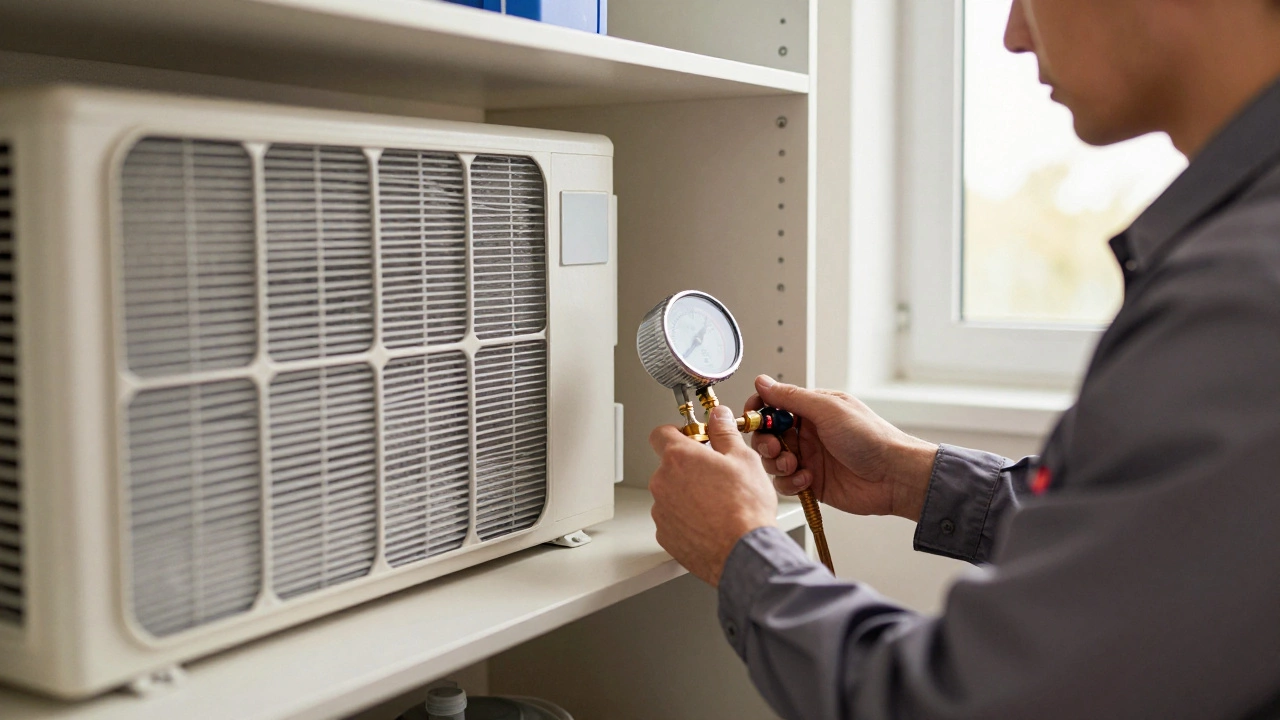
Here’s what happens during a good service visit:
- The technician checks refrigerant levels and fixes leaks
- Clean or replaces air filters
- Inspects electrical connections and tightens them
- Cleans the outdoor coil and removes debris
- Tests the defrost cycle (critical in winter)
- Checks blower motor and belt condition
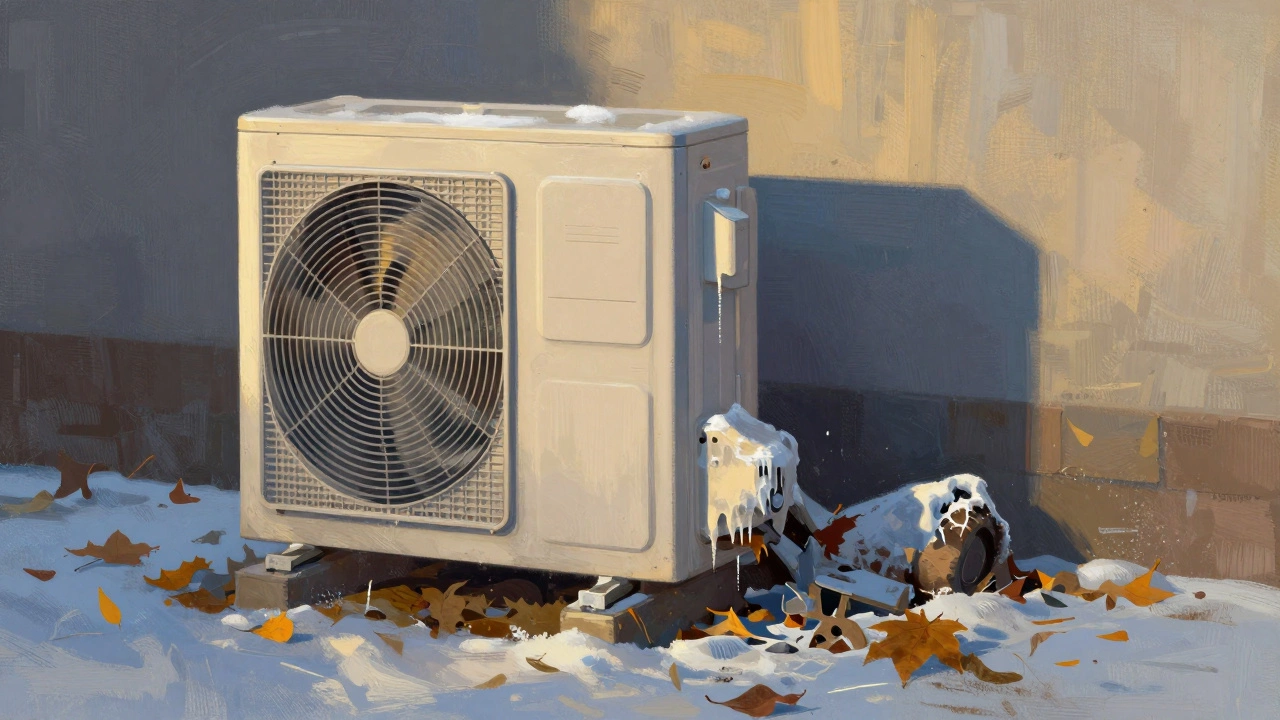
Homeowners often forget about the outdoor unit. Leaves, dirt, and snow can clog the coil. A dirty coil forces the system to work harder, using more electricity and overheating components. I’ve seen units fail after just 8 years because the coil was buried under pine needles and grass clippings.
Changing your air filter every 1-3 months is one of the easiest things you can do. A clogged filter restricts airflow, which strains the blower motor and can cause the evaporator coil to freeze. That’s a common cause of premature failure.
Signs Your Heat Pump Is Approaching End of Life
You don’t need a degree in HVAC to tell when your heat pump is on its last legs. Here are the top five warning signs:
- Strange noises-grinding, screeching, or loud banging mean something’s broken inside. A worn bearing or failing compressor isn’t fixable with a tune-up.
- Increased energy bills-if your electricity use jumps 20% or more without changing your habits, the system is losing efficiency.
- Inconsistent heating or cooling-some rooms are freezing, others are sweltering. That’s often a sign of refrigerant leaks or duct problems.
- Frequent repairs-if you’ve had two or more major repairs in the last two years, you’re spending more on fixes than you would on a new unit.
- Age over 15 years-even if it still works, older units are inefficient. New models are 30-50% more efficient than those made before 2010.
Some people try to stretch a dying heat pump with patches. But if the compressor is failing, replacing it costs $2,000-$3,500. That’s nearly half the price of a new system. At that point, it’s smarter to replace the whole unit.
When to Replace vs. Repair
The 50% Rule is a simple guideline used by most HVAC pros: If a repair costs more than half the price of a new unit, replace it.
Let’s say a new heat pump costs $6,000. If you’re being quoted $3,100 to fix the compressor, walk away. You’re better off with a new, more efficient model that comes with a 10-year warranty and lower monthly bills.
Also consider tax credits and rebates. In 2025, the U.S. Inflation Reduction Act offers up to $2,000 in federal tax credits for high-efficiency heat pumps. Many states and utilities add more-sometimes $1,000 or more on top. That can cut your new unit’s cost by 30% or more.
Older heat pumps use R-22 refrigerant, which is being phased out. It’s expensive and hard to find. New units use R-410A or the newer R-454B, which are more environmentally friendly and cheaper to service.
How to Pick a New Heat Pump
If you’re replacing, don’t just buy the cheapest one. Look for these specs:
- SEER2 rating-aim for 16 or higher. This measures cooling efficiency. Higher means lower summer bills.
- HSPF2 rating-look for 9 or above. This measures heating efficiency. Important if you live where winters are cold.
- Variable-speed compressor-lets the unit run longer at lower speeds, which improves comfort and cuts wear.
- Smart thermostat compatibility-lets you control the system remotely and optimize usage.
Also make sure the installer is licensed, insured, and has good reviews. Ask for a Manual J load calculation. This determines the right size for your home. Too big or too small will shorten the life of any heat pump.
Real-World Examples
A family in Raleigh, North Carolina, had a 2008 heat pump that lasted 17 years. They changed filters every 60 days, had annual service, and kept the thermostat at 68°F in winter. Their unit still worked fine, but they replaced it for the energy savings.
A couple in Cleveland replaced their 2005 unit after 12 years. They never cleaned the outdoor coil. Snow and ice built up every winter. The compressor failed in January. They spent $3,200 on a repair that barely worked for six months.
Another homeowner in Seattle kept their 2002 heat pump going for 21 years. They lived in a mild climate, used a programmable thermostat, and had a technician come every fall. It wasn’t the most efficient, but it worked. They replaced it only because the warranty expired and parts were getting hard to find.
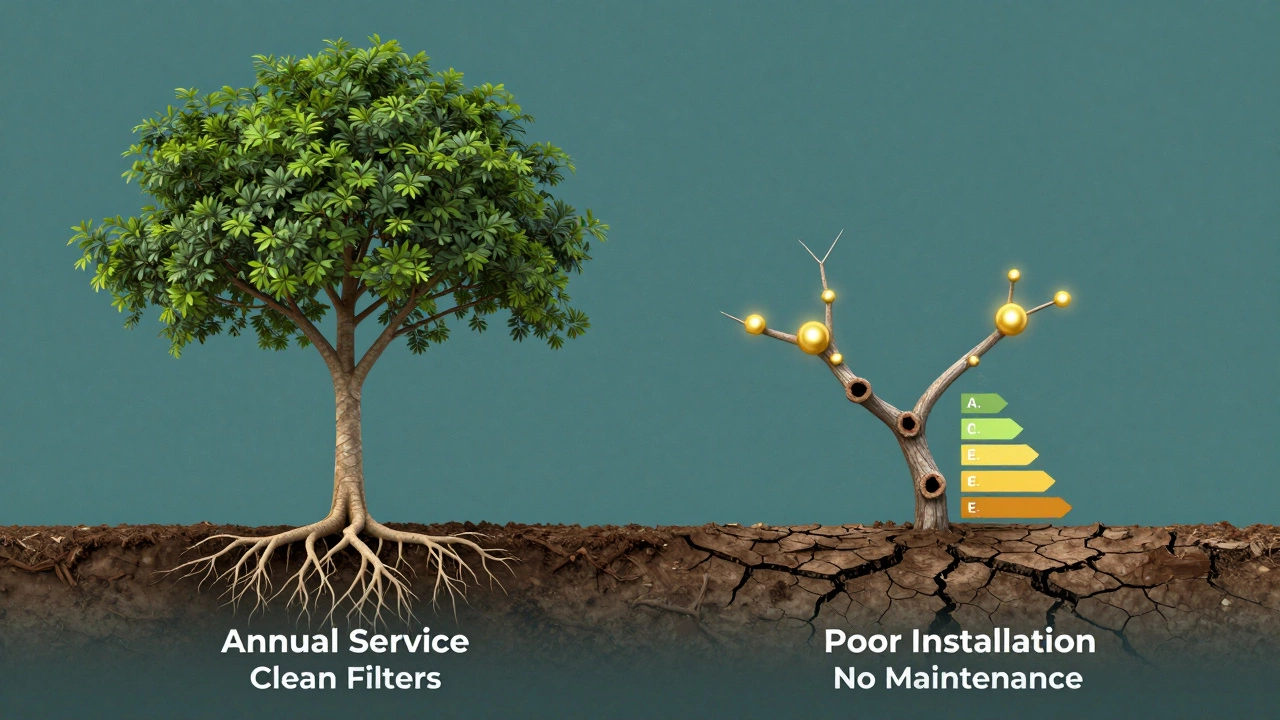
There’s no magic formula. But the pattern is clear: good care = longer life. Neglect = early failure.
Final Thoughts
Your heat pump doesn’t have to die at 15. With basic care, it can last two decades. The key is consistency-clean filters, annual tune-ups, and paying attention to changes in performance. Don’t wait for the system to scream before you act. A small fix today can save you thousands tomorrow.
If you’re approaching 12-13 years, start budgeting. Don’t wait until winter hits and your heat pump gives out. Plan ahead. New units are better, cheaper to run, and often come with financial help. The sooner you replace an aging system, the more you save in the long run.
Can a heat pump last 20 years?
Yes, a heat pump can last 20 years or more-but only with regular maintenance, proper installation, and moderate usage. Units in mild climates that get annual servicing and clean filters often reach this lifespan. Those in harsh conditions or neglected systems rarely make it past 12.
Is it worth repairing a 15-year-old heat pump?
Usually not. If the repair costs more than half the price of a new unit, replacement is smarter. A 15-year-old heat pump is already past its prime. Even if it works after repair, it’s likely inefficient, uses outdated refrigerant, and will need more fixes soon. New models are 30-50% more efficient and come with tax credits.
How often should a heat pump be serviced?
Once a year, ideally before the heating season starts. A professional should check refrigerant levels, clean coils, inspect electrical components, and test the defrost cycle. Homeowners should also replace air filters every 1-3 months depending on usage and pets.
Do heat pumps last longer in warm or cold climates?
Heat pumps tend to last longer in mild climates where they run year-round but aren’t pushed to extremes. In very cold areas, they often work with a backup furnace, which reduces strain. In hot, humid climates, constant cooling cycles increase wear. But poor maintenance affects lifespan more than climate.
What’s the most common cause of early heat pump failure?
The most common cause is poor installation or lack of maintenance. Dirty coils, low refrigerant, clogged filters, and oversized units force the compressor to work too hard. These are preventable issues. Most heat pumps that fail before 10 years do so because of neglect, not age.