Appliance Classifier & Repair Advisor
Unsure about a device? Answer these questions to classify it and get advice on repairs and insurance.
Answer the questions on the left to see the classification and advice.
Classification:
ResultWhy?
Repair Advice
You’re standing in the kitchen, staring at your blender. It plugs into the wall, it makes noise, and it definitely does work for you. But is it technically an appliance? If you’ve ever argued with a friend about whether a toaster counts as an appliance or just "kitchen gear," you aren’t alone. The line between a tool, a fixture, and an appliance gets blurry fast.
Here’s the thing: understanding what actually qualifies as an appliance matters more than you think. It affects how you insure your home, how you budget for repairs, and even how you talk to technicians when something breaks. Let’s clear up the confusion once and for all, so you know exactly what you’re dealing with when you call for help.
The Core Definition: Power and Purpose
At its simplest, an appliance is a machine or device that uses energy (usually electricity) to perform a specific household task. That’s the baseline. But not every plug-in device fits this label comfortably. To be considered a true appliance, a device generally needs three things:
- Energy Consumption: It must use electricity, gas, or water pressure to operate. A manual can opener doesn’t count. An electric one does.
- Specific Function: It performs a distinct chore like cooling, heating, cleaning, or cooking. It’s not just entertainment (like a TV) or communication (like a phone).
- Household Context: It’s designed for domestic use, not industrial manufacturing or office work.
This definition excludes things like smartphones or laptops. Sure, they use power and do tasks, but we categorize them as electronics because their primary function is data processing, not physical labor on your behalf. Your washing machine moves clothes; your laptop processes files. That physical labor is the key differentiator.
Major vs. Minor Appliances: The Big Divide
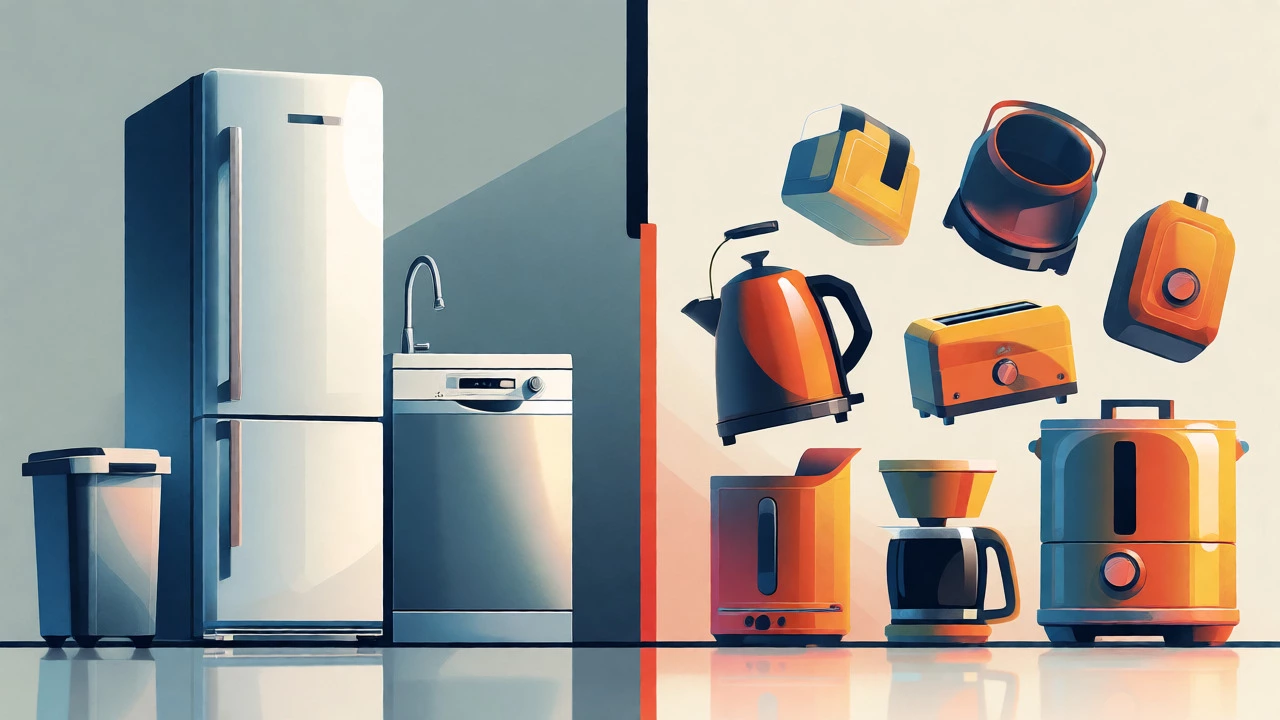
Once you accept the basic definition, the next step is splitting the world of appliances into two camps: major appliances (also called white goods) and minor appliances (or small appliances). This distinction isn’t just semantic; it changes how you maintain them and who fixes them.
| Feature | Major Appliances | Minor Appliances |
|---|---|---|
| Size & Weight | Large, heavy, often fixed or semi-fixed | Portable, lightweight, easy to move |
| Cost | $500 - $3,000+ | $20 - $300 |
| Lifespan | 10-15 years | 3-7 years |
| Repairability | Often worth repairing | Often cheaper to replace |
| Examples | Fridge, Oven, Washing Machine | Toaster, Blender, Kettle |
Major appliances are the backbone of your home. They handle big chores: keeping food cold, cleaning clothes, heating water. Because they’re expensive and complex, you invest in maintenance. You clean the coils on your fridge or descale your dishwasher. Minor appliances, on the other hand, are disposable by design. If your $40 coffee maker dies after four years, you don’t call a technician; you buy a new one. Knowing which category your device falls into saves you from wasting time and money on unnecessary repairs.
Where Does the Gray Area Live?
This is where most people get tripped up. What about a microwave? It sits on a counter like a minor appliance, but it cooks like a major one. Technically, microwaves are often classified as major appliances if they are built-in over-the-range models, but countertop versions usually fall under minor or mid-sized appliances. Insurance policies vary here, so check your coverage.
Then there’s the HVAC system. Is an air conditioner an appliance? Yes. Specifically, it’s a climate control appliance. Unlike a window unit, central air conditioning systems are integrated into the house structure, making them hybrid entities-part appliance, part building fixture. However, portable AC units are clearly minor appliances.
What about smart devices? A smart thermostat controls your furnace. It’s electronic, but it’s integral to an appliance system. Most experts consider the thermostat itself a component, while the furnace is the appliance. Similarly, a robot vacuum is a self-contained cleaning device. It fits the definition of a minor appliance, albeit a high-tech one. The rule of thumb: if it performs a physical household task autonomously, it’s an appliance.
Why Classification Matters for Repairs
If you’re reading this because something broke, you need to know what you’re calling. When you dial a service provider, saying “my appliance is broken” is too vague. Are they sending someone who specializes in refrigeration, or someone who handles laundry machines?
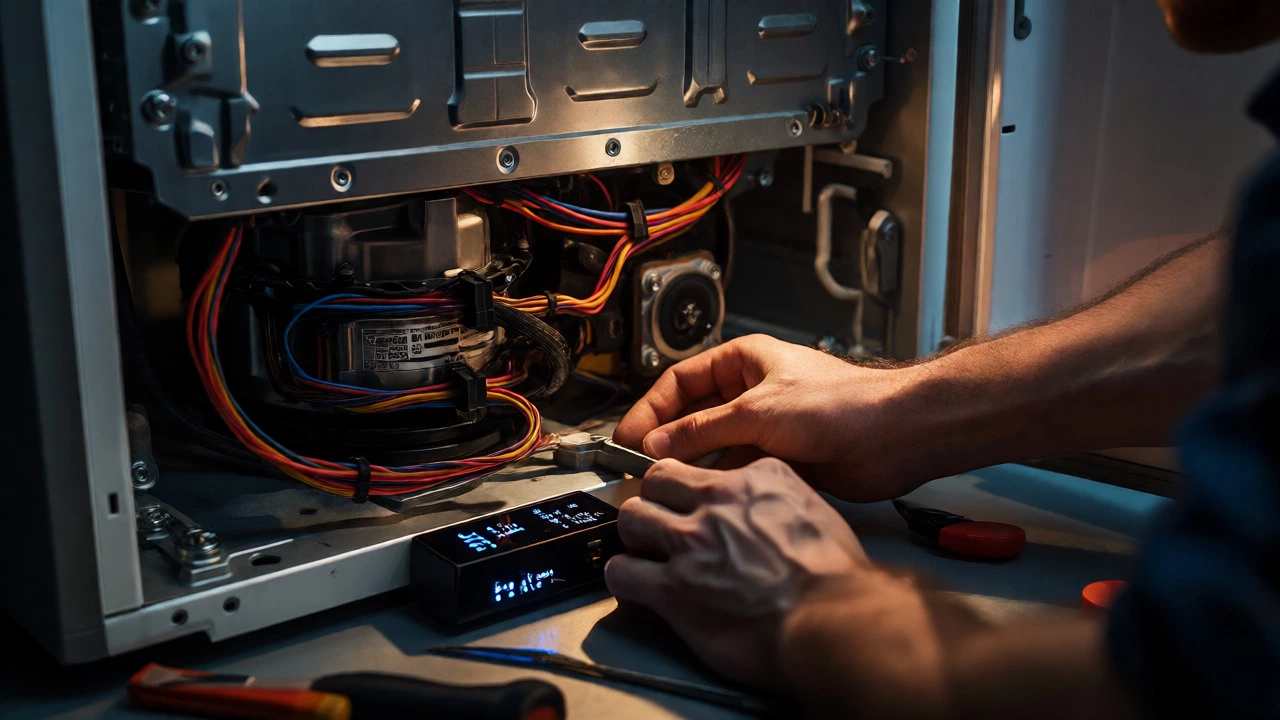
For major appliances, specialized knowledge is required. Fixing a compressor in a refrigerator requires handling refrigerants and electrical diagnostics. A handyman might struggle with that. For minor appliances, DIY fixes are often viable. Replacing a fuse in a toaster or unclogging a steam iron is straightforward. Understanding the classification helps you decide whether to troubleshoot yourself or hire a pro.
Consider cost-effectiveness. If a minor appliance costs $50 and the repair quote is $80, throw it away. If a major appliance costs $1,200 and the repair is $200, fix it. This simple math applies directly to the major/minor divide. Don’t let emotional attachment to a brand cloud your judgment on whether an item is truly worth saving.
Insurance and Warranty Implications
Your homeowner’s insurance policy likely covers damage to major appliances from covered perils like fire or burst pipes. However, mechanical breakdowns (wear and tear) are rarely covered unless you have a specific home warranty. Home warranties typically list covered appliances explicitly. If your policy says “built-in appliances,” it might exclude your freestanding range but include your oven if it’s installed under the counter.
Always read the fine print. Some insurers distinguish between “fixtures” (things attached to the house, like a ceiling fan) and “appliances” (things that plug in). Misclassifying an item could lead to a denied claim. For example, if you install a dishwasher, it becomes a built-in appliance. If it leaks and ruins your floor, coverage depends on whether the leak was due to installation error or product defect.
Tech Trends: The Rise of Connected Appliances
We are seeing a shift where appliances are becoming smarter. Refrigerators now have screens, ovens connect to Wi-Fi, and washers send alerts to your phone. These are still appliances, but they introduce software issues alongside mechanical ones. If your smart fridge stops connecting, it’s not necessarily an appliance failure-it’s a network issue. Troubleshooting these devices requires a dual skill set: understanding mechanics and basic IT connectivity.
This trend blurs the line further. Is a smart speaker an appliance? No, it’s an audio device. But if that speaker controls your lights and thermostat, it acts as a hub. The appliance remains the lightbulb or the thermostat, not the controller. Keep this distinction in mind when buying “smart” versions of traditional appliances. You’re paying for convenience, not a change in fundamental category.
Practical Checklist: Is It an Appliance?
Still unsure? Run through this quick mental checklist:
- Does it plug in or use gas/water? If no, it’s probably a tool or furniture.
- Does it perform a physical household chore? Cleaning, cooling, heating, cooking? If yes, proceed.
- Is it primarily for entertainment or information? If yes, it’s likely electronics.
- Is it large and stationary? Likely a major appliance. Small and portable? Likely minor.
By applying these filters, you can confidently categorize almost any device in your home. This clarity empowers you to make better decisions about maintenance, replacement, and insurance.
Is a television considered an appliance?
Generally, no. Televisions are classified as consumer electronics because their primary function is displaying information and entertainment rather than performing a physical household task like cleaning or cooking. While some older definitions included TVs, modern standards separate electronics from appliances based on function.
What is the difference between a fixture and an appliance?
A fixture is permanently attached to the property, such as a ceiling fan, built-in lighting, or cabinetry. An appliance is typically a standalone unit that plugs in or connects via flexible lines (water/gas), like a washing machine or microwave. Fixtures stay with the house during a sale; appliances may or may not, depending on local laws and agreements.
Are smart home devices considered appliances?
Most smart home devices, like smart speakers or hubs, are electronics. However, if the device itself performs a physical task, such as a robotic vacuum cleaner or a smart thermostat controlling heat, it is considered an appliance or a component of one. The key is whether it physically alters the environment or cleans/moves items.
Does a water heater count as an appliance?
Yes, a water heater is a major appliance. It uses energy (electricity or gas) to perform the specific household task of heating water for bathing and cleaning. It is often categorized separately as plumbing equipment, but in the context of home services and warranties, it is treated as a major appliance requiring professional repair.
Can I repair minor appliances myself?
Often, yes. Common issues like blown fuses, clogged filters, or loose cords in kettles, toasters, and blenders are easy to fix with basic tools. However, always unplug the device first. If the repair involves internal circuit boards or sealed components, it’s usually more cost-effective to replace the item entirely.