Oven Control Board Cost Estimator
Estimated Total Cost
Based on current market rates
Staring at a blank display or an oven that won’t heat up is frustrating enough. The panic sets in when you think about the bill. Is it going to be $200? $800? Or do you need to buy a whole new range? The short answer is that replacing an oven control board usually costs between $350 and $700 total. However, that number swings wildly depending on your brand, whether you hire a pro, and if you have the technical chops to do it yourself.
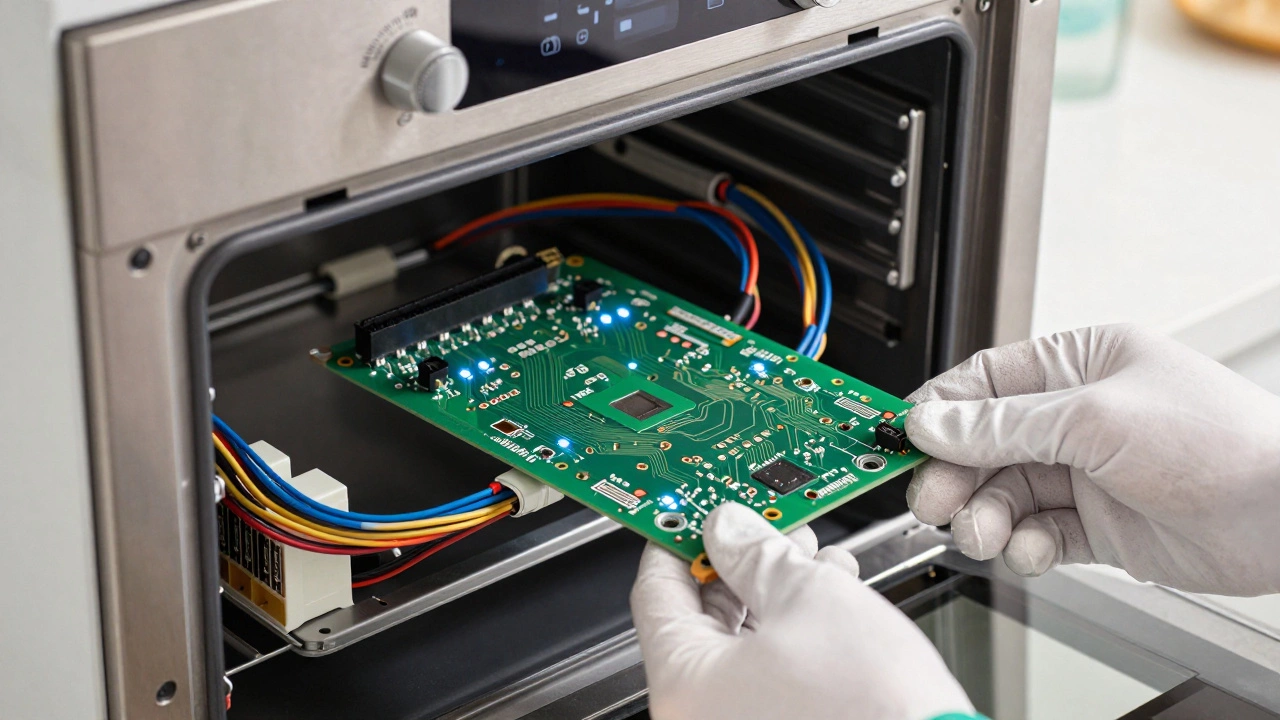
The control board is essentially the brain of your oven. It tells the heating elements when to turn on, manages the temperature sensors, and runs the clock. When this circuit board fails, the oven becomes a paperweight. Before you call a technician, it helps to understand exactly where that money goes. This guide breaks down the parts, the labor, and the hidden costs so you aren't caught off guard.
Quick Summary: Key Takeaways
- Total Professional Cost: Expect to pay between $400 and $800 for a certified technician to diagnose and replace the board.
- DIY Total Cost: If you do it yourself, you only pay for the part ($100-$400) plus basic tools.
- Part Variance: Generic boards are cheaper but risky; OEM (Original Equipment Manufacturer) parts cost more but guarantee fit.
- Diagnostic Fees: Most pros charge $75-$150 just to look at the problem, which is often waived if you proceed with the repair.
- Lifespan: A new control board typically lasts 7-10 years if installed correctly and protected from power surges.
Breaking Down the Oven Control Board Price
The biggest variable in your final bill is the part itself. An electronic control board is a printed circuit board containing microprocessors and relays that manage oven functions. These aren't generic off-the-shelf items like a lightbulb. They are custom-made for specific model numbers.
If you own a standard mid-range brand like Whirlpool, GE, or Frigidaire, the replacement board will likely cost between $100 and $250. These brands produce millions of units, keeping supply chain costs lower. You can find these parts easily on sites like PartSelect or RepairClinic.
However, if you have a premium brand like Wolf, Sub-Zero, Viking, or high-end Samsung/LG models, the price jumps significantly. For these luxury appliances, a single control board can run $300 to $600. Some proprietary European brands might even require ordering directly from overseas, adding weeks to the wait time and increasing the cost due to shipping tariffs.
There is also the option of aftermarket or universal boards. Third-party manufacturers make boards that mimic the original signals. These can cost as little as $50. While tempting, they often lack the precise calibration of the original, leading to temperature inaccuracies. In my experience living in Vancouver, where we rely heavily on our ovens for winter cooking, I wouldn't risk baking a holiday turkey on a cheap universal board unless the oven was otherwise trash.
| Brand Tier | Examples | Part Cost Range | Availability |
|---|---|---|---|
| Budget/Mid-Range | Whirlpool, GE, Maytag, Frigidaire | $100 - $250 | High (Often in stock) |
| Premium | Samsung, LG, Bosch, KitchenAid | $200 - $400 | Moderate |
| Luxury/Pro-Style | Wolf, Viking, Sub-Zero, Thermador | $350 - $700+ | Low (May require special order) |
The Hidden Cost: Labor and Diagnostic Fees
Buying the part is only half the battle. Unless you are comfortable stripping down the back panel of your oven and handling high-voltage connections, you’ll need a technician. Here is how pros charge in 2026.
Most appliance repair companies charge a service call fee or diagnostic fee. This covers the drive time and the first hour of troubleshooting. In major cities like Vancouver, Toronto, or New York, this fee ranges from $80 to $150. The good news? Many reputable technicians will waive this fee if you authorize the repair on the same visit. So, if you’re ready to fix it immediately, you shouldn't pay extra for the diagnosis.
Once the diagnosis is confirmed, the labor cost comes into play. Replacing a control board is considered a medium-difficulty job. It involves removing the oven door, taking out the racks, unscrewing the back panel, disconnecting wires, and swapping the board. It typically takes a pro 45 minutes to 1.5 hours.
Labor rates vary by region. In Canada and the US, hourly labor for appliance repair sits between $90 and $150 per hour. Since most jobs take less than two hours, many companies offer a flat rate for "standard replacements." Expect to add $150 to $300 to the part cost for professional installation.
So, the math looks like this:
Part ($200) + Labor ($200) = $400 Total.
For a luxury brand:
Part ($500) + Labor ($250) = $750 Total.

Can You Replace It Yourself? (The DIY Route)
If you have a screwdriver, a multimeter, and steady hands, you can save significant money. The DIY route cuts your cost down to just the price of the part. But before you start, ask yourself: Do I know how to identify the correct part number?
Using the wrong board is the most common DIY mistake. Ovens look similar on the outside, but the internal wiring harnesses differ slightly between model years. You must locate the rating plate inside the oven door frame or on the side wall. It will list the Model Number and Serial Number. Enter this into a parts retailer’s website to get the exact match.
Here is what the process generally involves:
- Disconnect Power: Unplug the oven or turn off the breaker. Never skip this. Even when off, capacitors can hold a charge.
- Access the Board: Remove the oven racks and door. Unscrew the back panel. On some slide-in ranges, you may need to remove the top trim piece.
- Document Connections: Take a photo of every wire connected to the old board. Label them with tape if necessary. Mixing up a sensor wire with a heating element wire can blow the new board instantly.
- Swap and Test: Remove the old board, install the new one, reconnect wires exactly as photographed, and restore power.
If you mess up the wiring, you could damage other components like the temperature sensor or the heating elements. That turns a $200 repair into a $600 repair. If the thought of electricity makes you nervous, hire a pro. Your safety and the longevity of the appliance are worth the extra cash.
Is It Worth Repairing or Should You Buy New?
This is the million-dollar question. Appliance experts use the "50% Rule": If the repair costs more than 50% of the price of a new, comparable appliance, consider replacing it.
In 2026, a decent new electric range starts around $800 and goes up to $2,500+ for smart features. If your oven is 15 years old and needs a $400 control board, that’s close to the threshold. However, consider the age and condition of the rest of the unit. Are the heating elements working? Is the door seal tight? Does it clean well?
If the oven is otherwise in good shape, repairing the control board is almost always the smarter financial move. A new board gives you another 7-10 years of life. Plus, buying a new appliance involves delivery fees, haul-away fees for the old one, and potential installation charges for gas lines or hardwired electrical connections.
Also, consider environmental impact. Manufacturing a new steel-and-glass oven has a massive carbon footprint. Extending the life of your current appliance is the eco-friendly choice.
Signs Your Control Board Is Failing
Don’t wait until the oven dies completely. Catching issues early can sometimes prevent total board failure. Watch for these symptoms:
- Blank Display: The clock and temperature readout are dead, even though the oven is plugged in.
- Erratic Heating: The oven heats up but doesn’t shut off, or it shuts off too early. This suggests the board isn't reading the temperature sensor correctly.
- Error Codes: Modern ovens flash codes like F9, E0, or SF. These often point directly to communication errors between the board and sensors.
- Unresponsive Controls: You press buttons, but nothing happens. The touchpad interface may be fried.
- Burning Smell: A distinct acrid smell coming from the back of the oven indicates overheating electronics on the board.
If you see any of these, check your home’s electrical outlet first. Sometimes a tripped GFCI or loose plug mimics board failure. If power is good, the board is likely the culprit.
Preventing Future Control Board Failures
Control boards don't usually fail without reason. They are sensitive to voltage spikes and moisture. To protect your investment after the repair:
Use a Surge Protector. Ovens draw high amperage. Lightning strikes or grid fluctuations can send surges through your home wiring. While you can't plug a hardwired oven into a strip, installing a whole-house surge protector at your main electrical panel is a wise investment for all major appliances.
Avoid Steam Exposure. When self-cleaning or roasting meats, keep the kitchen well-ventilated. Excessive humidity can seep into the back panel over time, causing corrosion on the board's solder joints. Ensure the rear access panel is screwed back tightly after any maintenance.
Check Door Seals. A bad door seal forces the oven to work harder, cycling the heating elements more frequently. This increased thermal stress can shorten the lifespan of the relays on the control board.
How long does an oven control board last?
On average, an oven control board lasts between 7 and 10 years. However, this varies based on usage frequency, power quality in your home, and manufacturing defects. Premium brands often use higher-quality components that may last longer, while budget models might fail sooner due to cheaper capacitors and relays.
Can I replace just the clock module instead of the whole board?
In older ovens (pre-2000), the clock/timer was often a separate mechanical or simple electronic unit. In modern digital ovens, the clock function is integrated into the main control board. If the clock is dead, the entire board usually needs replacement. There is no separate "clock module" to swap in contemporary models.
Why is my oven control board blinking?
Blinking lights or error codes indicate the board has detected a fault. Common causes include a broken temperature sensor, a disconnected wire, or a failed relay within the board itself. Refer to your owner’s manual for the specific error code. Often, resetting the oven by turning off the breaker for 60 seconds can clear temporary glitches, but persistent blinking usually means hardware failure.
Does insurance cover oven control board repairs?
Standard homeowners or renters insurance does not cover normal wear and tear or mechanical breakdowns. However, if the control board failed due to a lightning strike or a power surge caused by an external event, some policies may cover it under "appliance protection" riders. Check your policy details. Alternatively, extended warranties purchased at the time of sale often cover control boards for 1-5 years.
What is the difference between a control board and a user interface board?
Some high-end ovens split the electronics into two boards: the main control board (which handles heating logic) and the user interface board (which handles the touchscreen/buttons). If your oven heats correctly but the screen is unresponsive, you might only need to replace the cheaper interface board ($50-$150) rather than the expensive main control board. A technician can diagnose which specific board is faulty.