Oven Repair vs. Replace Decision Tool
Use this tool to apply the "50% Rule" and assess common failure scenarios for your electric oven.
1. Financial Context
2. Failure Scenario
Moderate: Core function, usually worth fixing if clean.
Deal-Breaker: Expensive, high risk of future failure.
Multiple: Sign of end-of-life.
Verdict
You open the door to your kitchen, expecting dinner, but find cold air and a blinking error code. Your electric oven is five years old. It’s not ancient, but it’s definitely out of its honeymoon phase. The technician quotes you $250 for a part and labor. Do you pay up or start browsing new appliances?
This isn't just about money; it's about value. A five-year-old oven sits in a tricky middle ground. It’s too new to throw away without guilt, but old enough that hidden issues might be lurking. Let’s break down exactly when you should fix it and when you should cut your losses.
The 50% Rule: A Simple Math Check
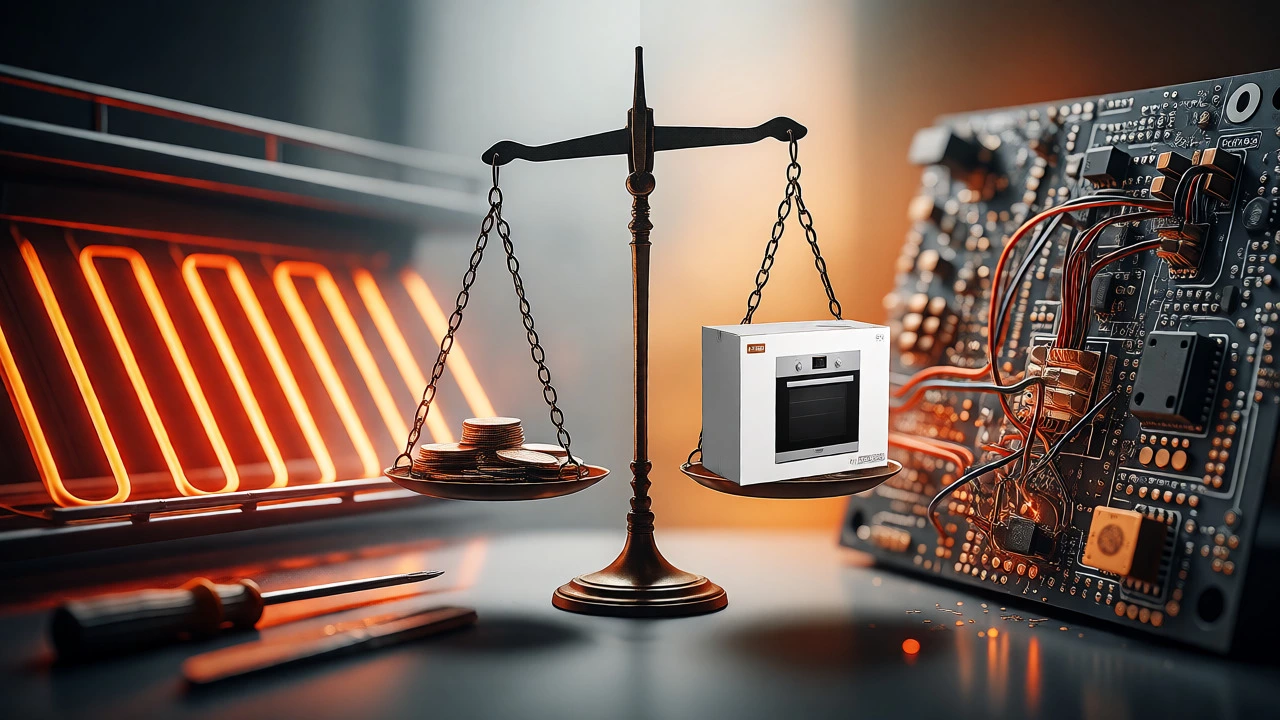
Appliance technicians often use a simple heuristic called the 50% Rule. If the cost of the repair exceeds 50% of the price of a brand-new replacement unit, you should probably buy a new one. But here’s the catch: this rule assumes the rest of the oven is healthy.
For a standard mid-range electric oven costing around $1,000 CAD today, a $400 repair is borderline. However, if you have a high-end double oven that cost $3,000 originally, a $400 repair is a bargain. Context matters more than raw numbers. You need to look at what broke, not just how much it costs.
What Broke Matters More Than How Old It Is
Not all failures are created equal. Some parts are cheap consumables; others are structural disasters. Here is how to categorize common faults in a five-year-old unit:
- Cheap Fixes (Do These): Door hinges, light bulbs, rack guides, or minor control panel buttons. These are low-stress repairs. If the heating element works fine, fixing a hinge keeps your current oven running perfectly for another few years.
- Moderate Fixes (Evaluate Carefully): Heating elements, thermostats, or cooling fans. A bake element might cost $80 plus labor. If the rest of the oven looks clean and functions well, this is usually worth it. The core engine of the oven is still good.
- Deal-Breakers (Replace): Control board failures, main harness shorts, or enamel peeling inside the cavity. Control boards on modern ovens are expensive ($300-$600) and prone to failing again if voltage spikes occurred. If the enamel is bubbling, heat escapes unevenly, and cleaning becomes a nightmare.
If your issue falls into the "Deal-Breaker" category, walk away. Replacing a control board on a five-year-old oven is like putting a new transmission in a car with a cracked engine block.
The Hidden Cost of Downtime
We often forget that time is money. In Vancouver, where I live, waiting for a specialized part can take two weeks. Can you cook without an oven? If you rely on meal prep for work lunches, losing your oven for 14 days is a massive inconvenience.
New ovens are available immediately. Big-box retailers and local appliance stores stock popular models. If you choose repair, ask the technician: "How long until the part arrives?" If the answer is "more than a week," factor in the cost of eating out or using a countertop toaster oven. Sometimes, paying $100 extra for immediate availability beats a cheaper repair that leaves you hungry.
Lifespan Expectations: Why Five Years Is a Turning Point
According to data from Consumer Reports, the average lifespan of an electric oven is 13 to 15 years. At year five, you are roughly 40% through its life. Statistically, the likelihood of a second major failure within the next three years increases significantly after the first major breakdown.
Modern ovens are packed with electronics. Older mechanical ovens were simpler and easier to fix. Today’s digital interfaces, convection fans, and smart features introduce more points of failure. When one electronic component dies, it often stresses neighboring components. This is why we see a cluster of failures in older units. Fixing one thing now might trigger another repair six months later.
| Scenario | Estimated Repair Cost (CAD) | Recommendation | Reasoning |
|---|---|---|---|
| Heating Element Failure | $150 - $250 | Repair | Core function restored; low risk of cascade failure. |
| Control Board Error | $350 - $550 | Replace | High cost relative to value; likely to fail again soon. |
| Door Glass Shattered | $200 - $300 | Depends | Only repair if frame is intact; otherwise, safety hazard. |
| Multiple Minor Issues | $400+ total | Replace | Symptom of general wear; better to get warranty on new unit. |
Energy Efficiency: The Silent Savings Factor
Your five-year-old oven was efficient when bought. But technology moves fast. Newer models use better insulation and smarter fan motors. While the energy savings might seem small-perhaps $20 to $40 per year-they add up over ten years.
More importantly, consider functionality. Have you ever wanted true convection cooking? Or a faster preheat time? Many users stick with their old oven because it "still works," ignoring how much better modern options perform. If you cook frequently, upgrading isn't just about reliability; it's about performance. A new oven with precise temperature control can save you from burnt edges and undercooked centers, improving your food quality immediately.
When to Definitely Keep Your Current Oven
Despite the risks, there are clear cases where repairing is the smart move. First, if you bought a premium brand like Wolf, Sub-Zero, or Miele. These appliances are built to last decades. Parts are expensive, but they are designed to be serviced. Throwing away a $4,000 oven because of a $300 sensor is financially painful.
Second, if the oven matches your custom cabinetry. In many homes, especially in older Vancouver neighborhoods, appliances are built-in. Removing an old oven and installing a new one might require carpentry work, trim changes, or electrical updates. That extra $500 in installation costs can tip the scale back toward repair. Always check the dimensions before buying a replacement.
Check Your Warranty Before You Call Anyone
Many manufacturers offer extended warranties on specific parts, such as the heating element or the interior coating. Even if the general warranty expired, some brands cover critical components for seven or ten years. Dig out that receipt or check the serial number online. If you are covered, the repair is free or nearly free. Never pay full price without checking this first.
Also, consider credit card protection. Did you buy the oven with a premium credit card? Many cards extend the manufacturer’s warranty by one year automatically. For a five-year-old oven, this might be a long shot, but it’s worth a quick call to your bank.
DIY or Professional? Know Your Limits
Can you fix it yourself? Replacing a heating element is straightforward: unplug the oven, remove two screws, swap the coil, and plug it back in. If you are handy, you save the labor cost ($100-$150). However, dealing with gas lines, internal wiring, or sealed systems requires a pro.
For electric ovens, always disconnect power at the breaker box, not just the wall switch. Residual charge can linger in capacitors. If you aren't comfortable working with electricity, hire a technician. Safety isn't worth the risk of saving a hundred bucks.
The Verdict: Trust Your Gut, Verify With Data
So, is it worth it? If the repair is under $200 and fixes a single isolated issue, yes. If the repair is over $400 or involves the brain of the oven, no. Look at the overall condition. If the racks are rusted, the glass is foggy, and the timer flickers, let it go. If everything else is pristine, keep it alive.
Remember, a new oven comes with peace of mind and a fresh warranty. A repaired oven is a gamble on future reliability. Weigh the stress of potential future breakdowns against the upfront cost. For most people with a standard mid-range electric oven, a major repair at year five is a signal to start shopping.
How long do electric ovens typically last?
The average lifespan of an electric oven is between 13 and 15 years. High-end brands may last longer with proper maintenance, while budget models may fail sooner due to lower-quality components.
Is it cheaper to repair or replace an oven?
It depends on the age and the specific fault. Generally, if the repair cost exceeds 50% of the replacement cost, buying new is more economical. For ovens under 5 years old, repair is usually the best option unless the control board fails.
What are the most common signs my oven needs replacing?
Signs include uneven cooking despite calibration, excessive smoke during operation, broken door seals that cannot be replaced, peeling interior enamel, and frequent electronic glitches or error codes.
Can I replace just the heating element myself?
Yes, replacing a bake or broil element is a common DIY task. It usually requires unscrewing the element bracket inside the oven cavity and reconnecting two wires. Ensure the power is completely off at the circuit breaker before starting.
Does repairing an oven void the remaining warranty?
Using unauthorized parts or performing DIY repairs incorrectly can void any remaining manufacturer warranty. If your oven is still under warranty, contact the manufacturer or an authorized service provider first.