Electric Range Repair vs. Replace Calculator
Tip: Don't forget to add any non-refundable diagnostic fees if you've already had the oven checked.
Your Recommendation
...Total Repair Cost
$0
Total Replacement Cost
$0
Additional Factors to Consider:
- The 50% Rule: If repair costs exceed 50% of a new equivalent model, replacement is usually better financially.
- Brand Quality: If you own a premium brand (Viking, Wolf), repairs are often worth more than with builder-grade units.
- Multiple Failures: If two unrelated systems fail simultaneously, it may indicate deeper wiring issues.
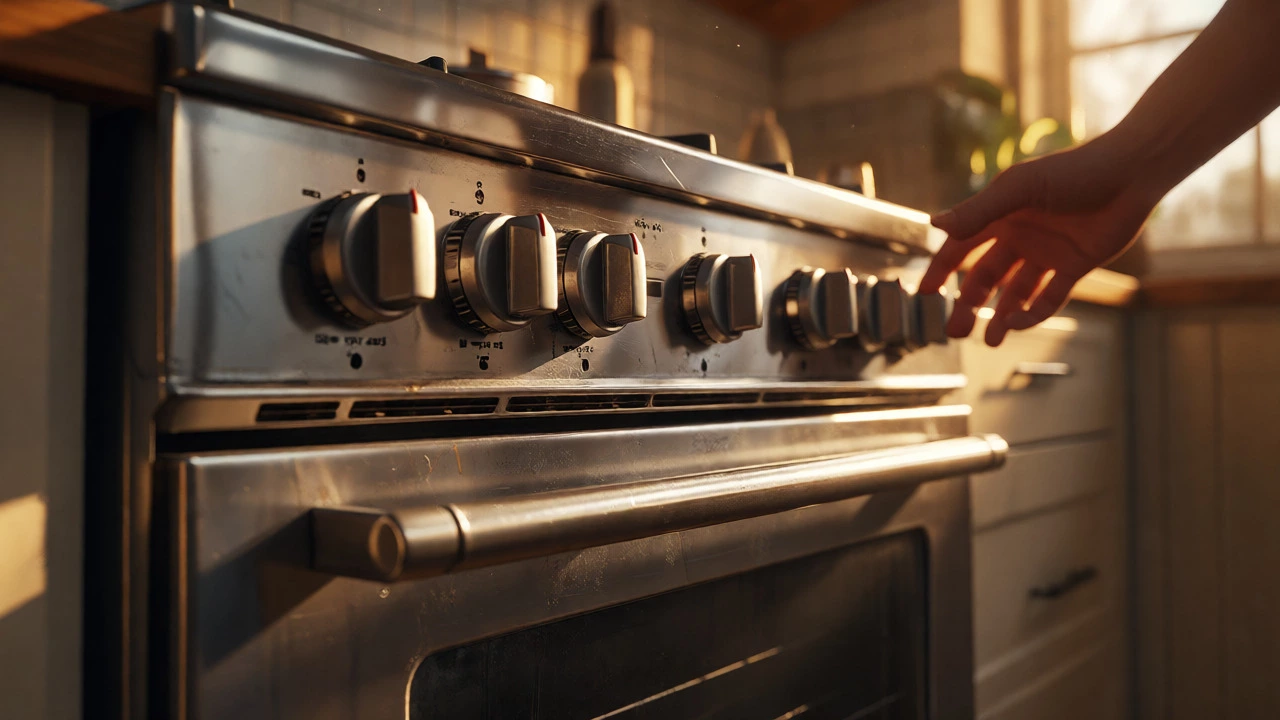
You stare at your electric range, which has served you faithfully for a decade. The bottom heating element just burned out, or maybe the thermostat is acting up again. You pull out your phone to search for an appliance technician, but then doubt creeps in. Is this old workhorse worth saving, or are you throwing money into a sinking ship?
This is one of the most common dilemmas homeowners face. There is no single "yes" or "no" answer because it depends entirely on the specific problem, the type of failure, and what kind of new appliance you want to buy. But we can break down the math and the logic so you stop guessing and start deciding.
The 50% Rule: A Simple Starting Point
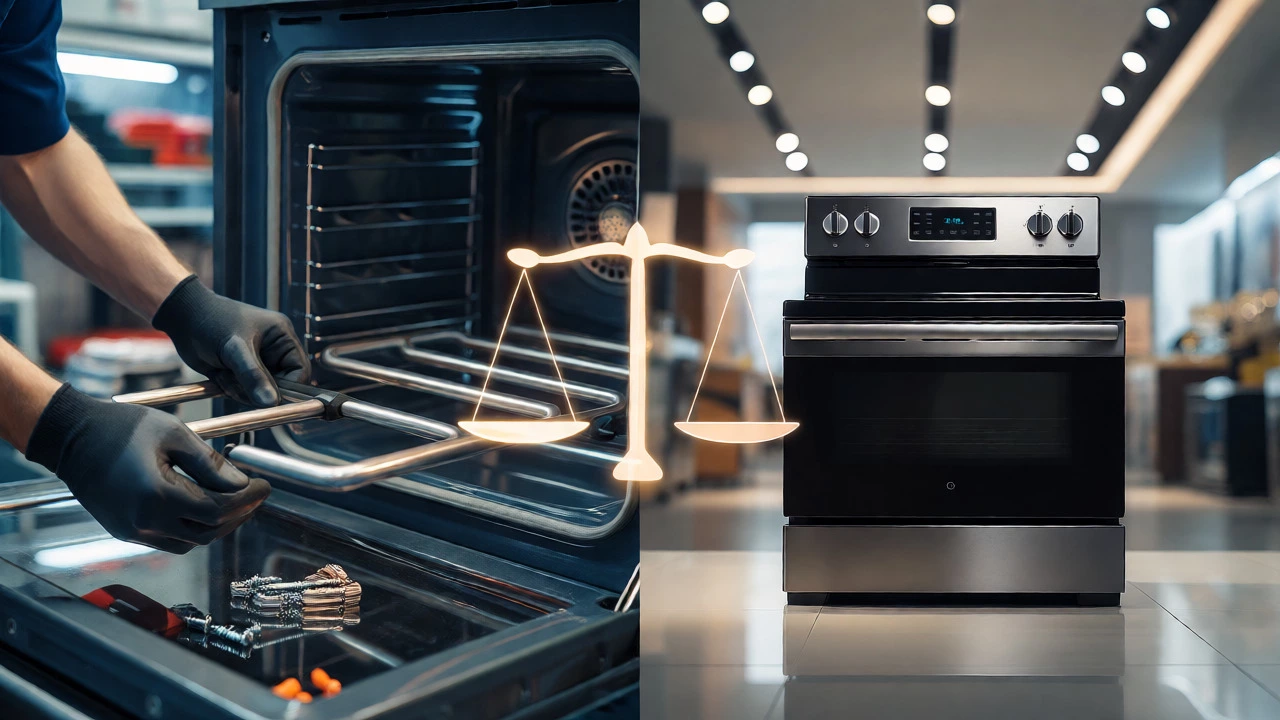
Most appliance technicians use a rule of thumb called the 50% rule. If the cost of the repair exceeds 50% of the price of a brand-new equivalent model, you should probably replace it. If it’s less than 50%, repair it.
Let’s make this concrete. Say your electric range needs a new control board. That part might cost $250, plus $150 for labor. Total: $400. A basic new electric range costs about $600 to $800. Since $400 is more than half of $600, replacement wins. But if you only need a door handle switch that costs $30 plus $100 labor ($130 total), repairing is clearly the smarter financial move.
However, this rule ignores quality. A $600 builder-grade replacement isn’t comparable to a high-end existing unit. If you own a premium brand like Viking or Wolf, a $600 replacement might be a downgrade in performance. In those cases, even a 60% repair cost might be worth it to keep the superior cooking experience.
Diagnosing the Problem: What Actually Broke?
Not all breakdowns are created equal. Some failures are minor annoyances; others signal the end of the line. Here is how to categorize the issue before you call anyone.
- The "Easy Fixes": These are usually worth repairing regardless of age. Think broken door handles, faulty light bulbs, a jammed drawer slide, or a single burnt-out bake element. Parts are cheap ($20-$80), and labor is minimal. Your 10-year-old oven likely has plenty of life left if these are the only issues.
- The "Middle Ground": Problems with the clock/timer, a single burner switch, or a thermostat. Labor dominates the cost here. If the rest of the oven works perfectly, fixing these keeps you from buying a whole new unit for a small inconvenience.
- The "Deal Breakers": Main control board failure, cracked glass cooktop, or severe rust/corrosion inside the cavity. Control boards often fail due to power surges or heat stress. Replacing them is expensive and risky-if the board was fried by a surge, other components might be damaged too. Cracked glass cannot be repaired; it must be replaced, which often costs nearly as much as a new top-mounted unit.
If your oven has multiple simultaneous failures-say, the igniter fails and the timer stops working-it’s a strong sign the internal wiring harness or main relay board is degrading. At that point, chasing individual parts becomes a game of whack-a-mole.
Labor Costs and Technician Availability
In Vancouver and many North American cities, skilled appliance technicians are in short supply. This drives up labor rates. Expect to pay between $100 and $150 per hour, with a minimum service fee of $75-$100 just to show up. This flat fee covers diagnostics and travel.
Why does this matter for a 10-year-old machine? Because diagnostic fees are non-refundable if you choose not to proceed with the repair. If you call a tech, they spend 30 minutes diagnosing, find a bad sensor, quote you $300, and you say "no thanks," you still owe them the $100 call-out fee. Factor this into your decision.
Also, consider the age of the parts inventory. For brands like Frigidaire or Whirlpool, parts remain available for 10+ years. However, for niche European brands or discontinued models, finding a specific control board might take weeks. Can you go without an oven for three weeks? If not, replacement might be faster.
Energy Efficiency and Hidden Savings
A common argument for replacement is energy savings. Modern ranges are more efficient, but is the difference significant enough to pay for a new appliance? Let’s look at the numbers.
| Feature | 10-Year-Old Standard Range | New Energy-Efficient Range |
|---|---|---|
| Average Bake Cycle (kWh) | 2.5 kWh | 1.8 kWh |
| Insulation Quality | Standard Fiberglass | High-Density Ceramic |
| Heat Loss During Preheat | Higher | Lower |
| Est. Annual Electricity Cost (at $0.15/kWh)* | $120 | $90 |
| Annual Savings | - | $30 |
*Based on typical usage of 4 hours/week baking.
Saving $30 a year sounds nice, but it would take 20 years to recoup the cost of a $600 new range through energy savings alone. Unless you have a gas range and are switching to induction (which offers different benefits), energy efficiency is rarely the primary reason to replace an electric oven. Don’t let marketing claims about "green" appliances sway you if the repair bill is low.
The Replacement Trap: Installation and Disposal
Buying a new range isn’t just about the sticker price. You have hidden costs:
- Disposal: Hauling away an old range costs $50-$100. Some retailers include this, many don’t.
- Installation: If your new range requires a different plug type (e.g., moving from a 3-prong to a 4-prong outlet) or different dimensions, you’ll pay an electrician $150-$300 to modify your kitchen setup.
- Delivery Fees: Often $50-$100 for white-glove delivery.
Add these up, and a $600 range quickly becomes a $900 project. Compare that to a $200 repair, and the gap widens significantly. Always get a full quote including haul-away and install before comparing prices.
When to Keep the Oven Regardless of Cost
Sometimes, emotional and practical value outweighs pure math. Consider keeping your 10-year-old range if:
- You rent your home: If you plan to move within 2-3 years, don’t invest in a new appliance. Just fix it enough to pass inspection or function adequately.
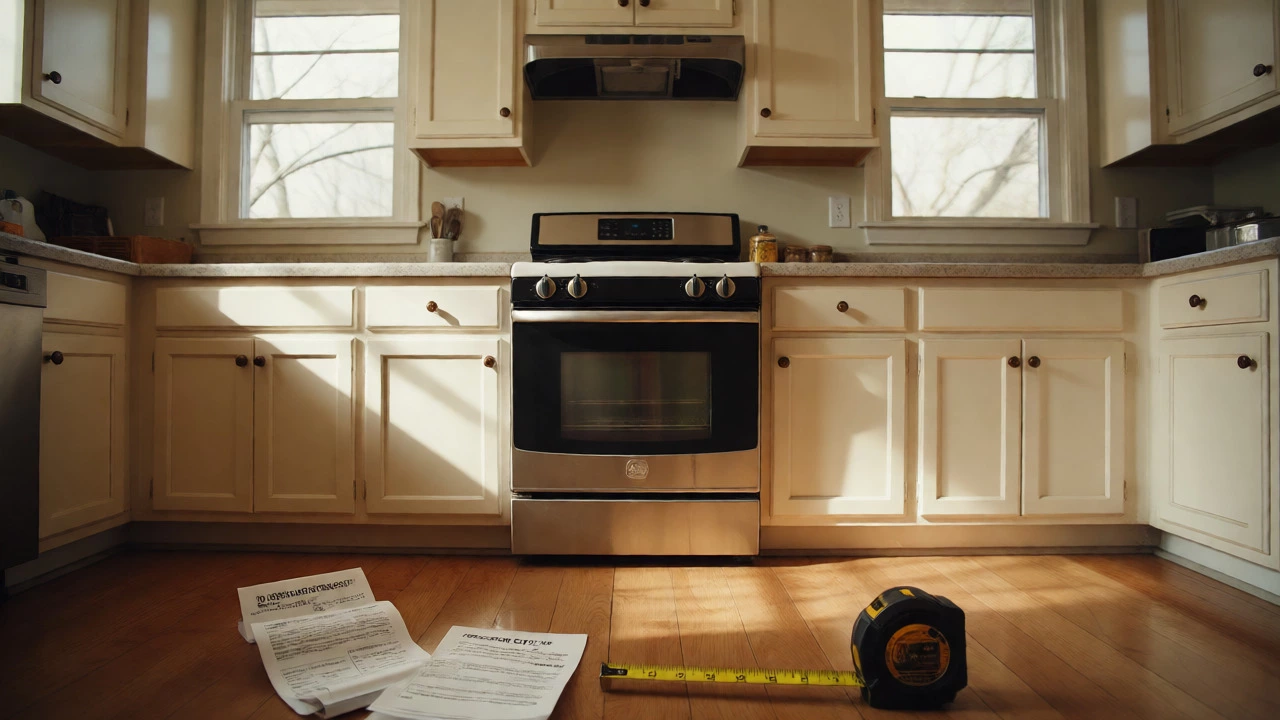
- It fits perfectly: Kitchen renovations are expensive. If your current range fits the cabinetry exactly, replacing it might require carpentry changes, countertop adjustments, or backsplash modifications. Keeping the same size saves thousands in remodeling.
- You love the features: Many older ranges had robust mechanical controls that are easier to repair than modern touchscreens. If you hate digital interfaces, your old analog dial system might be preferable to any new mid-range model.
Decision Checklist: Repair or Replace?
Run through this quick audit before making your final call.
- Check the Warranty: Did you buy an extended warranty? If yes, check the terms. Most cover parts but not labor after year 5.
- Inspect the Exterior: Look for rust around the hinges, cracks in the enamel, or warped doors. Cosmetic damage doesn’t affect function but signals overall wear. If the body is falling apart, a new internal part won’t help.
- Test Multiple Functions: Do both ovens work? Does the broiler fire? If everything else is perfect, repair. If two unrelated systems fail, replace.
- Get Two Quotes: Never trust one technician. Call two independent services. If quotes differ by more than 20%, ask why. One might be upselling unnecessary parts.
If the repair cost is under $250 and the oven otherwise cooks well, do it. If the repair is over $400 and the oven is already showing signs of age elsewhere, start shopping for replacements. Remember, a 10-year-old electric range typically lasts 15-20 years with proper care. You’re halfway there, not at the finish line.
How long do electric ranges typically last?
The average lifespan of an electric range is 13 to 15 years. With good maintenance and timely repairs, many units exceed 20 years. Age alone is not a reason to replace; condition and functionality are better indicators.
Is it cheaper to repair or replace a broken oven element?
Repairing is almost always cheaper. A bake or broil element costs $20-$50 for the part. Even with professional installation ($100-$150 labor), the total is far less than a new range. DIY replacement is possible for many models, costing only the price of the part.
What are the most expensive parts to replace on an electric range?
The main electronic control board is usually the most expensive component, ranging from $200 to $500 depending on the brand. Glass cooktops are also costly to replace, often exceeding $400 for the part alone. Thermostats and sensors are generally affordable ($50-$100).
Should I replace my oven if it heats unevenly?
Uneven heating can often be fixed by calibrating the thermostat or replacing a failing convection fan motor. These are relatively inexpensive repairs. However, if the insulation itself has degraded (check by feeling the exterior sides during a bake cycle-they should be warm but not hot), replacement may be necessary as insulation cannot be retrofitted.
Do old electric ranges use more electricity than new ones?
Yes, but not dramatically. Newer models have better insulation and more precise temperature control, reducing wasted energy. However, the annual savings are typically $20-$40. This rarely justifies the upfront cost of replacement unless you are upgrading to a high-efficiency induction model.