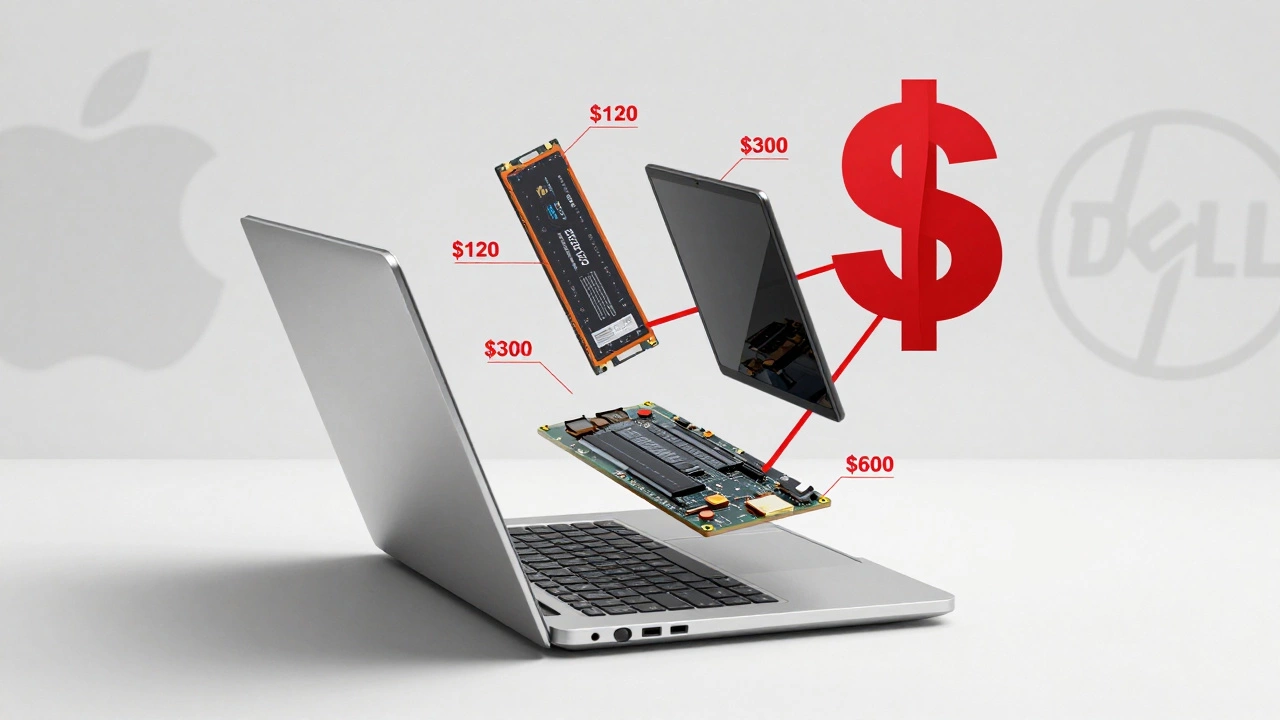
Ever opened your laptop only to find it won’t turn on, and then checked the repair quote only to feel like you’ve been hit with a brick? You’re not alone. A simple screen replacement can cost $300. A new motherboard? That’s $600. And you’re still not sure if it’s worth it. Why does fixing a laptop feel like buying a new one?
It’s Not Just the Part - It’s the Labor
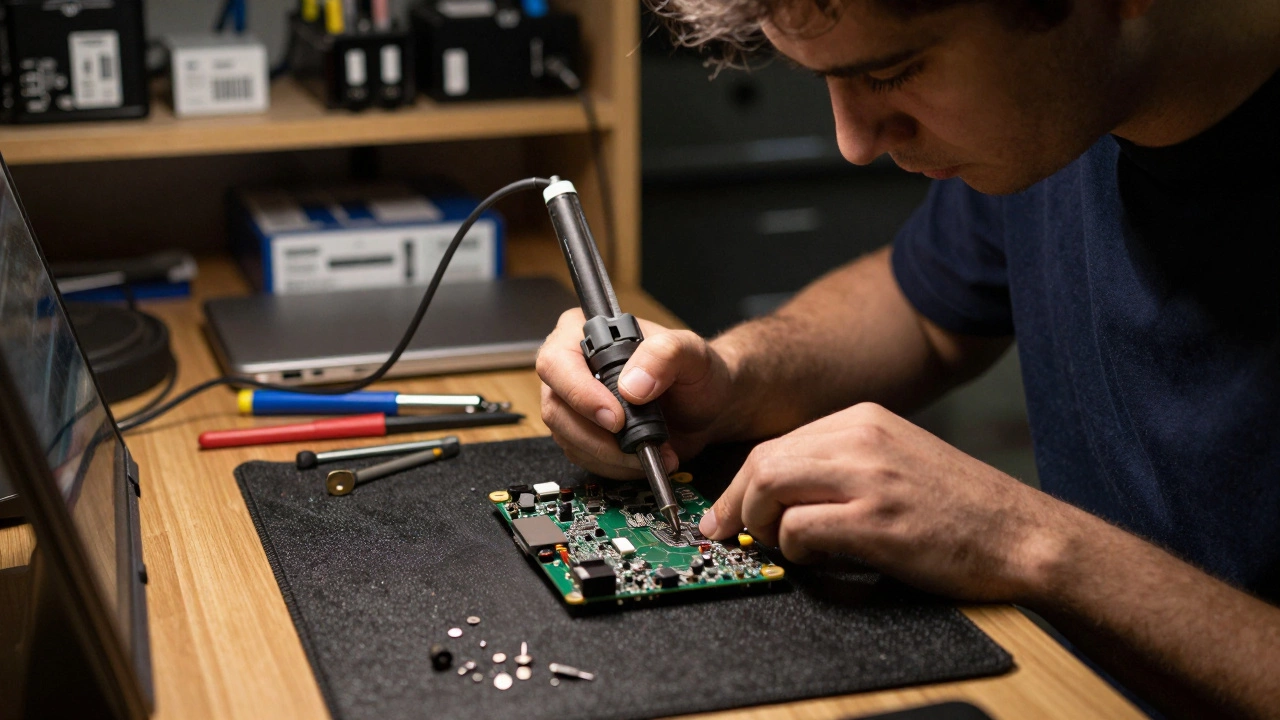
Laptop repair isn’t like fixing a toaster. You can’t just unplug it, pop off the cover, and swap a fuse. Modern laptops are built like origami - layers of tiny screws, glued-in batteries, and components packed so tight that even a simple keyboard replacement takes 45 minutes to an hour. Technicians need specialized tools: precision screwdrivers, heat guns, micro-soldering irons, and anti-static mats. All of that adds up.
Most repair shops charge $75 to $120 an hour. That’s not just for your time - it’s for the technician’s training. Fixing a laptop requires knowing how to decode error codes, match exact part numbers, and handle fragile connectors. A bad solder job on a logic board can fry the whole thing. One wrong move, and you’re out $800. That’s why experienced techs charge more. They’ve seen what happens when you cut corners.
Parts Are Locked Down - And Overpriced
Here’s the ugly truth: manufacturers don’t want you fixing your own laptop. Apple, Dell, Lenovo, HP - they all design parts to be proprietary. You can’t just buy a replacement screen from Amazon and call it a day. The screen has to match the exact model number, firmware version, and sometimes even the serial number. Otherwise, the laptop won’t recognize it.
Official replacement parts? They’re marked up 300% to 500%. A $20 LCD panel from a Chinese supplier might cost $120 from Apple’s authorized service center. And that’s if they’ll even sell it to you. Most OEMs only sell parts to certified technicians. So even if you find a cheaper part online, the shop still has to buy it through a middleman - and they’ll pass that cost on to you.
Diagnosis Takes Time - And It’s Not Free
Before you even get a quote, the tech has to figure out what’s wrong. That’s not a quick plug-in test. Is it the battery? The power adapter? The logic board? The RAM? The display cable? Each test takes time. A faulty charging port might look like a dead battery. A failing SSD can mimic a motherboard crash. Without the right diagnostic tools - which cost thousands - you’re guessing.
Many shops charge a $40 to $75 diagnostic fee. Some apply it to the final repair cost. Others don’t. Either way, you’re paying for the time it takes to find the real problem. And if the repair isn’t done? You still owe that fee. It’s not a scam - it’s the cost of expertise.
Warranty and Liability Are Heavy Burdens
When you take your laptop to a certified repair shop, they’re putting their reputation on the line. If the repair fails in a week, they have to fix it again - for free. That’s why most shops offer only 30 to 90 days of warranty on repairs. They know how often these devices fail again, even after a “fix.”
And then there’s liability. If a shop uses a third-party battery and it catches fire? They could be sued. That’s why many avoid non-OEM parts. Even if they’re cheaper, the risk isn’t worth it. Insurance for repair businesses isn’t cheap. Those premiums get baked into every repair quote.
Low Volume = High Prices
Think about it: how many laptops do you see broken in a day? Ten? Twenty? Compare that to a fridge - you see five broken ones in a single neighborhood. Laptops are more complex, but far fewer are repaired. That means repair shops can’t spread their overhead across hundreds of repairs like a fridge repair shop can.
That’s why you’ll often find a fridge repair guy who also does laptops - because they need the volume to stay in business. But even then, they’re not making much on each one. The cost of tools, training, and inventory stays the same whether they fix one laptop a week or ten.
Replacement Is Often Cheaper - And That’s the Problem
Here’s the real kicker: for many laptops, buying a new one is cheaper than repairing it. A $700 laptop with a cracked screen? A new one costs $800. A $1,200 MacBook with a failing logic board? A new one is $1,300. Why spend $600 to fix a device that’s already half-dead?
Manufacturers know this. That’s why they design laptops with short lifespans - 3 to 4 years - and make repairs expensive. It’s not a bug. It’s business. And it works. Most people just buy new.

What You Can Do About It
You don’t have to accept these prices. Here’s what actually helps:
- Check your warranty - Even if you bought it used, some manufacturers offer extended coverage. AppleCare, for example, covers accidental damage for up to two years.
- Get multiple quotes - A local independent shop might charge half of what the official store does. Ask if they use OEM or aftermarket parts.
- Buy used parts - Sites like eBay or iFixit sell tested, recycled parts at 60% off. Just make sure they come with a return policy.
- Fix it yourself - If you’re handy, iFixit has step-by-step guides for almost every laptop. A new battery for a Dell XPS? $35. Labor? $0. You save $200.
- Ask about trade-ins - Some shops offer store credit if you’re upgrading. That can cut your repair cost by $100 or more.
When to Walk Away
There are times when repair isn’t just expensive - it’s pointless.
- Your laptop is over 5 years old.
- The repair costs more than 60% of a new equivalent model.
- It’s a budget model (under $500) - those aren’t built to last.
- You’re replacing multiple parts (screen + battery + keyboard) - that’s a sign the whole system is failing.
If any of these apply, skip the repair. Buy a refurbished laptop from a trusted seller. You’ll get better performance, a full warranty, and save money in the long run.
It’s Not Broken - It’s Planned
Laptop repair isn’t expensive because it’s hard. It’s expensive because it’s designed to be. Manufacturers profit more from selling you a new device than fixing the old one. That’s why they make parts hard to replace, diagnostics complex, and warranties short.
But you’re not powerless. You can shop smarter, fix yourself, or choose a device that’s built to last. The next time you see a $500 repair quote, ask yourself: is this a repair - or a sales pitch?
Is it worth repairing a 5-year-old laptop?
Generally, no. Laptops older than five years usually have outdated processors, limited RAM, and failing batteries. Even if you fix one issue, another will follow soon. The cost of repair often exceeds 60% of a new refurbished model, which will perform better and come with a warranty. It’s smarter to upgrade.
Why do Apple repairs cost so much?
Apple controls every part of the repair process. They don’t sell parts to third parties, require proprietary tools, and charge premium labor rates. Even simple repairs like screen replacements use custom connectors and firmware locks. You’re paying for exclusivity, not just quality. Independent shops that use aftermarket parts can save you 40-60%, but Apple’s warranty won’t cover them.
Can I use third-party parts for my laptop repair?
Yes - but with caution. Third-party parts from reputable sellers like iFixit or eBay can save you 50% or more. Make sure they come with a return policy and match your exact model number. Avoid no-name brands on Amazon. A cheap battery can swell, leak, or catch fire. A bad screen can flicker or show dead pixels. You get what you pay for.
Do laptop repair shops make money on parts or labor?
Most make more on parts. A $25 battery sold for $120 gives a 380% markup. Labor is often marked up too - $75/hour sounds fair until you realize the job only took 40 minutes. But skilled labor is expensive to train and retain. The real profit comes from combining high-margin parts with time-intensive labor.
Why won’t my laptop manufacturer help me repair it?
Manufacturers make more money selling new devices than fixing old ones. They also want to control the repair ecosystem to ensure quality - and to limit competition. Many now push “repairability scores” as PR, but still restrict access to tools and parts. The Right to Repair movement is pushing back, but progress is slow.
If you’re stuck with a broken laptop, don’t panic. Take a breath, check your options, and don’t let fear of complexity make you pay more than you need to. Sometimes, the best repair is knowing when to walk away.