Heat Pump Repair vs Replacement Calculator
Determine if your heat pump should be repaired or replaced based on age, repair costs, and system history. This tool implements the industry guideline: if repair costs exceed 50% of a new unit's price, replacement is typically the better choice.
Enter your heat pump details above to see if repair or replacement is recommended.
Heat pumps are one of the most efficient ways to heat and cool your home, especially in places like Vancouver where winters are damp and summers are mild. But when your heat pump stops working, you’re left wondering: can you repair a heat pump yourself, or do you need to call a pro? The answer isn’t simple - and it depends on what’s wrong.
Most heat pump problems aren’t fixable without tools or training
Heat pumps aren’t like a toaster or a coffee maker. They’re complex systems that move heat using refrigerant, electrical components, and precise airflow. If the unit isn’t turning on at all, you might think it’s a simple fuse issue. But in reality, a dead thermostat, a tripped breaker, or a faulty reversing valve could be the culprit. Most homeowners don’t have the tools to test refrigerant pressure, check capacitor health, or diagnose a bad compressor.
Take the example of a heat pump that blows cold air in heating mode. A lot of people assume it’s low on refrigerant. But refrigerant doesn’t just “leak out” unless there’s a physical breach in the copper lines. If you add refrigerant without finding the leak, you’re just wasting money and risking environmental harm. That’s why the EPA requires certification to handle refrigerants - and why DIY fixes often make things worse.
What you can check yourself
There are a few things you can safely do before calling a technician. These won’t fix a broken heat pump, but they can rule out simple issues and save you a service call.
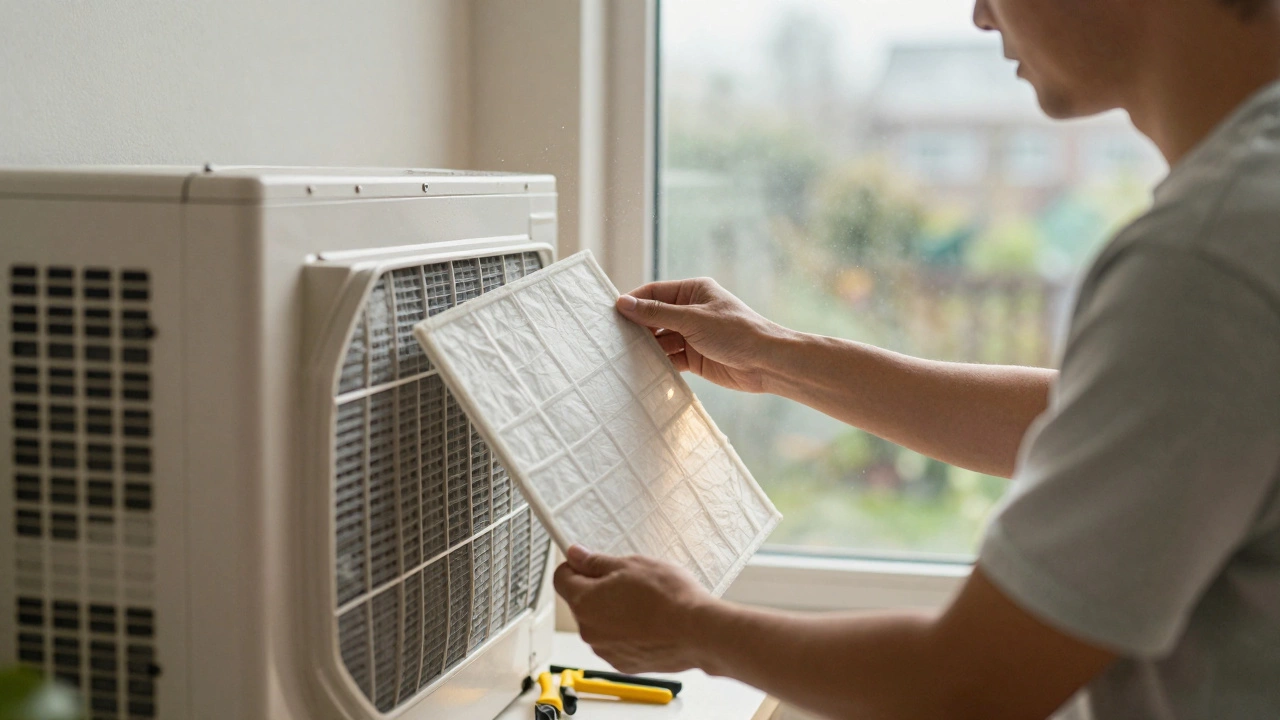
- Check the air filter. A clogged filter is the #1 reason heat pumps lose efficiency. Replace it every 1-3 months, especially during heavy use.
- Clear debris from the outdoor unit. Leaves, snow, or ice buildup around the outdoor coil can block airflow. Turn off the power and gently remove obstructions with a brush or hose - don’t use a power washer.
- Verify the thermostat settings. Make sure it’s set to “Heat” and not “Cool.” Check the batteries. Try switching the mode to “Emergency Heat” (if available) to see if that works.
- Reset the system. Turn off the power at the circuit breaker for 60 seconds, then turn it back on. This can reset control boards and clear minor glitches.
If those steps don’t help, you’re likely dealing with something deeper.
Common heat pump failures that need professional help
Here are the five most common problems that require a licensed HVAC technician:
- Refrigerant leaks. Low refrigerant isn’t a refill job - it’s a leak detection job. Finding the leak requires pressure testing, dye injection, or electronic detectors. Most homeowners don’t have access to this equipment.
- Faulty compressor. If the compressor is humming but not turning, or if it’s making grinding noises, it’s likely failing. Replacing it costs $1,500-$3,000, and it’s not something you can do in a weekend.
- Defrost cycle issues. Heat pumps go into defrost mode to melt ice on the outdoor coil. If it doesn’t come out of defrost, you’ll get poor heating. This is usually a control board or sensor problem.
- Blower motor failure. If air isn’t moving through the vents, the indoor blower motor may be dead. It’s not always easy to access, and replacing it requires electrical knowledge and proper torque settings.
- Electrical control board failure. Modern heat pumps have complex boards that manage everything from fan speed to defrost timing. These can fail due to power surges or age. Diagnosing them requires a multimeter and manufacturer-specific schematics.
When to replace instead of repair
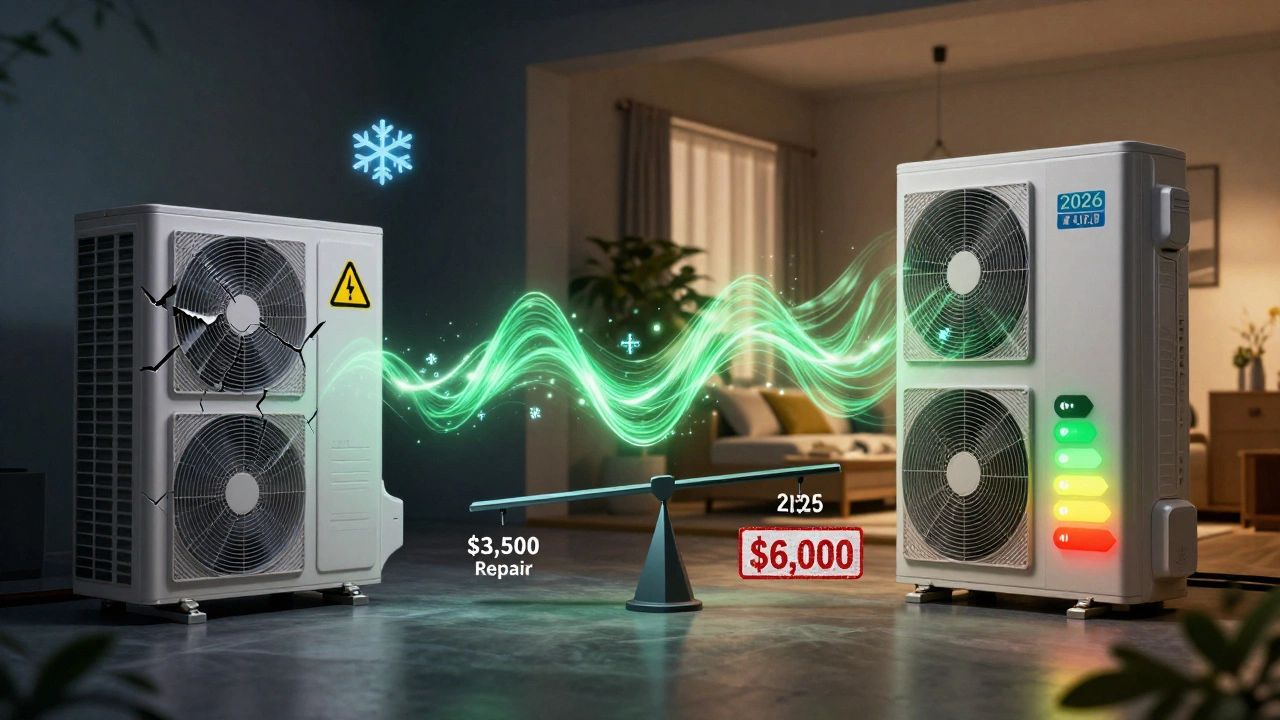
Not every broken heat pump is worth fixing. If your unit is over 12 years old, it’s likely operating at 60-70% efficiency compared to new models. A 2026 heat pump can be 40% more efficient than one from 2014 - that’s hundreds of dollars in saved energy each year.
Use this simple rule: if the repair cost is more than half the price of a new unit, walk away. For example, if a new heat pump costs $6,000, don’t spend $3,500 on a compressor replacement. Also, if you’ve had multiple repairs in the last two years, you’re just throwing money into a sinking ship.
There are also rebates available in British Columbia through the Home Energy Efficiency Program for upgrading to a high-efficiency heat pump. Some programs cover up to $2,500. Check with your local utility provider - you might save more than you think.
Why hiring a licensed technician matters
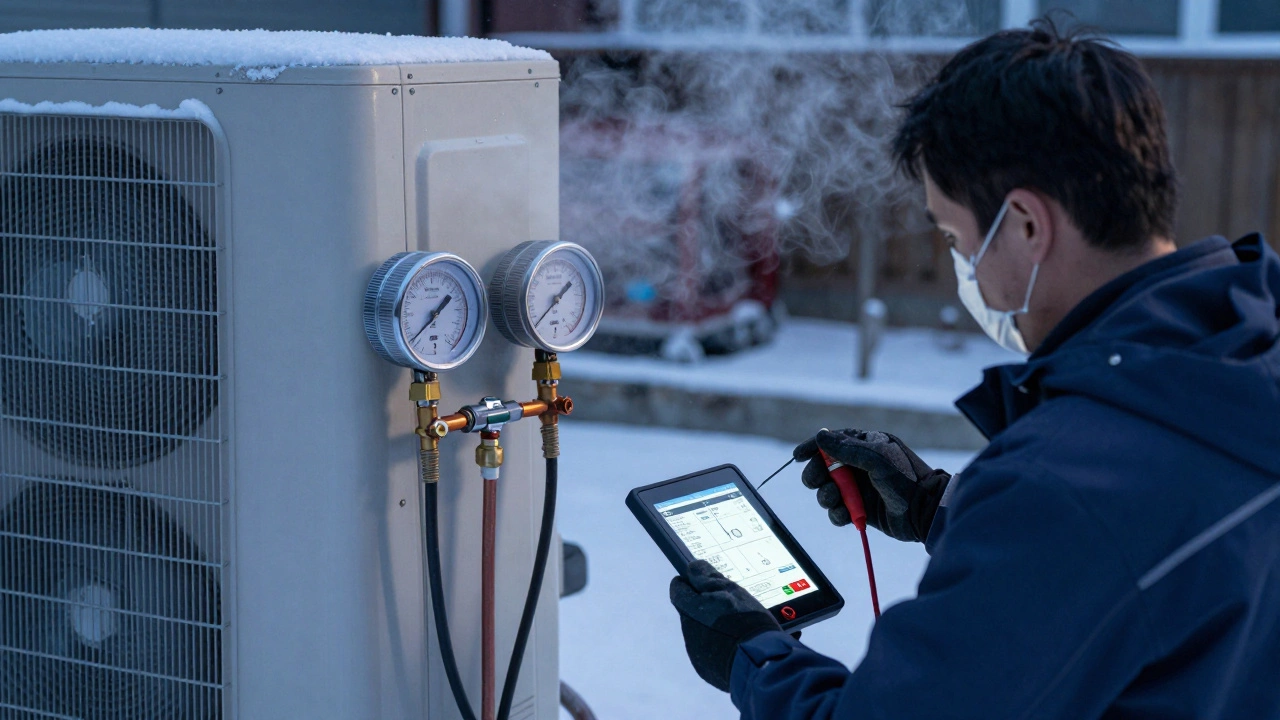
A certified HVAC technician doesn’t just replace parts. They diagnose the root cause. They’ll check refrigerant charge with a manifold gauge, test capacitor capacitance with a digital meter, inspect ductwork for leaks, and verify airflow with a vane anemometer. These aren’t guesswork tasks - they’re precise measurements.
Also, many manufacturers require professional installation and service to keep the warranty valid. If you try to fix it yourself and damage the unit, you could void your warranty entirely. That’s a $1,000+ gamble.
Prevention is cheaper than repair
The best way to avoid a heat pump breakdown is regular maintenance. Most manufacturers recommend a professional tune-up once a year - ideally in the fall before winter hits. During a tune-up, a technician will:
- Check refrigerant levels and pressure
- Inspect electrical connections and wiring
- Test the reversing valve and defrost cycle
- Clean the indoor and outdoor coils
- Verify thermostat accuracy
This typically costs $100-$150. Compare that to a $2,000 compressor replacement or a $4,000 emergency winter repair. It’s not a luxury - it’s smart insurance.
What to look for in a heat pump repair company
If you need help, don’t just pick the cheapest quote. Look for:
- Technicians with NATE certification (North American Technician Excellence)
- Company with at least 5 years of local experience
- Clear, written estimates with parts and labor broken out
- Warranty on parts and labor (at least 1 year)
- Positive reviews mentioning heat pump-specific work (not just AC repair)
Companies that specialize in heat pumps understand the unique challenges of dual-mode systems. A general HVAC tech might know how to fix an air conditioner, but not how a heat pump’s reversing valve behaves under load.
Final takeaway
Can you repair a heat pump? Yes - but only the easy stuff. Cleaning filters, clearing debris, resetting the thermostat - those are safe. Anything involving refrigerant, electrical components, or internal parts? Leave it to the pros. Trying to fix it yourself can cost you more in the long run: ruined equipment, voided warranties, or even safety hazards.
Heat pumps are built to last 15-20 years. With proper care, they’ll serve you reliably. But when they break, don’t gamble on a YouTube tutorial. Call a licensed technician. It’s not just about fixing the machine - it’s about keeping your home warm, safe, and efficient.
Can I add refrigerant to my heat pump myself?
No. Refrigerant is a regulated substance under EPA rules. Only certified technicians can legally handle it. Adding refrigerant without fixing the underlying leak is illegal, ineffective, and harmful to the environment. It also voids warranties and can damage your system.
How long does a heat pump last before needing replacement?
Most heat pumps last 15 to 20 years with regular maintenance. After 12 years, efficiency drops noticeably, and repair costs start to climb. If your unit is older than 12 years and needs a major repair, replacement is usually the smarter financial choice.
Why is my heat pump freezing up?
A frozen outdoor unit usually means poor airflow or low refrigerant. Dirty filters, blocked vents, or a failing blower motor can cause this. If it happens often, the defrost cycle may not be working. A technician will check the defrost control board, sensors, and refrigerant levels to find the cause.
Is it normal for my heat pump to run all day in winter?
Yes. Unlike gas furnaces, heat pumps run longer but at lower power to maintain steady temperatures. If it’s running constantly and your home isn’t warming up, that’s a problem - likely due to poor insulation, a malfunctioning thermostat, or low refrigerant.
Can I use my heat pump in extreme cold?
Most modern heat pumps work down to -15°C (5°F). Below that, they rely on backup electric resistance heat, which is more expensive. In Vancouver’s climate, this isn’t usually an issue. But if you live in a colder region, consider a dual-fuel system that switches to gas when temperatures drop.