Fridge Troubleshooting Diagnostic Tool
Diagnose Your Fridge Problem
Select the main symptom you're experiencing to get tailored repair guidance
Recommended Repair Steps
If your fridge has started making strange noises, sweating on the outside, or just won’t stay cold, you’re not alone. In Vancouver’s damp winters and warm summers, fridges work harder than ever-and they break in predictable ways. Most people assume it’s time to replace the whole unit, but 7 out of 10 fridge failures are fixable for under $150. You just need to know where to look.
The Door Seal Is the Most Common Culprit
The rubber gasket around your fridge door wears out long before anything else. It doesn’t make noise. It doesn’t flash a warning light. It just slowly stops doing its job: keeping cold air in and warm air out.
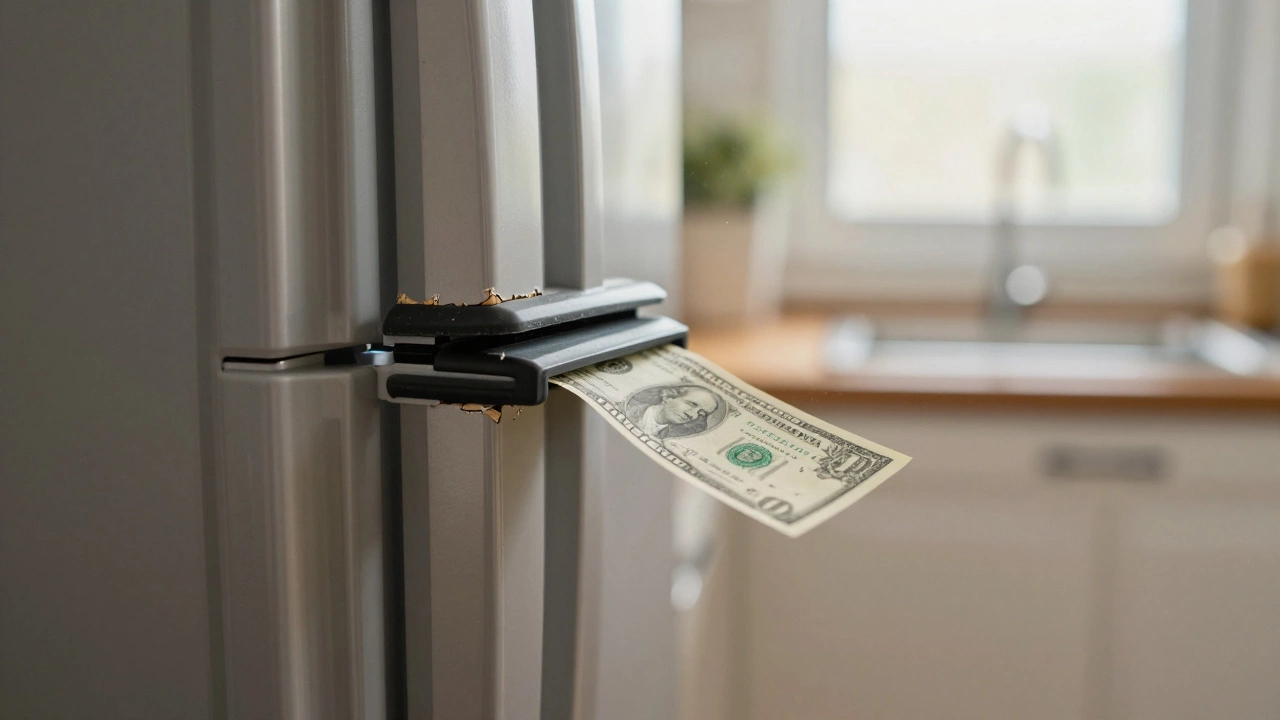
Test yours with a simple trick. Close a dollar bill in the door and try to pull it out. If it slides out easily, the seal is bad. If it sticks, you’re good. Replace it if it’s cracked, stiff, or peeling. A worn seal forces the compressor to run 40% longer just to keep things cold. That’s why your电费 bill creeps up even when you haven’t changed your habits.
Most fridge models use standard-sized seals. You can order one online using your model number-usually found on a sticker inside the fridge, near the top shelf. Installation takes 20 minutes. No tools needed.
The Compressor Is the Heart-And the Most Expensive Failure
If your fridge runs constantly but stays warm, the compressor might be struggling. This is the big pump in the back that moves refrigerant. When it fails, you won’t hear a loud bang. Instead, you’ll hear a low hum that never stops-or worse, silence when it should be running.
Check the back of the fridge. Feel the compressor (it’s a metal box with copper tubes). If it’s hot to the touch and vibrating, it’s working. If it’s cold and quiet, power might be cut. Check the start relay-a small plastic box clipped onto the compressor. If it rattles when you shake it, it’s broken. Replacing the relay costs $25 and takes 10 minutes.
But if the compressor itself is dead, you’re looking at $600+ to replace it. At that point, most people in Vancouver opt for a new fridge. But don’t rush. A 10-year-old fridge with a bad compressor might still have 5 more years if you swap the condenser fan or clean the coils first.
Clogged Coils Are Silent Killers
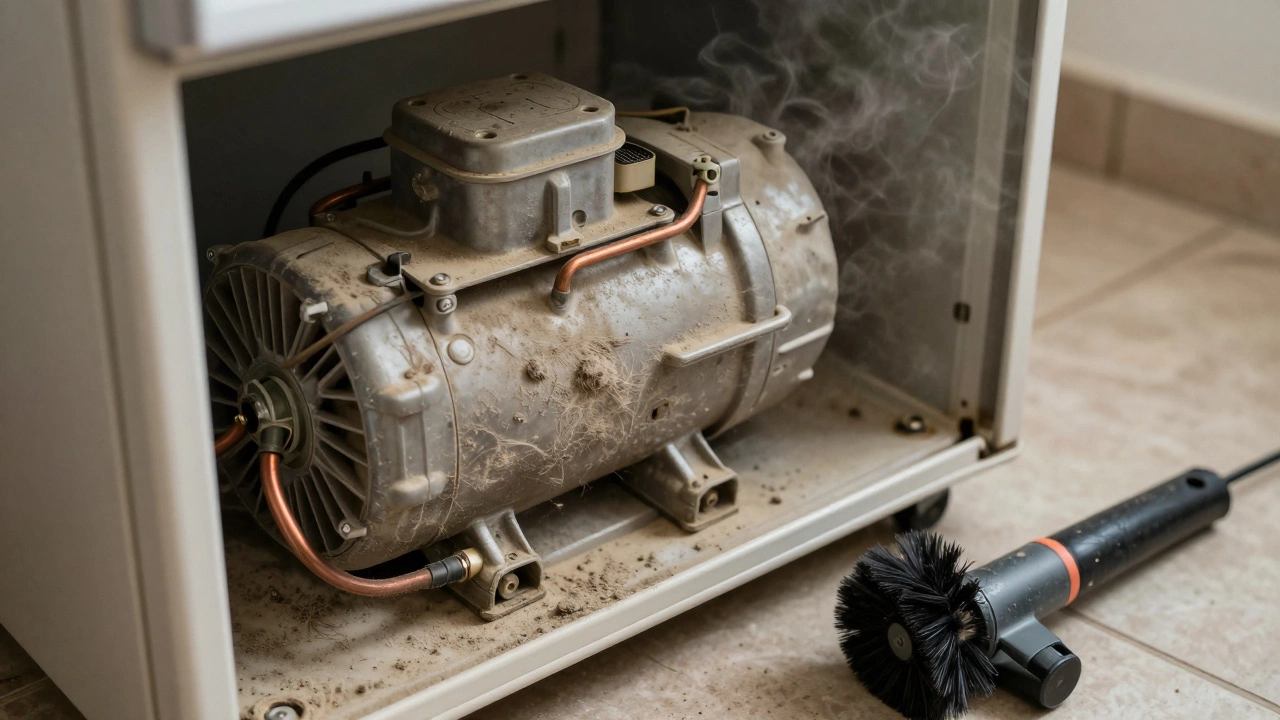
Every fridge has coils-usually at the back or bottom-that release heat. Dust, pet hair, and kitchen grease build up over time. This is the #1 reason fridges overheat and shut down in winter, when people forget to clean them.
Unplug the fridge. Pull it out from the wall. Use a vacuum with a brush attachment or a coil brush (under $10 at hardware stores) to clean the coils. Do this every 6 months. If you have pets, do it every 3.
Dirty coils make the compressor work twice as hard. You’ll notice the fridge running nonstop, the back wall getting hot, or frost building up inside the freezer. Clean the coils, and many fridges come back to life without a single part replacement.
The Thermostat or Temperature Control Board Fails Quietly
Your fridge doesn’t know it’s too warm. It relies on a thermostat or electronic control board to tell the compressor when to turn on. If that part dies, the fridge stays off-even when it’s 5°C inside.
Older fridges use mechanical thermostats. Turn the dial to the coldest setting. If the compressor still doesn’t kick on, the thermostat is likely dead. Newer models use digital boards. Those are trickier. No simple test. But if the display is flickering, showing error codes like “Er” or “FF,” or the lights work but the fridge won’t cool, the board is suspect.
Replacing a thermostat costs $40-$80. A control board? $150-$300. If your fridge is over 12 years old, consider whether the repair makes sense. But if it’s a 5-year-old Samsung or LG with a $60 part, it’s worth fixing.
The Defrost Timer or Heater Stuck in Frost Mode
Freezers are supposed to defrost automatically every 6-12 hours. If that system fails, ice builds up behind the back panel, blocking airflow. The fridge feels warm, but the freezer is rock solid.
Open the freezer. Look at the back wall. If it’s covered in thick frost or ice, the defrost system is broken. There are two parts: the timer (in older fridges) and the heater (in newer ones). The timer is a little clock-like device near the bottom. Turn it manually with a screwdriver. If the compressor starts, the timer is bad. Replace it for $35.
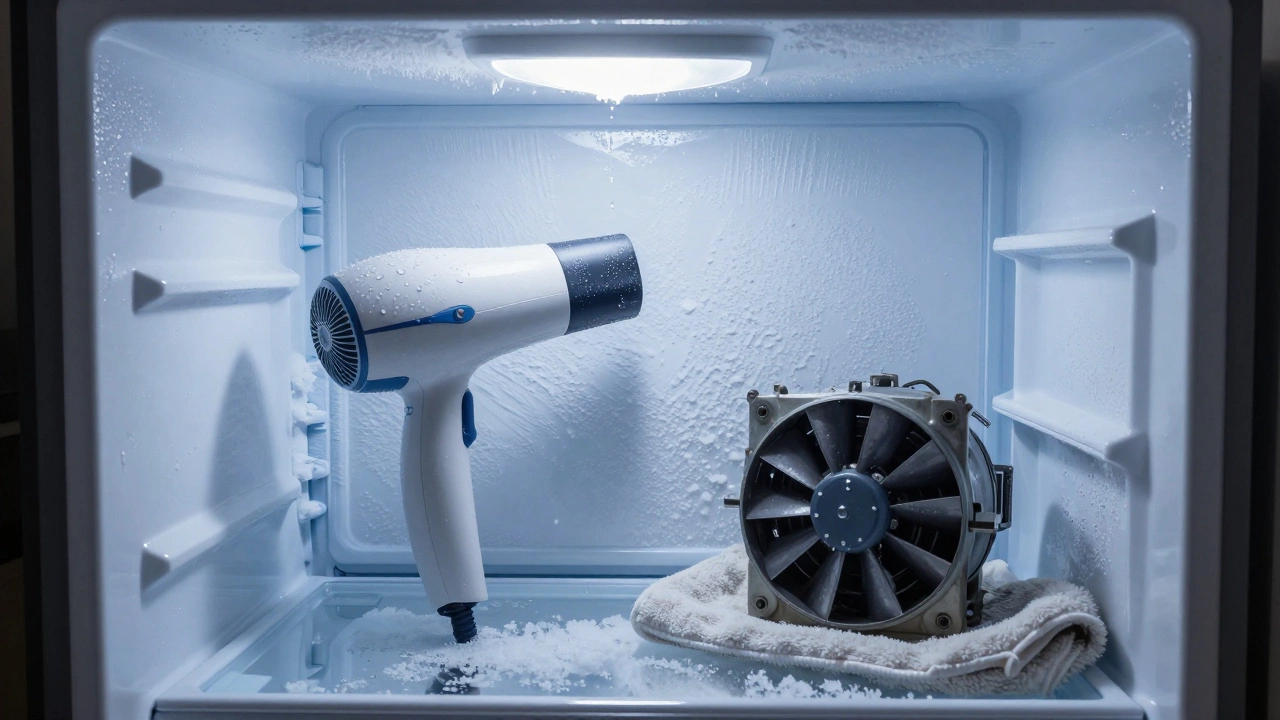
If the timer is fine, the heater might be burned out. It’s a thin wire behind the freezer panel. You can test it with a multimeter for continuity. If it reads infinite resistance, it’s dead. Replacement heater kits cost $50 and take an hour to install. You’ll need to remove the back panel and defrost the ice first-use a hair dryer on low, not a knife.
Evaporator Fan Failure Is Easy to Miss
The evaporator fan circulates cold air from the freezer into the fridge compartment. If it stops, your fridge stays warm while the freezer works fine. It’s a silent failure-no warning lights, no noise.
Unplug the fridge. Remove the back panel in the freezer. Look for the fan. If it’s covered in ice, defrost it. If it spins freely by hand, it might still be working. Plug the fridge back in and listen near the freezer wall. If you hear the compressor running but no wind noise, the fan motor is dead.
Replace the fan motor for $45-$75. Most models use the same part. It’s a 15-minute job. Just unplug the wires, remove two screws, and swap it out. This fixes more fridges than people realize.
When to Call a Pro-and When to Walk Away
Most fridge problems are DIY-friendly. But some things need a technician:
- Refrigerant leaks (you’ll see oil stains near copper lines)
- Compressor failure in fridges under 8 years old (check warranty)
- Electrical issues involving the main control board with no clear error code
For everything else-seals, coils, fans, relays, thermostats-buy the part, watch a YouTube video for your model, and do it yourself. Vancouver has great local repair shops, but they charge $85/hour. You can fix 90% of issues for less than the cost of one service call.
Ask yourself: Is the fridge more than 12 years old? Is it a basic model with no smart features? If yes, replacement might be smarter. But if it’s a mid-range unit with a clean history, fixing it saves money and reduces waste. In a city that cares about sustainability, keeping appliances alive matters.
Quick Checklist: What to Check First
- Is the door seal leaking? (Dollar bill test)
- Are the coils dusty? (Clean them)
- Is the freezer frosted over? (Check defrost system)
- Can you hear the fan running in the freezer? (If not, replace it)
- Does the compressor hum constantly? (Test the start relay)
- Is the temperature setting correct? (Sometimes it’s just turned up accidentally)
Most fridges die slowly. They don’t just stop. They get louder, hotter, or inconsistent. If you catch it early, you can save hundreds. Don’t wait until everything’s warm.