Water Heater Repair Decision Guide
Assess Your Situation
Answer these questions to determine if you should try to fix your water heater yourself or call a professional.
Recommendation
SAFETY WARNING: If you're experiencing a gas leak or major tank damage, get out of the house immediately. Call a professional right away.
Water heaters break down. It’s not a matter of if-it’s when. One morning, you turn on the shower and get ice water instead of steam. Or worse, you hear a loud rumble from the basement and smell something burning. Your first thought? Fix your own water heater. It’s tempting. After all, YouTube has a video for everything. But is it smart? Or are you just setting yourself up for a flooded basement, a broken budget, or worse-a gas leak?
When DIY Makes Sense
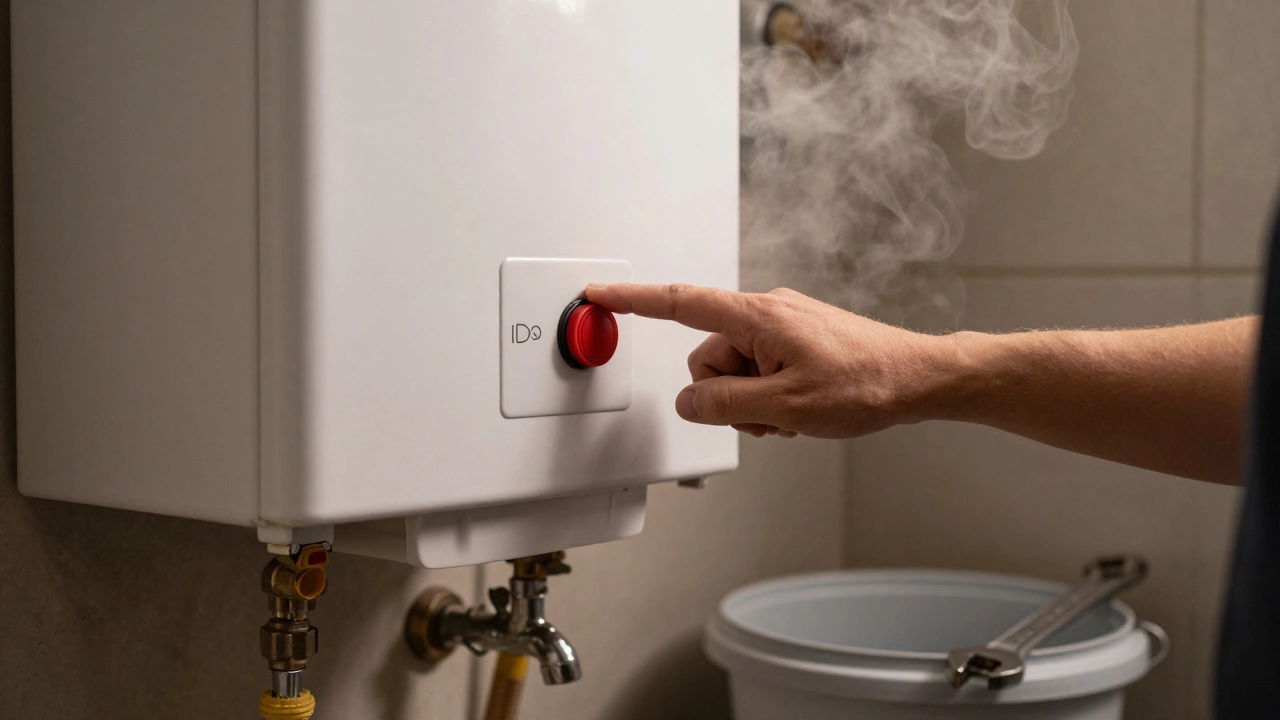
Not every water heater problem needs a pro. Some fixes are simple, safe, and take less than an hour. If your water isn’t hot enough, the culprit might be a tripped reset button on the thermostat. Most electric water heaters have a red button near the top. Press it. If it clicks and the water heats up within an hour, you’re done. No tools needed.
Another common fix: flushing sediment. Over time, minerals from hard water sink to the bottom of the tank. That sludge reduces efficiency and causes loud popping noises. To fix it, turn off the power or gas, shut the cold water inlet, attach a garden hose to the drain valve, and let it run into a bucket or drain. Do this once a year. It extends the life of your heater by years. This is one of the few DIY tasks that actually saves money long-term.
If the pressure relief valve is leaking, it’s usually just corroded. Turn off the water and power. Unscrew the old valve with a wrench. Replace it with a new one from any hardware store. It costs under $20. Done right, this prevents dangerous pressure buildup. These are the three fixes that make sense for most homeowners.
When You Should Call a Pro
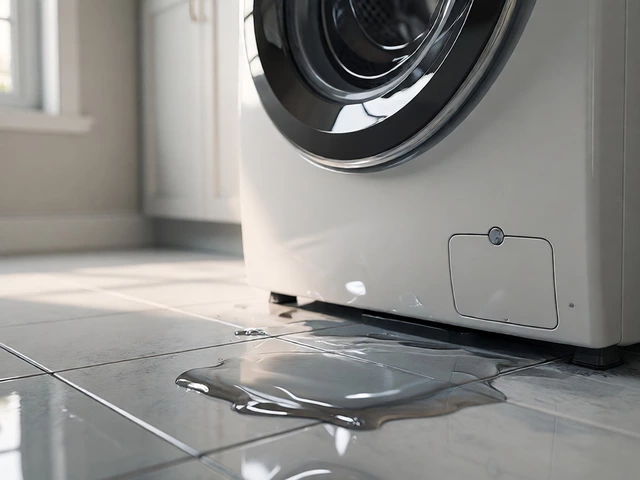
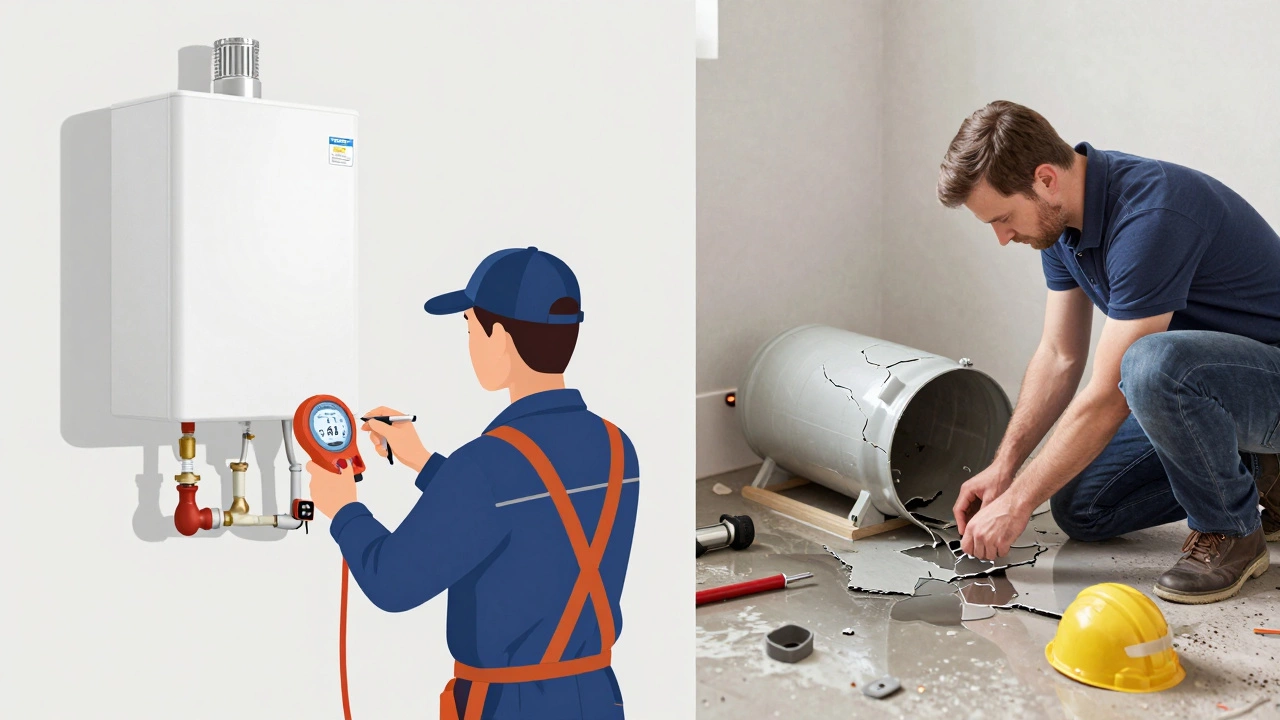
Now, here’s where things get risky. If your water heater is leaking from the tank itself-especially from the sides or bottom-you’re not fixing it. You’re replacing it. A tank leak means the metal has corroded through. No patch, sealant, or epoxy will hold. Trying to fix it only delays the inevitable flood. Water damage to your floor, walls, or foundation can cost thousands. A new water heater? Around $1,200 installed. Water damage repair? $5,000 and up.
Gas water heaters are another story. If you smell gas-like rotten eggs-get out of the house. Don’t turn on lights. Don’t use your phone. Call the gas company from outside. Even if you think it’s just a loose connection, gas leaks can explode. Gas lines need to be pressure-tested with special tools. Only licensed plumbers are trained to do this safely.
Electric water heaters aren’t much safer if you’re not qualified. The heating elements and thermostats run on 240 volts. One wrong move with a screwdriver and you’re looking at a serious shock-or worse. I’ve seen homeowners try to replace elements without turning off the breaker. One spark, and they spent weeks in the hospital. Don’t be that person.
What You Don’t See: Hidden Costs
DIY sounds cheap. But hidden costs add up fast. You buy a new thermostat for $40. You spend three hours on it. The water still doesn’t heat. You buy a new element. Then a new dip tube. Now you’ve spent $150 and two weekends. Meanwhile, the tank keeps rusting. You end up replacing the whole unit anyway-and you’ve got a mess to clean up.
Professional installers don’t just swap out parts. They check the venting, the anode rod, the water pressure, the expansion tank. They test for code compliance. They know if your 12-year-old heater is on its last legs, even if it still works. They can tell you whether to repair or replace-and why. That advice is worth more than the service call.
Also, warranties. Most new water heaters come with 6 to 12 years of coverage. But if you install it yourself? The warranty is void. Manufacturers require professional installation. That means if your new heater fails in year three, you pay for the replacement out of pocket. A pro installs it right. You keep the warranty. That’s $1,000+ saved.

The Real Safety Risks
Let’s talk about what no YouTube video will warn you about: carbon monoxide. Gas water heaters produce it as a normal byproduct. But if the vent pipe is cracked, blocked, or improperly installed, that gas flows into your home instead of outside. Carbon monoxide is odorless. It kills silently. In 2024, the Consumer Product Safety Commission reported over 200 deaths linked to faulty water heater vents in the U.S. alone.
Electric units have their own dangers. If the wiring is old or the circuit is overloaded, it can overheat and start a fire. Homeowners often plug water heaters into extension cords or shared outlets. That’s a fire hazard. Licensed electricians check the amperage, the wire gauge, the breaker size. They know what’s safe. You don’t.
And then there’s liability. If you fix your own heater and it leaks and floods your neighbor’s apartment? Your homeowner’s insurance might deny the claim. They’ll say you performed unlicensed repairs. That’s not a hypothetical. It’s happened. In 2023, a homeowner in Ohio was sued for $87,000 after a DIY water heater repair flooded three units. He had no insurance coverage.
How to Decide: A Simple Checklist
Still unsure? Use this quick guide:
- Safe to DIY: Reset button tripped, flushing sediment, replacing pressure valve, replacing anode rod (if you know how), fixing a leaky faucet connection.
- Call a pro: Tank is leaking, gas smell, no hot water after reset, strange noises from the tank, water is rusty or cloudy, heater is over 8 years old, you’re not sure what you’re doing.
If you’re even a little hesitant-call someone. There’s no shame in it. Water heaters are one of the most dangerous appliances in your home. They hold 40 to 80 gallons of scalding water under pressure. They use gas or high-voltage electricity. You don’t need to be a hero. You just need to be smart.
What to Look for in a Pro
If you’re hiring someone, don’t just pick the cheapest bid. Look for:
- Licensed and insured plumber or HVAC technician
- At least 5 years of experience with water heaters
- Clear, written estimate before work starts
- Warranty on labor (at least 1 year)
- Reviews mentioning water heater jobs specifically-not just general plumbing
A good pro will show up with a diagnostic tool to check voltage, gas pressure, and water flow. They’ll explain what’s wrong in plain language. They won’t pressure you into a $2,500 tank if a $1,000 one will do. They’ll tell you if your heater is worth saving-or if it’s time to upgrade to a tankless model.
When to Upgrade Instead of Repair
If your water heater is older than 8 years, repair might be throwing good money after bad. Newer models are 20% to 30% more efficient. A 12-year-old heater could be costing you $200 extra a year in energy bills. Tankless water heaters last 20 years. They save space. They never run out of hot water.
And rebates. In 2025, many states and utility companies offer up to $1,000 in rebates for switching to energy-efficient models. A pro can help you apply. DIY? You’ll miss out.
Bottom line: If your heater is 8+ years old and needs a major fix, replace it. Don’t patch it. You’ll save more in the long run.
Final Thought: It’s Not About Skill-It’s About Risk
You don’t need to be a genius to fix a water heater. But you do need to understand the stakes. A dripping valve? Easy fix. A cracked tank? Disaster waiting to happen. A gas leak? Life-threatening. The difference isn’t skill. It’s awareness.
Most people who try to fix their own water heater aren’t reckless. They’re just trying to save a few bucks. But the real cost isn’t the price of a new thermostat. It’s the cost of a flooded home. A hospital bill. A lawsuit. A funeral.
Some things aren’t worth the risk. Your water heater is one of them.