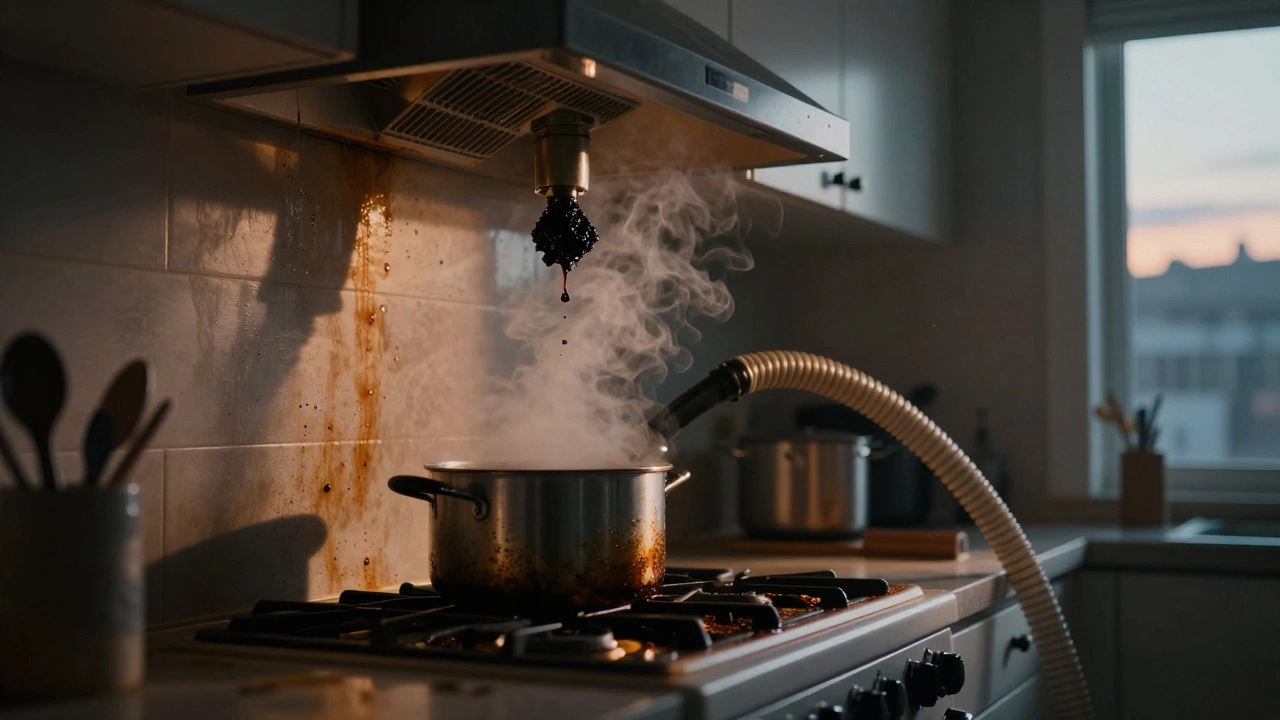
When your extractor fan suddenly goes quiet, it’s more than just an annoyance. That hum you used to ignore? Now you notice the silence-and the grease, the steam, the lingering smells. It’s not magic. Something broke. And if you’ve checked the switch and it’s still dead, you’re probably wondering: what causes an extractor fan to stop working?
It’s Not Always the Motor
Most people assume the motor is dead. But in over 60% of cases, the motor is fine. I’ve pulled apart enough broken fans in Vancouver kitchens to know this: the real culprits are usually simpler-and cheaper-to fix. The motor only fails when it’s been running nonstop for years, overheating, or got soaked in steam. More often, it’s something blocking airflow, tripping safety, or just wearing out slowly.Blocked or Clogged Ductwork
This is the #1 reason extractor fans lose power. Not because they’re broken, but because they’re suffocating. Grease, dust, and even bird nests can build up inside the duct over time. When airflow is restricted, the fan motor works harder. It draws more current. And if it’s been doing this for months, the thermal overload protector kicks in. It’s not a fuse blowing. It’s a safety switch shutting it down to prevent a fire. You can’t see it, but if your fan runs for 10 minutes and then shuts off, only to start again after cooling down, that’s the sign. Try this: turn off the power, remove the fan cover, and stick a vacuum hose into the duct opening. If you pull out a handful of greasy gunk, you’ve found your problem. Clean it out. Reinstall. It’ll run like new.Worn-Out Bearings or a Sticky Shaft
Extractor fans spin at high speeds-sometimes over 2,000 RPM. That puts stress on the bearings. Over time, they get dry, gritty, or rusted. Especially in humid kitchens. If the motor turns but the blade doesn’t, or if it groans when you spin it by hand, the bearings are toast. You can test this. Unplug the fan. Try spinning the blade with your fingers. If it feels stiff, catches, or doesn’t spin freely for more than a full rotation, the shaft is binding. You can try cleaning and lubricating it with a drop of light machine oil (like 3-in-One), but most of the time, it’s easier to replace the whole motor assembly. A new motor costs less than $50 and takes 20 minutes to install.Failed Capacitor (The Silent Killer)
If your fan makes a low hum but doesn’t spin, or if it starts slowly and then stops, the capacitor is likely dead. It’s a small cylindrical component wired to the motor. It gives the motor that initial push to start. Without it, the motor can’t overcome inertia. You’ll find it inside the fan housing, usually near the motor. It looks like a tiny silver or black tube. If it’s bulging, leaking, or smells burnt, it’s gone. You can test it with a multimeter if you know how, but most homeowners just replace it. A new capacitor costs $5. You don’t need to be an electrician-just unplug the fan, take a photo of the wiring before disconnecting, and match the microfarad (µF) rating on the old one.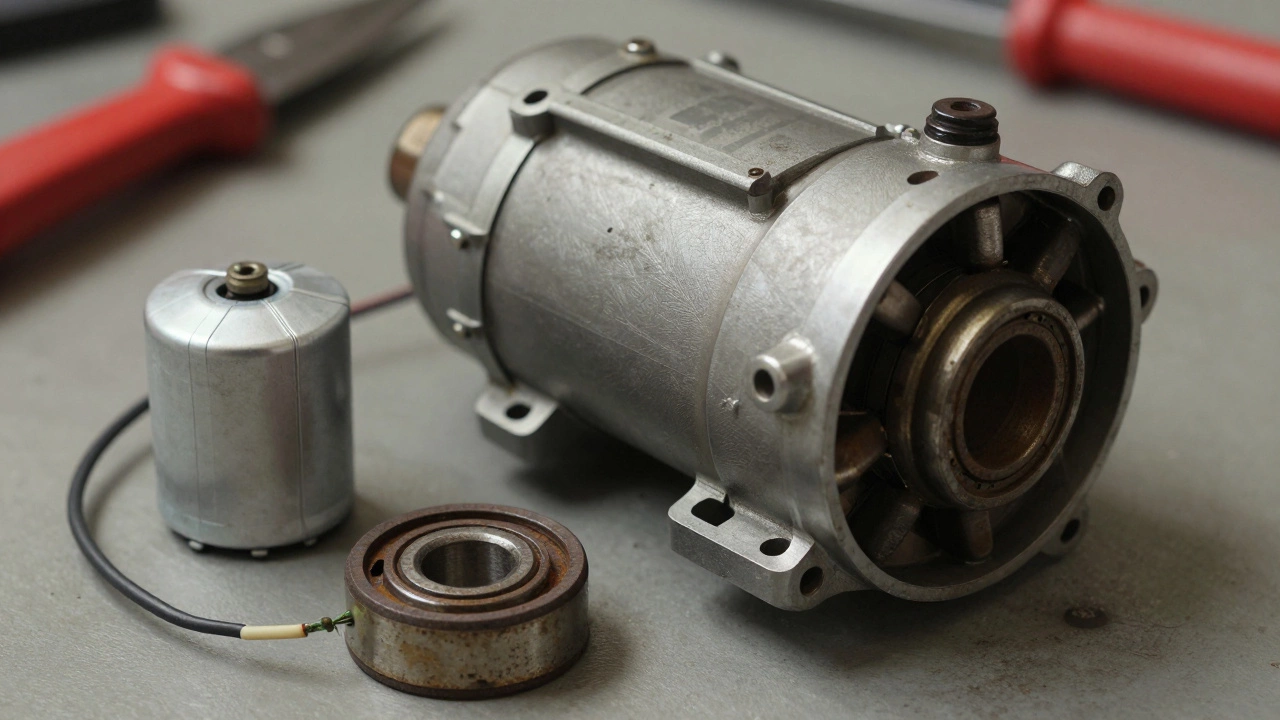
Loose or Corroded Wiring
Vancouver kitchens are damp. Constant steam means moisture gets into wall sockets, junction boxes, and behind the fan. Over time, copper wires corrode. Connections loosen. That’s why your fan works sometimes but not others. Or why it only runs when you jiggle the switch. Check the wiring at the fan’s terminal block. Look for greenish buildup, frayed insulation, or wires that pull out easily. If you see corrosion, turn off the circuit breaker. Clean the terminals with fine sandpaper. Reconnect tightly. If the wires are brittle, replace them. Don’t just tape them. That’s a fire risk.Faulty Switch or Pull Cord
The switch on your wall or the pull cord on the fan itself can wear out. Especially if it’s been used daily for 10+ years. I’ve seen pull cords snap inside the housing, or switches that click but don’t complete the circuit. Test it: bypass the switch. Unplug the fan. Disconnect the wires going to the switch. Twist them together temporarily (use electrical tape). Plug it back in. If the fan runs, the switch is dead. Replace it. It’s a $12 part. No rewiring needed-just match the terminals.Power Issues: Tripped Breaker or Faulty Outlet
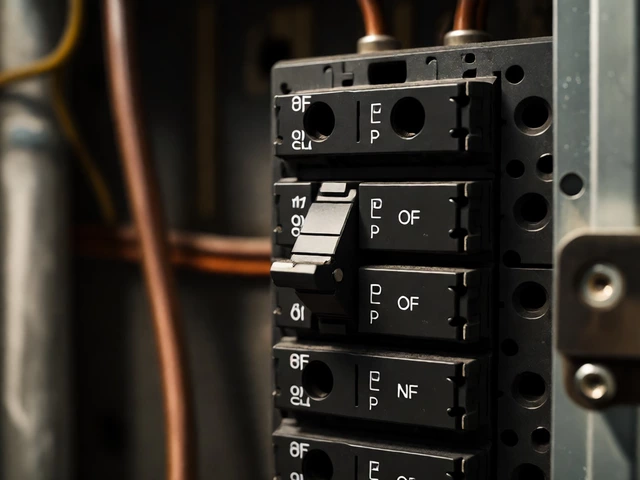
Sometimes, the fan isn’t the problem. The circuit is. Kitchen circuits are often overloaded. If you’ve added a new appliance-say, a sous-vide cooker or a high-wattage coffee maker-it might be pushing the circuit past its limit. The breaker trips. Or the outlet is loose. Try plugging a lamp into the same outlet. If it doesn’t turn on, the issue is upstream. Check your breaker panel. Look for a switch that’s halfway off. Reset it. If it trips again, don’t keep resetting it. Call an electrician. You’ve got a wiring fault.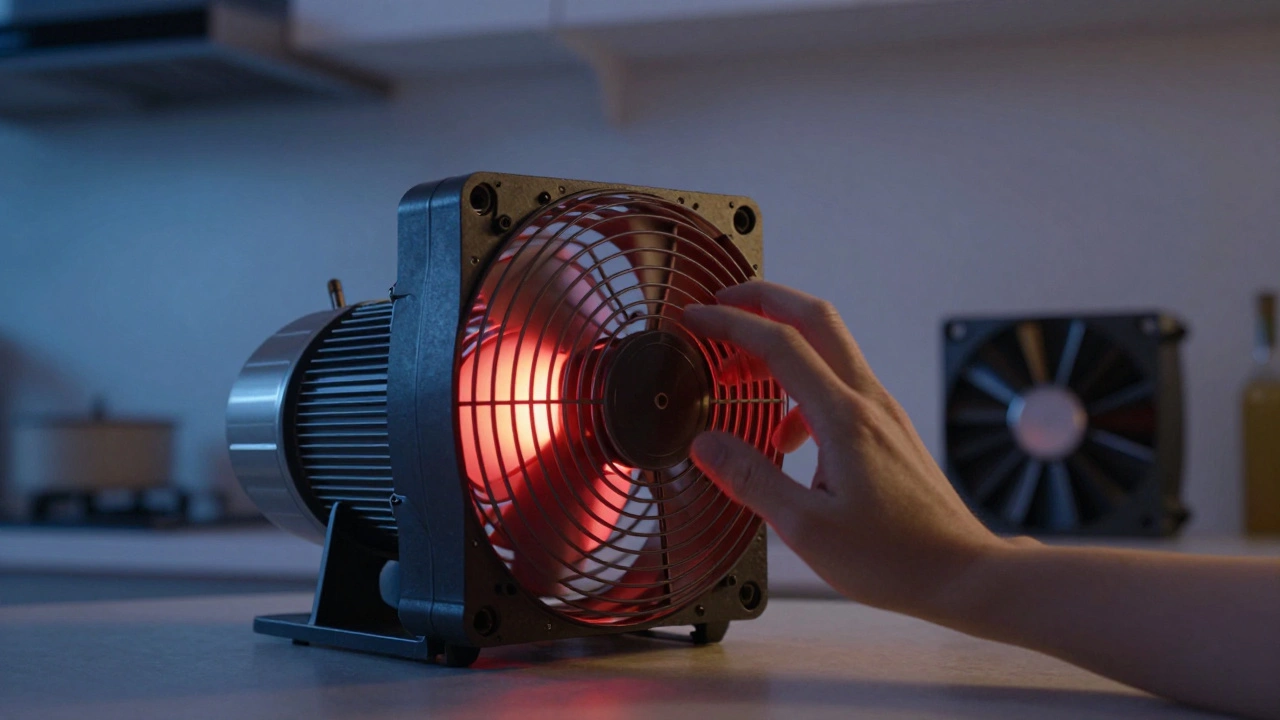
Age and Build Quality
Not all fans are created equal. Cheap models from big-box stores often use plastic bushings, thin wire, and low-grade motors. They’re designed to last 3-5 years. Not 15. If your fan is over a decade old and has never been cleaned, it’s not a repair job-it’s a replacement. Modern extractor fans are quieter, more efficient, and have better safety features. Look for ones with thermal overload protection, washable grease filters, and brushless DC motors. They cost more upfront but save you money in repairs and electricity.Quick Checklist: What to Check First
If your extractor fan stopped working, follow this order:- Is the circuit breaker tripped? Reset it.
- Test the outlet with another device.
- Listen for a hum-if you hear one, the capacitor or motor is suspect.
- Spin the blade by hand. Is it stiff? Bearings are likely worn.
- Remove the filter. Is it clogged with grease? Clean or replace it.
- Check the duct. Is it kinked or blocked? Clear it out.
- Bypass the wall switch. If the fan runs, replace the switch.
If you’ve checked all of these and it still doesn’t work, the motor itself is probably dead. Replacing it is straightforward. You don’t need to replace the whole unit unless the housing is cracked or rusted through.
When to Call a Professional
You can fix 90% of extractor fan problems yourself. But if you’re uncomfortable with electricity, if the fan is wired into a dedicated circuit, or if you smell burning plastic, stop. Call a licensed electrician or appliance technician. A faulty fan can overheat and ignite grease buildup. That’s not a DIY fix.Prevention Is the Best Repair
Clean your grease filter every month. Vacuum the duct every 6 months. Don’t let steam build up. Run the fan for 15 minutes after cooking-even if you think it’s not necessary. That’s how you avoid the big failures. Most fans die slowly. You just stop noticing the warning signs.Why does my extractor fan turn on and off by itself?
This usually means the motor is overheating because of restricted airflow. Check the duct for blockages and clean the grease filter. If the fan still cycles on and off after cleaning, the thermal overload protector inside the motor may be faulty and needs replacement.
Can a dirty filter cause the fan to stop working?
Yes. A clogged filter doesn’t stop the fan directly, but it forces the motor to work harder. Over time, this causes overheating, which triggers the safety cutoff. Cleaning the filter regularly prevents this chain reaction.
Is it worth repairing an old extractor fan?
If the fan is over 10 years old, it’s usually cheaper to replace it. Modern fans use less energy, are quieter, and have better safety features. Repairing an old unit might cost $80-$150, while a new one with installation runs $120-$300-and lasts longer.
What’s the difference between an extractor fan and an exhaust fan?
There’s no technical difference. "Extractor fan" is the term used in Canada and the UK for kitchen ventilation fans. "Exhaust fan" is the common term in the U.S. Both remove air, moisture, and odors from a room. The same troubleshooting steps apply to both.
Can I install a new extractor fan myself?
Yes, if you’re replacing a similar model. Turn off the power, disconnect the old unit, match the duct size and wiring, and mount the new one. If you’re moving the duct or changing the circuit, hire a professional. Improper venting can cause mold or violate building codes.