Fridge Health Check Tool
This tool helps you identify signs of refrigerator failure based on the article's criteria. Answer the questions below to determine if it's time for a replacement.
Ever open your fridge and wonder if it’s just being slow-or if it’s done for good? Most people keep their refrigerators way past their prime, hoping it’ll bounce back. But a failing fridge doesn’t just waste electricity-it can ruin your food, flood your kitchen, or even become a fire hazard. You don’t need to be a technician to spot when it’s time to walk away. Here are the seven clear signs your refrigerator is past saving.
1. It’s Over 10 Years Old
Most refrigerators last between 10 and 15 years. If yours was made before 2016, it’s already in the danger zone. Energy Star says newer models use 40% less power than those made before 2014. That means your 12-year-old fridge could be costing you $150 extra a year in electricity alone. Even if it’s still running, the compressor is likely working harder than it should. Replacing it isn’t just about convenience-it’s about saving money over time.
2. Food Keeps Spoiling Faster Than Usual
If your milk sours before the date, lettuce turns slimy in three days, or leftovers develop mold overnight, your fridge isn’t holding temperature. The ideal fridge temperature is between 35°F and 38°F. If it’s above 40°F, bacteria grow fast. Use a simple fridge thermometer (they cost $5 at any hardware store). If it’s consistently above 40°F, even after you adjust the dial, the thermostat or evaporator fan is failing. Repairing it might cost $200-more than half the price of a new entry-level fridge.
3. The Back or Bottom Is Hotter Than It Should Be
It’s normal for the back of a fridge to feel warm-cooling systems dump heat there. But if the area is so hot you can’t touch it, or if the floor near the compressor is warm, something’s wrong. A dirty condenser coil can cause this, but if you’ve cleaned it and it’s still overheating, the compressor is straining. Compressors don’t get tired-they fail. Once they start overheating, they won’t recover. A replacement compressor costs $400-$600. That’s not a repair. That’s a new fridge with extra steps.
4. It’s Noisier Than Ever
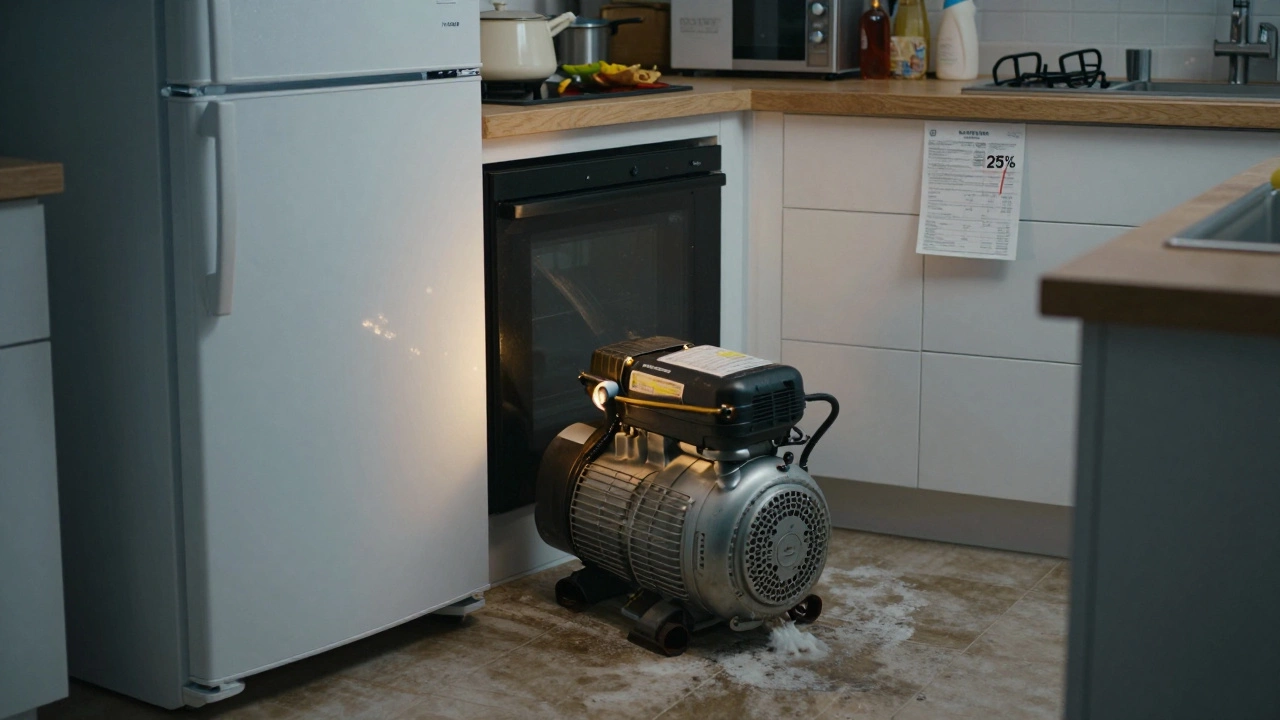
All fridges hum. But if it’s suddenly clanking, grinding, or buzzing like a lawnmower, that’s not normal. A failing compressor makes a loud, low rumble. A broken evaporator fan sounds like a jet engine inside the freezer. A worn-out condenser fan buzzes like a stuck transformer. These aren’t minor issues-they’re symptoms of internal breakdown. If you hear these sounds and the fridge isn’t cooling properly, don’t waste time on a technician’s diagnostic fee. Just replace it.
5. Frost Builds Up in the Freezer (Even If It’s a Frost-Free Model)
Frost-free fridges are supposed to auto-defrost. If you’re now scraping ice off the back wall every few weeks, the defrost heater or timer has failed. This isn’t just a nuisance-it’s a sign the cooling system is out of balance. Ice buildup blocks airflow, so the fridge can’t cool evenly. You might think a manual defrost fixes it, but the root problem stays. Within months, the ice returns, and now the compressor is working overtime. Replacing the defrost kit costs $150-$250. But if the compressor is already stressed, you’re just delaying the inevitable.
6. The Door Seal Is Cracked or Won’t Close Tightly
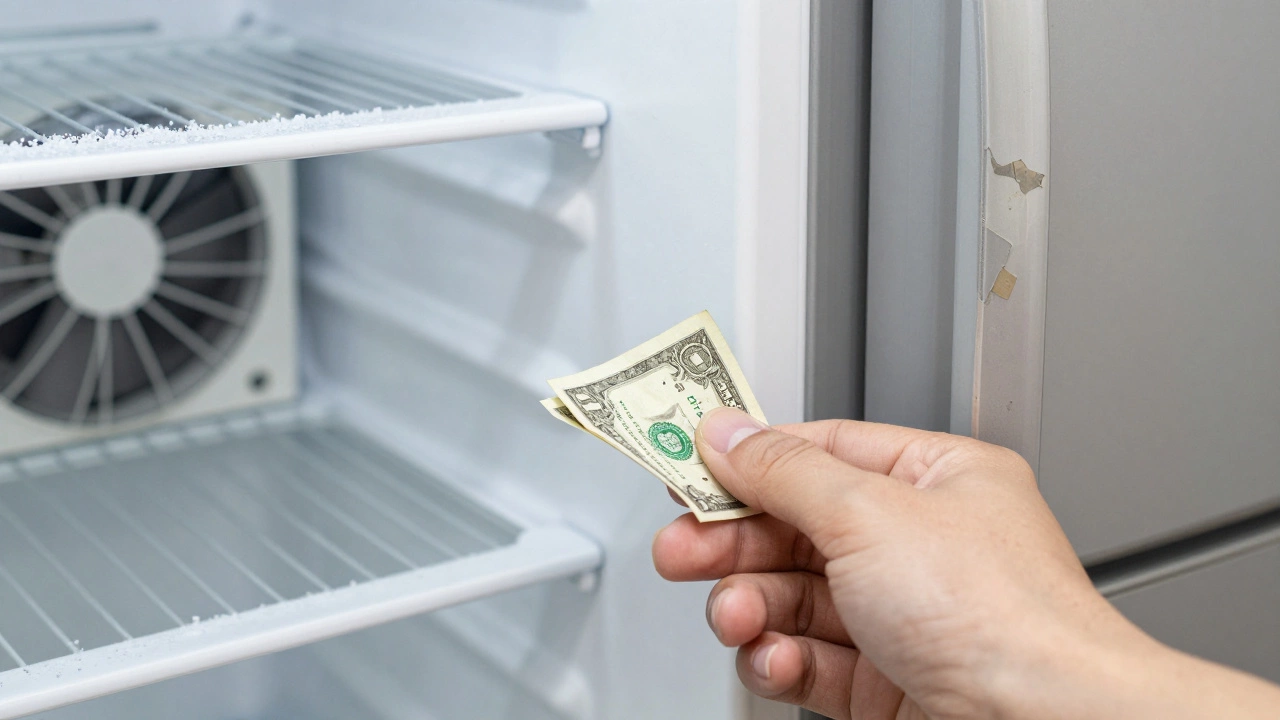
Check the gasket-the rubber seal around the door. Run your hand along it. If you feel cold air leaking out, or if the seal is cracked, brittle, or peeling, cold air escapes. You can test it: close the door on a dollar bill. If you can pull it out easily, the seal is bad. A bad seal means your fridge works 50% harder to stay cold. That’s extra electricity and faster wear on the compressor. Replacing the gasket costs $50-$80. But if your fridge is older than 8 years, the rest of the system is already aging. Fixing the seal won’t fix the real problem.
7. Your Electric Bill Has Spiked Without Reason
Look at your utility bills from the past 3 years. If your fridge usage has jumped 25% or more without changes in weather or usage, the fridge is leaking energy. Modern fridges use 300-500 kWh per year. An old one can use 800-1,200 kWh. That’s $100-$150 extra per year. Add that up over five years? That’s enough to buy a new fridge outright. Some energy companies even offer rebates when you replace an old fridge. Check your local utility-they might pay you $50-$100 to get rid of it.
What to Do Next
If you’ve checked off two or more of these signs, it’s time to replace. Don’t wait for it to die completely. A fridge that stops working suddenly can leak coolant, flood your kitchen, or overheat and catch fire. Look for ENERGY STAR-certified models-they’re quiet, efficient, and often come with smart features like temperature alerts. Many retailers offer free removal when you buy a new one. And if you’re unsure, take a photo of the model number and search online. If the manufacturer stopped making parts for it five years ago, repair isn’t worth it.
Replacing a fridge isn’t a luxury. It’s a smart home decision. A failing fridge doesn’t just waste money-it wastes food, safety, and peace of mind.
Can I fix a fridge that’s not cooling instead of replacing it?
You can try, but only if the fridge is under 8 years old and the issue is simple-like a dirty coil, a faulty thermostat, or a broken fan. If the compressor is failing, the defrost system is broken, or the unit is over 10 years old, repair costs will likely exceed 60% of a new fridge’s price. In those cases, replacement is cheaper and safer in the long run.
How long should a refrigerator last?
Most refrigerators last between 10 and 15 years. High-end models with better components might reach 18 years, but that’s rare. Budget models often fail before 8 years. The key isn’t just age-it’s how hard the compressor has been working. If you notice signs like excessive heat, strange noises, or rising energy bills, it’s aging faster than expected.
Is it worth repairing a 12-year-old fridge?
Generally, no. A 12-year-old fridge is at or past its expected lifespan. Even if a $300 repair fixes one issue, the compressor or seals are likely near failure. You’ll face another repair in 6-12 months. New ENERGY STAR fridges pay for themselves in energy savings within 3-5 years. Plus, they’re quieter, more reliable, and often come with warranties.
Why does my fridge smell bad even after cleaning it?
A persistent bad smell usually means moisture has been trapped for months-often because the fridge isn’t cooling properly. Condensation builds up in hidden drains or behind panels, letting mold and bacteria grow. If cleaning doesn’t fix it, the evaporator drain line might be frozen or blocked. This points to a deeper cooling system failure. The smell won’t go away until the fridge maintains proper temperature.
Can a bad fridge cause a fire?
Yes. A failing compressor can overheat and ignite insulation or wiring. Older models often use flammable refrigerants or lack modern thermal cutoffs. If your fridge is making loud buzzing sounds, the back is extremely hot, or you smell burning plastic, turn it off immediately and unplug it. Don’t wait. Fire risk increases sharply after 10 years, especially if the unit has been repaired multiple times.