Cooker Repair vs. Replacement Calculator
Enter Appliance Details
Enter your details to see if you should repair or replace your cooker.
Your kitchen is the heart of your home, but that heart just stopped beating. The oven won’t heat up, or maybe the burners on your gas cooker are sputtering out. You’re staring at a cold meal and a broken appliance, wondering if you should call a technician or head to the store for a new one. This is a classic dilemma that hits every homeowner eventually. The answer isn't always black and white, but there is a clear framework to help you decide without losing money or sanity.
In 2026, with inflation still impacting big-ticket items and energy efficiency standards rising, the decision to repair or replace has shifted. It’s no longer just about the price tag; it’s about long-term value, safety, and environmental impact. Let’s break down exactly how to calculate whether fixing your current unit makes sense or if it’s time to upgrade.
The 50% Rule: Your First Line of Defense
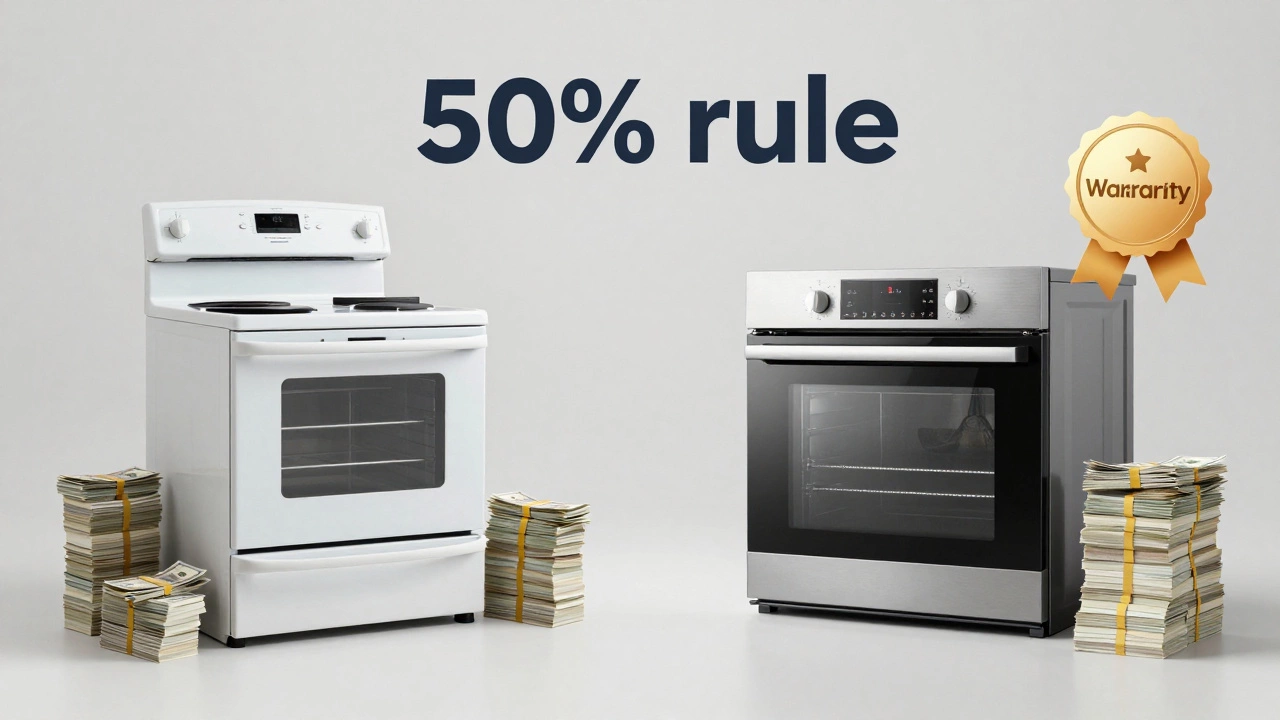
The most reliable heuristic in the appliance industry is known as the 50% rule. It’s simple math that saves you from emotional spending. If the cost of the repair exceeds 50% of the price of a comparable new unit, you should generally replace the appliance.
Why 50%? Because once you pay half the price of a new machine to fix an old one, you’re essentially buying a used product with unknown future reliability. Imagine your electric range costs $800 to replace. If the repair quote comes back at $450, you’re better off buying new. You get a warranty, modern features, and peace of mind. However, if the repair is $150 for a simple thermostat swap, the math clearly favors fixing it.
This rule applies regardless of the brand. Whether you own a budget model or a high-end smart oven, the percentage threshold remains the same. It protects you from the "sunk cost fallacy," where you keep pouring money into a dying asset because you’ve already invested so much.
Age Matters More Than You Think
How old is your cooker? Age is the silent killer of appliances. Most standard cookers have a lifespan between 10 and 15 years. High-end models might stretch to 20 years, but they become increasingly expensive to maintain as parts become obsolete.
- Under 5 years: Almost always worth repairing. The core components (motors, heating elements) should last much longer. A failure this early is often a manufacturing defect covered by warranty.
- 5 to 10 years: The gray zone. Check the 50% rule. If the repair is minor (like a door seal or a burner cap), fix it. If it’s major (control board or igniter system), consider replacement.
- Over 10 years: Lean towards replacement. Even if the repair is cheap, other parts are likely nearing the end of their life. You risk paying for multiple repairs within a short period.
Think of it like a car. You don’t hesitate to fix a flat tire on a two-year-old sedan. But if the transmission blows on a fifteen-year-old rust-bucket, you start looking at dealerships. Appliances work the same way.
Gas vs. Electric: Different Repair Profiles
The type of fuel your cooker uses changes the repair calculus significantly. Gas cookers involve combustion, which introduces safety risks and more complex mechanical parts. Electric cookers rely on electrical circuits and heating elements, which are generally simpler but can be costly if the control board fails.
| Component | Gas Cooker Issue | Electric Cooker Issue | Typical Repair Cost (CAD) |
|---|---|---|---|
| Ignition/Heating | Faulty spark switch or clogged burner | Broken heating element | $100 - $300 |
| Control System | Gas valve failure | Electronic control board | $200 - $600 |
| Oven Temp | Thermocouple or thermostat | Sensor or relay | $150 - $400 |
| Safety Risk | High (Gas leak) | Medium (Electrical shock) | N/A |
If you have a gas cooker, safety is paramount. A faulty gas valve or cracked hose isn't just an inconvenience; it’s a hazard. In these cases, even if the repair is slightly over the 50% threshold, I recommend fixing it immediately rather than replacing the entire unit, provided the rest of the appliance is sound. Never attempt DIY fixes on gas lines. Call a certified technician.
For electric units, a failed heating element is common and relatively cheap to replace. However, if the main control board-the brain of the oven-goes out, the repair cost can skyrocket. Control boards are proprietary and often cost nearly as much as a new mid-range oven. When the brain dies, the body usually follows soon after.
Energy Efficiency: The Hidden Cost of Old Appliances
We often forget that older appliances are energy hogs. An oven manufactured in 2015 is significantly less efficient than one built in 2026. Newer models feature better insulation, precise temperature controls, and convection fans that cook food faster using less energy.
Consider the energy efficiency rating. In Canada, look for Energy Star certification. A new efficient oven can save you hundreds of dollars annually on electricity or gas bills, especially if you cook daily. Over five years, those savings can offset the initial purchase price of a new unit. If your current cooker takes 30 minutes longer to preheat and loses heat rapidly when the door opens, you’re literally burning money every time you bake a cake.
Also, think about convenience. Modern ovens come with self-cleaning cycles, steam assist, and smart connectivity. While these aren’t essential, they improve your quality of life. If you hate scrubbing burnt-on grease, a pyrolytic self-clean function might be worth the upgrade alone.
When DIY Makes Sense (And When It Doesn’t)
Not every problem requires a professional. Some issues are quick fixes that can save you a service call fee, which typically ranges from $75 to $150 in Vancouver just for the visit.
You can safely handle:
- Cleaning clogged burner ports on a gas stove with a needle or pin.
- Replacing a glass cooktop surface if it’s cracked (if you buy the exact part).
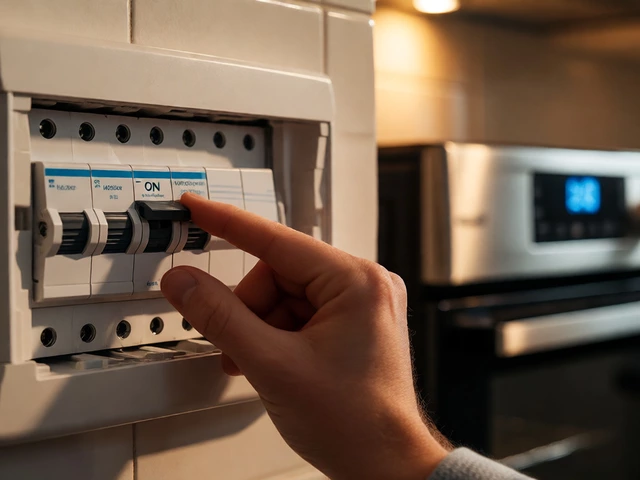
- Checking the circuit breaker if the entire unit is dead.
- Replacing door seals or gaskets, which wear out over time.
However, do not touch:
- Internal wiring or control boards unless you are qualified.
- Gas valves or pressure regulators.
- Compressors or motors in built-in ovens.
Mistakes here can void warranties, cause fires, or lead to gas leaks. If you’re unsure, stop. The cost of a professional diagnosis is often worth avoiding a catastrophic error.

Environmental Impact: Repair vs. Replace
In 2026, sustainability is a major factor. Manufacturing a new appliance consumes significant resources-steel, glass, electronics, and packaging. Transporting it to your home adds carbon emissions. Throwing away a working-but-broken unit contributes to landfill waste.
If your cooker is under 10 years old and the repair is minor, fixing it is the greener choice. You extend the life of the existing product. However, if the unit is ancient and inefficient, replacing it with a high-efficiency model reduces your long-term carbon footprint through lower energy consumption. It’s a balance between immediate waste and long-term resource use.
Recycling your old cooker is also easier now. Many retailers offer haul-away services when you buy a new one. Ensure the old unit is properly recycled, particularly if it contains refrigerants (in some combo units) or hazardous materials.
Decision Checklist: What Should You Do?
To make your final decision, run through this quick checklist:
- Get a Quote: Call two local technicians. Ask for a diagnostic fee and an estimate for the repair. Don’t just ask "how much"; ask "is this a recurring issue?"
- Check the Age: Find the serial number online to determine the manufacture date. Is it past its prime?
- Calculate the 50% Rule: Compare the repair cost to the price of a similar new model at Home Depot or Best Buy.
- Assess Safety: Are there gas smells, sparks, or erratic temperatures? If yes, prioritize safety over cost.
- Consider Usage: Do you cook every day? If so, downtime is costly. A new unit offers reliability. If you rarely cook, a cheap repair might suffice.
If you’re still on the fence, lean towards replacement if the unit is over 10 years old. The peace of mind and efficiency gains usually outweigh the upfront cost. But if it’s a newer model with a simple fix, repair it. You’ll save money and reduce waste.
How much does it cost to repair a cooker in Vancouver?
In Vancouver, labor rates for appliance repair technicians typically range from $90 to $150 per hour. Diagnostic fees usually sit between $75 and $120. Simple repairs like replacing a heating element or igniter may cost $150-$300 total. Complex issues involving control boards or gas valves can exceed $500. Always ask for a written estimate before authorizing work.
Is it safe to use a cooker with a broken igniter?
No, it is not safe. If the igniter fails, gas may build up without lighting, creating a risk of explosion or fire. Never manually light a gas burner with a match if the automatic ignition system is broken. Turn off the gas supply and call a professional immediately.
Can I replace an oven heating element myself?
Yes, replacing a heating element is one of the few DIY-friendly repairs. It usually involves unscrewing the old element and plugging in the new one. However, ensure the power is disconnected at the breaker first. If you are uncomfortable with electrical components, hire a technician to avoid shock hazards.
What signs indicate my cooker needs replacement instead of repair?
Key signs include: frequent breakdowns (more than twice a year), age over 10-12 years, uneven heating that cannot be calibrated, strange noises from internal motors, and visible rust or damage to the interior. If the repair cost exceeds 50% of a new unit's price, replacement is financially smarter.
Do new cookers really save money on energy bills?
Yes, especially if your current unit is older than 10 years. Modern ovens have better insulation and more efficient heating elements. Convection fans circulate hot air more effectively, reducing cooking times by up to 25%. Over several years, these savings can amount to hundreds of dollars, helping to offset the initial purchase cost.