Oven Temperature Calibration Assistant
This tool helps you determine if your oven is running too hot or too cold based on your actual temperature reading. Most home ovens are accurate within ±25°F. If your oven is off by more than 50°F, you'll need to recalibrate or replace the temperature sensor.
Calibration Results
Recommended Adjustment: Enter this value in your oven's settings under "Calibrate," "Temp Adjust," or "Offset."
Important: If your oven is off by more than 50°F, it may need a temperature sensor replacement. For professional assistance, contact a technician.
Your oven won’t heat up. The display is blank. Or maybe it’s heating, but unevenly-burning cookies on one side and leaving the other raw. You’re standing there, hungry, staring at a broken appliance that’s supposed to make dinner. Before you call a technician or start shopping for a new one, try these simple fixes. Most oven problems are easy to diagnose and fix yourself-no special tools needed.
Is the oven getting power?
Before you dive into heating elements or thermostats, check the obvious: is the oven even getting electricity?
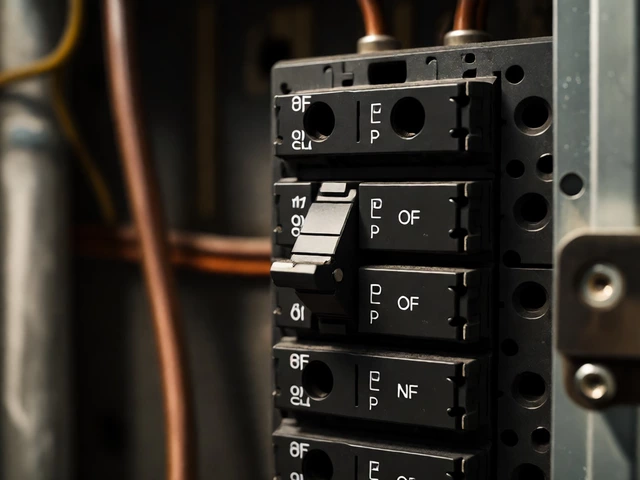
Start by looking at the display. If it’s completely dead, no lights, no beeps, no clock, the issue is likely power. First, check if the outlet is working. Plug in a lamp or toaster. If it doesn’t turn on, the circuit breaker might’ve tripped. Head to your electrical panel and look for a breaker labeled "Oven," "Range," or "Kitchen." Flip it off and back on. If it trips again right away, stop. That’s a wiring issue-you need an electrician.
If you have a gas oven with an electric ignition, the same rules apply. Even gas ovens need power for the control panel and spark igniter. No power? No flame.
Also, check if your oven has a dedicated outlet. Some models, especially older ones, plug into a standard wall socket. Make sure the plug is fully seated. A loose connection can cause intermittent problems.
The oven won’t heat up-what’s broken?
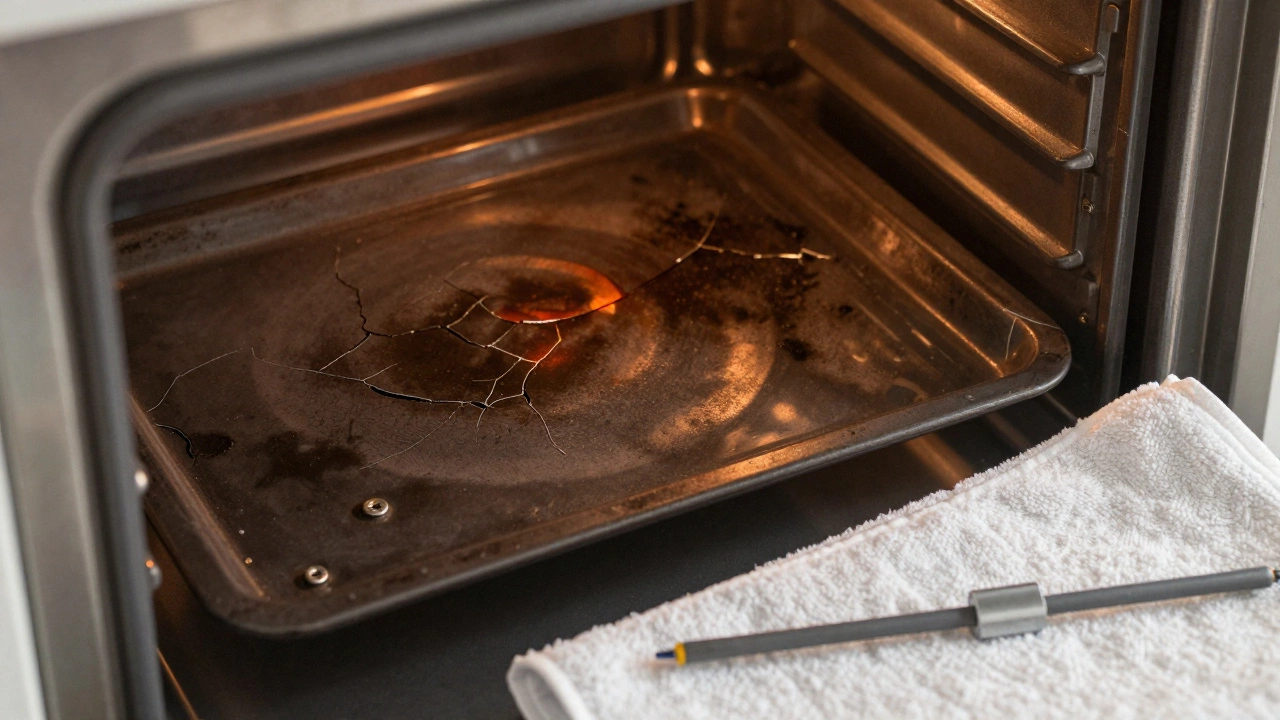
If the display works but the oven doesn’t heat, you’ve got a heating element issue. Most electric ovens have two elements: a bake element (bottom) and a broil element (top). The bake element does most of the work during normal cooking.
Turn the oven on to 350°F and watch through the door. If the bottom element doesn’t glow bright orange after 5-10 minutes, it’s likely burned out. You might see dark spots, cracks, or sections that look melted. That’s it-dead element.
Replacing it is simple. Unplug the oven or shut off the breaker. Remove the two screws holding the element in place. Pull it out a few inches and unplug the wires. Plug in the new one (they’re usually sold with the connectors already attached), push it back in, and screw it down. Reconnect power. Test it.
Broil element problems are rarer but possible. If broiling doesn’t work but baking does, the broil element is likely the culprit. Same fix: unplug, remove, replace.
Temperature feels off-oven runs too hot or too cold
Ever baked a cake and it’s burnt on the outside but doughy in the middle? Or roasted chicken that took two hours to reach 165°F? Your oven’s thermostat might be off.
Most home ovens are accurate within ±25°F. But if it’s off by more than 50°F, you need to recalibrate or replace the temperature sensor.
Here’s how to test it: buy an oven thermometer-$10 at any hardware store. Place it in the center of the middle rack. Set the oven to 350°F. Wait 20 minutes. If the thermometer reads 300°F or 400°F, your oven is way off.
Many modern ovens let you adjust the temperature calibration in the settings menu. Look for "Calibrate," "Temp Adjust," or "Offset." You can usually add or subtract up to 35°F. If your oven reads 30°F low, set the offset to +30. Test again.
If your oven doesn’t have a calibration setting, the temperature sensor (a thin metal probe inside the oven cavity) is likely faulty. It looks like a thin metal rod with a wire leading to the back panel. Unplug the oven, remove the back panel, and test the sensor with a multimeter. At room temperature, it should read around 1000-1100 ohms. If it reads open circuit (infinite resistance) or way off, replace it. Sensors cost $25-$50 and are easy to swap.
Self-cleaning mode won’t start or gets stuck
Self-cleaning cycles are high-heat, high-pressure events. If your oven won’t start the cycle, the most common cause is a faulty door latch.
The oven locks automatically during cleaning to prevent burns. If the latch motor or sensor fails, the control board won’t allow the cycle to start. You might hear a click but no heat. Or the door stays locked after cleaning ends.
Try this: unplug the oven for 10 minutes. Plug it back in. Reset the control board. If that doesn’t work, manually unlock the door. Most models have a manual release lever behind the lower kickplate. Remove the panel, find the lever, and pull it gently. If the door opens, the latch assembly is broken and needs replacing.
If the oven starts cleaning but stops mid-cycle, it’s usually due to overheating. The cooling fan might be clogged with dust or dead. Check the fan behind the control panel. If it’s not spinning, replace it. Cleaning the fan blades with a vacuum can also help.
Igniter won’t spark on a gas oven
Gas ovens don’t use glow bars like stovetops. Instead, they have an electric igniter that sparks to light the gas. If you turn the oven on and hear nothing-not even a click-it’s either the igniter or the control board.
First, check the gas supply. Is the shutoff valve open? Is the stove top burners working? If they are, the gas line is fine. The problem is electrical.
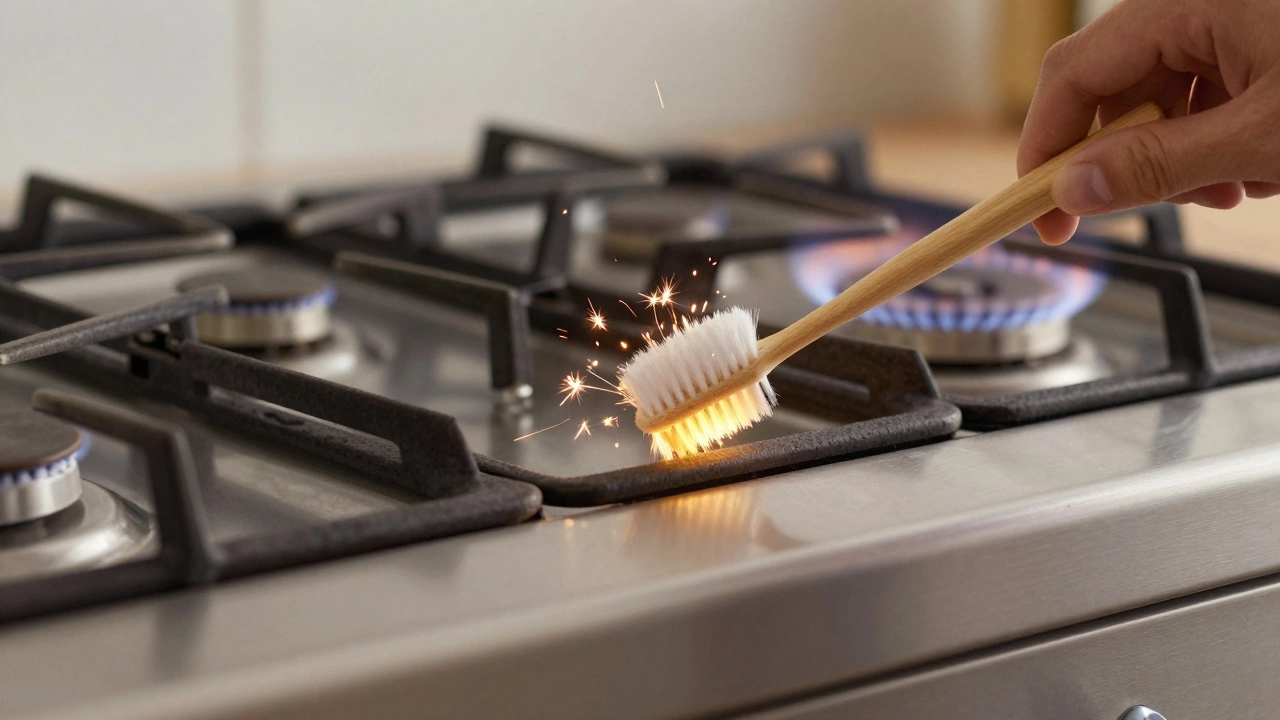
Listen closely when you turn the oven on. If you hear a faint buzzing or clicking, the igniter is trying to work but might be dirty. Use a dry toothbrush to clean the igniter tip. No spark? Try replacing the igniter. They cost $40-$70 and are easy to swap. Just disconnect the wires, unscrew it, and install the new one.
If there’s no sound at all, the control board might be dead. That’s a more expensive fix-$150-$300. Consider whether your oven is worth repairing. If it’s over 12 years old, replacement is often smarter.
Why is my oven making strange noises?
Ovens aren’t silent. But some sounds mean trouble.
A loud popping or cracking noise during preheating? That’s the metal expanding. Normal.
A continuous humming or buzzing? Could be the cooling fan, the transformer, or the control board. If it’s new and loud, check if something’s loose inside. If it’s old and getting louder, the fan motor is wearing out.
A clicking sound every few seconds? That’s the thermostat cycling the heat on and off. Normal.
But if you hear a loud bang when turning the oven on, especially in a gas oven, that’s gas building up before ignition. Turn it off immediately. This is dangerous. Call a technician. Don’t use it again until it’s fixed.
When to call a professional
You can fix most oven issues yourself. But some problems need a pro.
Call a technician if:
- The oven trips the breaker repeatedly
- You smell gas (even faintly)
- The control panel is completely dead and resetting doesn’t help
- You see melted wires, burnt plastic, or smoke
- You’re uncomfortable working with electricity or gas
Also, if your oven is over 15 years old, parts are harder to find, and repair costs might exceed half the price of a new one. New mid-range ovens start at $600. If your repair bill hits $400+, think about replacement.
Prevent future problems
Good maintenance keeps your oven running longer.
- Clean spills right away. Burnt-on food can damage the enamel and cause smoke.
- Don’t use abrasive cleaners on the interior. Use baking soda and water.
- Check the door seal yearly. If it’s cracked or loose, heat escapes and efficiency drops.
- Keep the vents clear. Dust buildup on the cooling fan causes overheating.
- Replace the oven light bulb with the right wattage. Wrong bulbs can overheat the housing.
A well-maintained oven lasts 15-20 years. A neglected one can die in 8.