Electric Hob Lifespan Estimator
Most people don’t think about how long their electric hob will last until it stops working. You turn the knob, nothing happens. The burner flickers. Or worse - it heats unevenly, and your food burns on one side and stays raw on the other. That’s when you start wondering: how long do electric hobs last?
Typical Lifespan of an Electric Hob
On average, a well-maintained electric hob lasts between 10 and 15 years. That’s the number you’ll see in most manufacturer manuals and repair guides. But real-world use tells a different story. In homes where cooking happens daily - especially in households with kids, large families, or people who love to experiment in the kitchen - the average drops to 8 to 12 years.
Induction hobs, which use magnetic fields instead of glowing coils, tend to last longer. They often hit the 15-year mark because they have fewer moving parts and generate less heat on the surface. Traditional coil and halogen hobs, on the other hand, wear out faster. The heating elements crack, the wiring degrades, and the control panels become unreliable after repeated exposure to steam, spills, and cleaning chemicals.
What Kills an Electric Hob Faster?
It’s not just age. It’s how you treat it.
Spilled sugary sauces that bake onto the surface? That’s a silent killer. Over time, the residue seeps into the gaps around the controls and causes short circuits. You think you’re cleaning it, but you’re just spreading the damage.
Using metal scouring pads on ceramic glass tops? That scratches the surface. Once the glass is scratched, moisture gets in. Moisture + electricity = cracked elements or blown fuses. I’ve seen more than a dozen hobs in Vancouver homes where the user cleaned with steel wool and expected it to last 20 years. It didn’t.
Power surges are another silent enemy. If your home doesn’t have surge protection on the kitchen circuit, every lightning storm or neighbor’s AC kicking on can zap a little bit of life out of the hob’s control board. One surge might not kill it, but five over five years? That’s enough to make the display glitch or the burners turn on by themselves.
Signs Your Electric Hob Is Done
Here’s what to watch for - these aren’t minor annoyances. They’re red flags.
- One or more burners won’t heat at all, even after replacing the element
- The control panel shows error codes like E1, E2, or Err - and resetting doesn’t fix it
- It takes longer than usual to boil water or heat pans
- You smell burning plastic or ozone when you turn it on
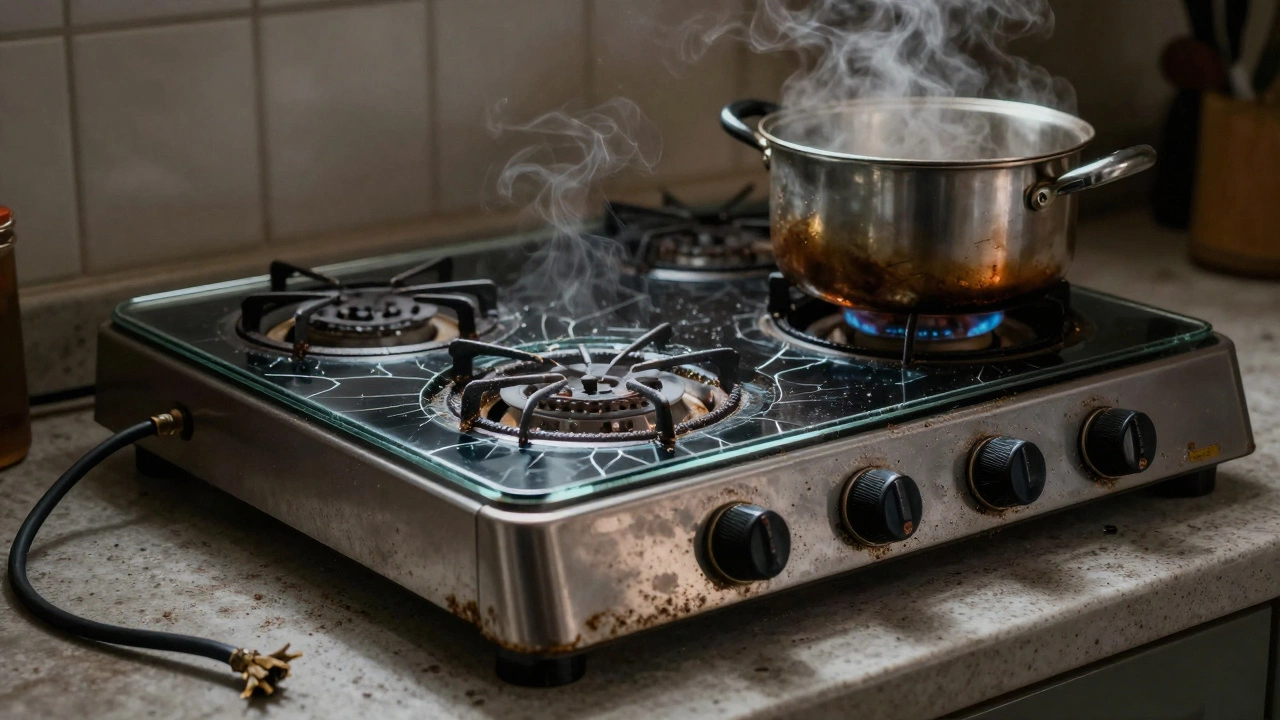
- The glass top is cracked, even if it’s just a hairline fracture
Some people try to fix cracked glass tops with epoxy. Don’t. It’s not safe. The heat expands the glass, and even a tiny crack can turn into a shock hazard. If the glass is broken, the hob is done. No repair shop will touch it.

Can You Extend the Life of Your Electric Hob?
Yes - but only if you act early.
Every six months, unplug the hob and clean under the control knobs. Dust and grease build up there, and it can cause the switches to stick or fail. Use a dry toothbrush or compressed air. Never spray cleaner directly on the controls.
Check the power cord and plug. If the cord feels stiff, looks frayed, or the plug is warm to the touch, replace it. A faulty cord can overload the circuit and damage the internal electronics.
Use flat-bottomed pots and pans. If your cookware rocks or wobbles on the surface, it puts pressure on the heating elements. That’s how coils break prematurely.
Install a simple surge protector for your kitchen outlet. They cost under $25 and can add years to your hob’s life. Most people don’t realize their appliances are connected directly to the home’s electrical system without any protection.
Repair vs. Replace: When to Decide
Here’s the rule of thumb: if the repair costs more than half the price of a new hob, walk away.
Replacing a single coil element? That’s $30-$60, plus labor. Worth it if the hob is under 8 years old.
Replacing the control board? That’s $200-$400. At that point, you’re looking at a new hob that costs $500-$800. Unless it’s a high-end model with special features, it’s rarely worth fixing.
Induction hobs are different. They’re more expensive to buy, but also more expensive to repair. A damaged induction coil can cost $300 just for the part. If your 12-year-old induction hob is failing, it’s usually cheaper to replace it than to fix it - especially since newer models are 30% more energy efficient.
What to Look for in a New Electric Hob
If you’re replacing it, don’t just grab the cheapest one on sale.
- Look for models with a 5- to 10-year warranty on the heating elements
- Choose ceramic glass with a scratch-resistant coating - it lasts longer and cleans easier
- Make sure the controls are touch-sensitive or rotary knobs, not touch buttons that get sticky
- Check if the hob has a child lock and auto-shutoff - safety features that also reduce accidental damage
- Stick with brands known for repairability: Bosch, Siemens, Electrolux, and Whirlpool all have widely available parts
Avoid no-name brands sold at warehouse clubs. They’re often built with cheaper materials and have zero support network. If something breaks, you’re stuck.
How Climate and Usage Affect Longevity
In places like Vancouver, where humidity is high and kitchens get steamy, electric hobs face extra stress. Moisture doesn’t just rust metal - it corrodes circuit boards slowly over time. If you cook with a lot of boiling water, steam, or pressure cookers, your hob is working harder than you think.
Also, if you live in an older home with outdated wiring, your hob might be getting inconsistent power. That causes the electronics to work harder and fail sooner. A licensed electrician can check your kitchen circuit load. If it’s running near capacity, upgrading the circuit might extend the life of your hob - and prevent a fire risk.
When to Call a Professional
Some problems you can fix yourself. Others? Not so much.
If you’re comfortable with basic tools, you can replace a burner element or clean the control panel. But if the hob is sparking, smoking, or tripping the breaker, turn it off and call someone. Don’t try to diagnose a faulty control board with a multimeter unless you know what you’re doing. One wrong touch can fry the whole unit - or worse, shock you.
Look for technicians who specialize in appliance repair, not general handymen. A good repair tech will test the voltage, check the wiring, and tell you if the problem is isolated or systemic. They’ll also let you know if the hob is worth fixing or if you’re throwing money away.
What Happens When It Dies?
Most people just toss their old hob in the garbage. Don’t.
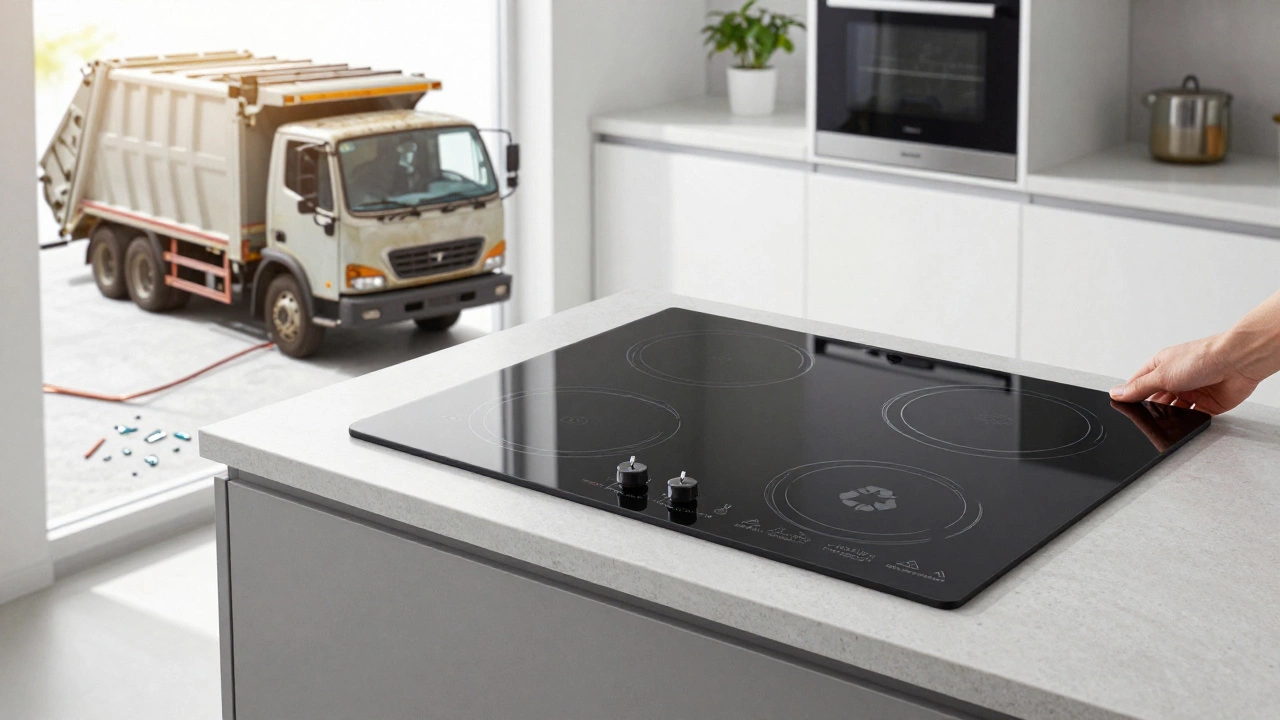
Electric hobs contain copper wiring, steel, glass, and sometimes rare earth magnets (in induction models). These materials can be recycled. Vancouver has several appliance recycling centers - check with the City of Vancouver’s waste management site. Some retailers even take back old units when you buy a new one.
Recycling isn’t just good for the planet. It’s often free, and some places even give you a small discount on your next purchase.
How long do electric hobs usually last?
Most electric hobs last between 10 and 15 years with normal use. Daily cooking, poor cleaning habits, or power surges can shorten that to 8-12 years. Induction models tend to last longer due to fewer mechanical parts.
Can I repair a cracked electric hob top?
No. Cracked ceramic glass is a safety hazard. Even small cracks can let moisture in, leading to electrical shorts or shocks. Repair shops won’t fix it - and DIY epoxy won’t hold up under heat. Replace the entire hob.
Is it worth repairing an electric hob?
Only if the repair costs less than half the price of a new unit. Replacing a burner element is worth it. Replacing the control board or power supply usually isn’t. For hobs over 8 years old, replacement is often the smarter choice.
What causes electric hobs to fail early?
Spilled food that bakes into controls, using metal scrubbers on glass tops, power surges without protection, moisture buildup in humid climates, and using warped or uneven cookware. These all stress the heating elements and electronics faster than normal wear.
Should I buy an induction hob instead?
If you cook often and want better efficiency, yes. Induction hobs heat faster, use less energy, and last longer - often 15+ years. They’re more expensive upfront but save money on electricity and replacements over time. Just make sure your cookware is magnetic (cast iron or stainless steel with a magnetic base).