Oven Repair Decision Tool
Answer 3 quick questions to find out who can fix your oven and estimate the cost.
Step 1: Power Status
What is happening when you try to turn on the oven?
Step 2: Circuit Check
Check your electrical panel. Is the breaker for the kitchen/range in the middle (off) position or flipped away from others?
Step 2: Visual Inspection
Open the door and look at the heating elements (top broil, bottom bake). Do you see any damage?
Step 3: Installation Type
How is your oven connected to the house?
Your electric oven decides to quit right before dinner. The display is dark, the racks are cold, and you’re staring at a brick of metal that used to bake your favorite sourdough. Your first instinct might be to call the person who handles all your house’s wiring: the electrician. But here is the tricky part-while an electrician understands voltage, circuits, and breakers, they are not always the right person to fix the internal mechanics of your kitchen appliance.
So, can an electrician repair an electric oven? The short answer is: it depends on where the problem lies. If the issue is with the home’s power supply, yes. If the issue is a broken thermostat or a burnt-out heating element inside the machine, probably not. Calling the wrong professional can cost you time and money, so let’s break down exactly who does what, when to call whom, and how to save yourself a service call fee by diagnosing the basics first.
The Difference Between House Wiring and Appliance Internals
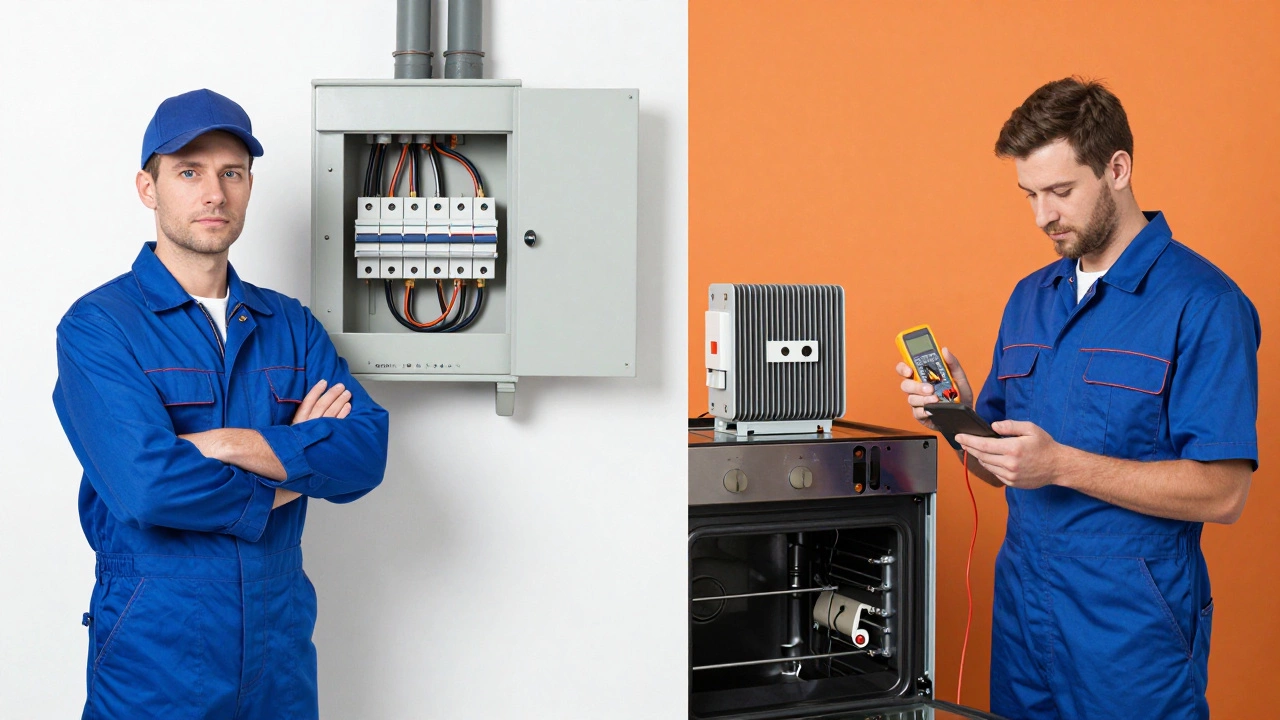
To understand why you might not want an electrician for every oven glitch, you have to look at what each professional is trained to do. An licensed electrician is a tradesperson qualified to install, maintain, and repair electrical wiring in buildings. Their expertise lies in the infrastructure: the panels, the breakers, the conduits running through your walls, and the outlets feeding your devices. They ensure that electricity gets from the grid to your plug safely and up to code.
An appliance repair technician, on the other hand, is a specialist focused on the mechanical and electronic components within specific household machines. They know how to replace thermal fuses, recalibrate control boards, swap out door switches, and diagnose sensor failures unique to brands like GE, Whirlpool, or Bosch. Think of it this way: an electrician builds the road; the appliance technician fixes the engine of the car driving on it.
If your oven isn’t getting power because the circuit breaker tripped, the electrician is your guy. If the breaker is fine but the oven still won’t heat, you need someone who knows how to open the back panel and test a heating element with a multimeter. Most general electricians do not carry spare oven parts, nor do they have the schematics for modern digital control boards.
When You Should Definitely Call an Electrician
There are specific scenarios where an electrician is the only correct choice. These usually involve the connection between your home’s electrical system and the appliance itself. Here is how to spot them:
- The breaker keeps tripping. If you reset the breaker and it immediately flips back off when you turn the oven on, you have a short circuit or an overload. This is a safety hazard. An electrician needs to inspect the wiring gauge and the outlet box to prevent fire risks.
- The oven is hardwired and shows no signs of life. Many large ranges are plugged into a 240-volt outlet, but some older models or built-in wall ovens are hardwired directly into the junction box. If there is no power, an electrician can check the continuity of the wires coming from the wall.
- You smell burning insulation near the outlet. This indicates overheating in the home’s wiring, not necessarily inside the oven. This requires immediate electrical inspection.
- You are installing a new oven and the existing outlet doesn’t fit. Modern ovens often require NEMA 14-50 plugs (four-prong), while older homes might have three-prong outlets. An electrician must upgrade the receptacle and verify the circuit amperage matches the oven’s requirements.
In these cases, the problem exists outside the appliance’s chassis. The electrician ensures the "delivery" of electricity is safe. Once they confirm power is reaching the terminal block inside the oven, their job is done.
When You Need an Appliance Technician Instead
Most oven problems are internal. The electricity arrives at the oven, but something inside stops it from doing its job. This is where appliance technicians shine. Common issues that fall into this category include:
- Burnt-out heating elements. Whether it’s the broiler at the top or the bake element at the bottom, these resistive coils eventually fail. They look like blackened tubes or flat ribbons. Replacing them takes twenty minutes and costs less than $50 for the part.
- Faulty temperature sensors. If your food is undercooked or overcooked despite the dial being set correctly, the thermistor (temperature sensor) might be sending bad data to the control board. A technician tests resistance values to confirm failure.
- Broken door switches. Many ovens won’t start if the door switch thinks the lid is open. If the oven hums but doesn’t heat, or if the interior light stays on constantly, the microswitch may be stuck or broken.
- Control board failures. Modern ovens are essentially computers. If the display flickers, buttons don’t respond, or error codes appear (like F9 or E6), the main electronic control board likely has a failed capacitor or relay. This requires specialized diagnostic tools.
Calling an electrician for these issues is like calling a plumber to fix a leaky faucet handle. They might be able to tell you water is flowing, but they won’t have the ceramic cartridge replacement part in their truck. An appliance technician carries a van full of universal and brand-specific parts, allowing them to fix the issue in one visit.
DIY Diagnostics: Before You Make Any Calls
Before you pay anyone a service call fee (which can range from $75 to $150), you can rule out several common issues yourself. Safety first: always unplug the oven or turn off the breaker before touching any internal components. However, you can check external factors without opening the machine.
- Check the circuit breaker. Go to your electrical panel. Look for the double-pole breaker labeled "Kitchen" or "Range." Is it in the middle (off) position? Flip it fully off, then back on. If it holds, try the oven again.
- Inspect the plug. If your oven plugs in, pull it out slightly (carefully!) to see if the prongs are melted or charred. A loose connection can cause arcing and power loss. If the plug looks damaged, stop using the oven and call an electrician.
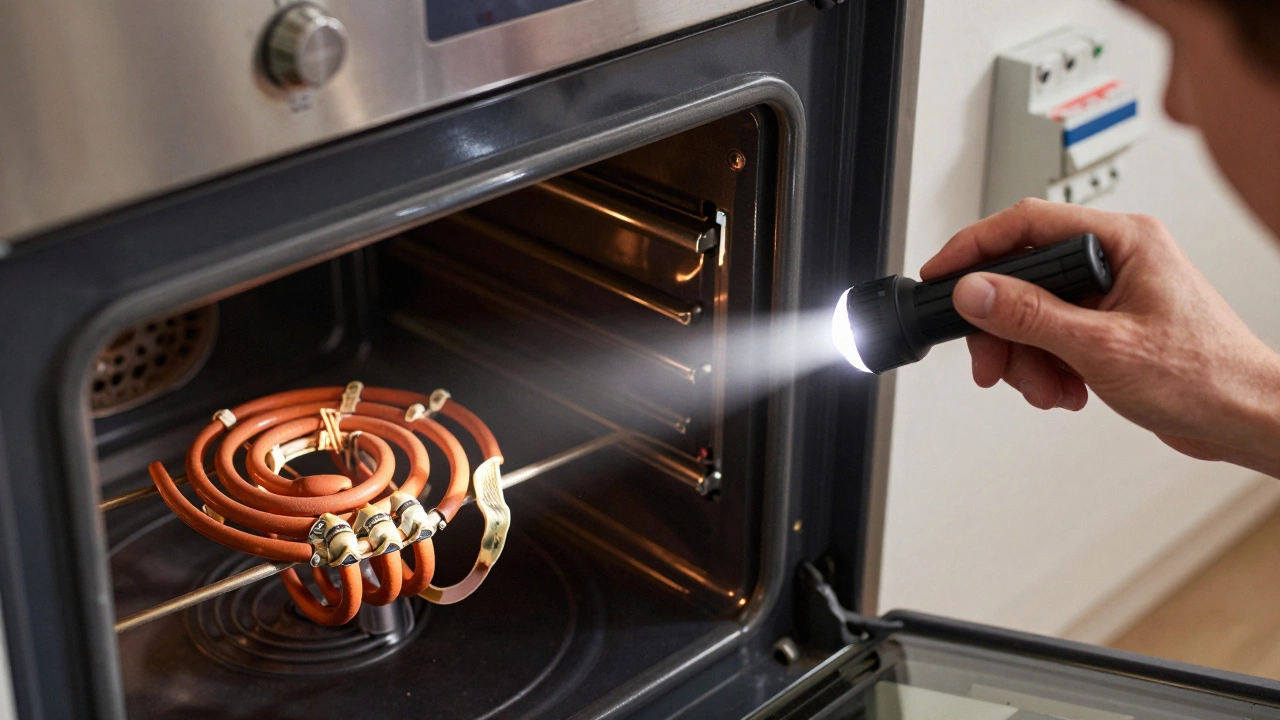
- Look for visible damage. Open the oven door. Shine a flashlight on the heating elements. Do you see blisters, holes, or glowing spots that shouldn’t be there? A broken element is obvious to the naked eye. You can buy replacements online using your model number.
- Test the self-clean cycle. Sometimes, the high heat of self-cleaning blows a thermal fuse. If the oven stopped working right after a clean cycle, the thermal fuse (usually located behind the rear panel) is likely blown. This is a cheap part but requires removing the back cover to access.
If these steps don’t resolve the issue, you’ve narrowed it down to an internal component failure. Now you need to decide who to call.
| Issue Type | Professional Needed | Why? |
|---|---|---|
| Tripping Breaker | Electrician | Problem is in home wiring/circuit load |
| No Power at Outlet | Electrician | Outlet or house wiring fault |
| Burnt Heating Element | Appliance Tech / DIY | Internal appliance component failure |
| Error Codes on Display | Appliance Tech | Requires control board diagnostics |
| Oven Won’t Heat but Lights Work | Appliance Tech / DIY | Element, relay, or sensor issue |
| New Installation (Wiring) | Electrician | Code compliance and safety connections |
Cost Comparison: Who Saves You Money?
Let’s talk dollars. Service call fees vary by region, but generally, licensed electricians charge higher hourly rates ($80-$120/hour) because their work involves structural building systems and strict licensing regulations. Appliance technicians often charge a flat diagnostic fee ($75-$100) plus parts and labor ($50-$90/hour).
If your oven has a simple broken heating element, an electrician might charge you $150 just to come out, realize it’s an internal part, and leave you with a referral. An appliance technician will likely fix it on the spot for a total bill of around $200-$300. If you’re handy, buying the element online costs $30, and you save the entire labor cost.
However, if the issue is a faulty 240-volt outlet, an appliance technician cannot legally or safely rewire your wall. They will tell you to call an electrician. In that case, the electrician’s rate is justified because they are upgrading your home’s infrastructure. Always ask for a diagnostic fee upfront and whether it applies toward the repair if you proceed.
Safety First: High Voltage Warnings
Electric ovens run on 240 volts. This is twice the voltage of standard household outlets and is lethal. Even when unplugged, capacitors in the control board can hold a charge. If you are not comfortable working with live wires or heavy appliances, do not attempt internal repairs.
Never bypass a thermal fuse or ground wire to make the oven work. These safety features exist to prevent fires. If you notice sparks, buzzing sounds from the outlet, or a burning smell, disconnect power immediately and call a professional. It is better to spend $100 on a diagnosis than to risk an electrical fire.
How to Choose the Right Pro
If you determine you need help, here is how to pick the right person:
- For wiring issues: Look for a licensed master electrician with insurance. Ask if they specialize in residential kitchens. Check reviews for mentions of "clean work" and "code compliance."
- For internal repairs: Find a certified appliance repair technician. Ideally, choose someone authorized by your oven’s manufacturer (e.g., Samsung, LG, Bosch). They have access to proprietary parts and software updates. Independent techs are often cheaper and equally skilled for mechanical issues.
- Ask about warranties. Both electricians and appliance techs should offer a warranty on their workmanship (usually 30 days to 1 year). If they refuse, walk away.
Don’t be afraid to ask the electrician: "Are you comfortable replacing internal oven components?" If they hesitate, thank them and call an appliance specialist instead. Clear communication saves everyone time.
Can I hire an electrician to replace an oven heating element?
Technically, yes, but it is usually inefficient. Electricians focus on home wiring, not appliance parts. They may not have the specific element in stock, and their hourly rate is typically higher than an appliance technician's. Unless your electrician also offers appliance repair services, it is better to call a dedicated appliance technician for internal component replacements.
How much does it cost to have an electrician check an oven outlet?
A standard service call for an electrician ranges from $75 to $150. If they simply test the outlet and find it functional, you pay only the diagnostic fee. If they need to replace the outlet or upgrade the wiring, expect to pay an additional $150 to $400 depending on the complexity and local labor rates.
Is it safe to use my oven if the breaker trips occasionally?
No. Frequent breaker tripping indicates a serious issue, such as a short circuit, overloaded circuit, or failing component. Continuing to use the oven risks damaging the wiring in your walls, causing electrical fires, or destroying the oven’s control board. Turn off the breaker and call a professional immediately.
What is the most common reason an electric oven stops heating?
The most common causes are a burnt-out bake or broil heating element, a faulty temperature sensor, or a blown thermal fuse. These are internal mechanical or electronic failures, not electrical supply issues, which is why an appliance technician is the preferred professional for these repairs.
Do I need a permit to have an electrician install a new oven circuit?
In many jurisdictions, yes. Installing a new 240-volt circuit for a range or wall oven often requires a building permit to ensure it meets local electrical codes. Your licensed electrician will usually handle the permit process and arrange for an inspection. Always ask your contractor about permit requirements before starting the work.