Gas Oven Igniter Diagnostic Tool
Symptom Check
Select symptoms you're experiencing:
Safety First: If you smell gas, turn off gas supply immediately and call your gas company. Do not use electronics near suspected gas leaks.
Diagnosis Results
Select symptoms to see diagnosis...
Recommended Action:
Select symptoms to see diagnosis...
CRITICAL WARNING:
Select symptoms to see diagnosis...
What to Do Next:
- Turn off gas supply before inspecting
- Check for visible igniter damage
- Consider professional help for gas line work
If your gas oven won’t light, or it takes forever to turn on, you’re not imagining things. More often than not, the culprit is a worn-out or failing igniter. Gas ovens don’t use sparks like electric stoves-they rely on a small but powerful component called the igniter to heat up and ignite the gas. When that part goes bad, your oven won’t work, and sometimes, it can even be dangerous.
It Takes Too Long to Light
A healthy gas oven igniter should light the burner within 30 to 45 seconds after you turn the knob to bake or broil. If you’re waiting a full minute or longer, and you can hear the gas hissing but no flame appears, that’s a classic sign the igniter is weak. The igniter needs to get hot enough-around 1,800 to 2,000 degrees Fahrenheit-to open the gas safety valve. If it’s worn out, it won’t reach that temperature, so the gas stays shut off. You might hear the gas flow, but no ignition. That’s not just inconvenient-it’s a red flag.You Smell Gas
If you smell gas but the oven doesn’t light, that’s serious. The igniter’s job isn’t just to create flame-it’s to signal the gas valve to open only when it’s ready to burn the gas safely. A failing igniter can let gas leak into the oven cavity without igniting it. That gas builds up. When the igniter finally sparks or heats enough to light, you get a small puff or even a small flame burst. That’s not normal. It’s a fire hazard. If you smell gas for more than 10 seconds without ignition, turn off the gas supply to the oven and ventilate the room immediately. Don’t flip switches or use phones nearby-spark risks ignite the gas.The Oven Lights but Goes Out Right Away
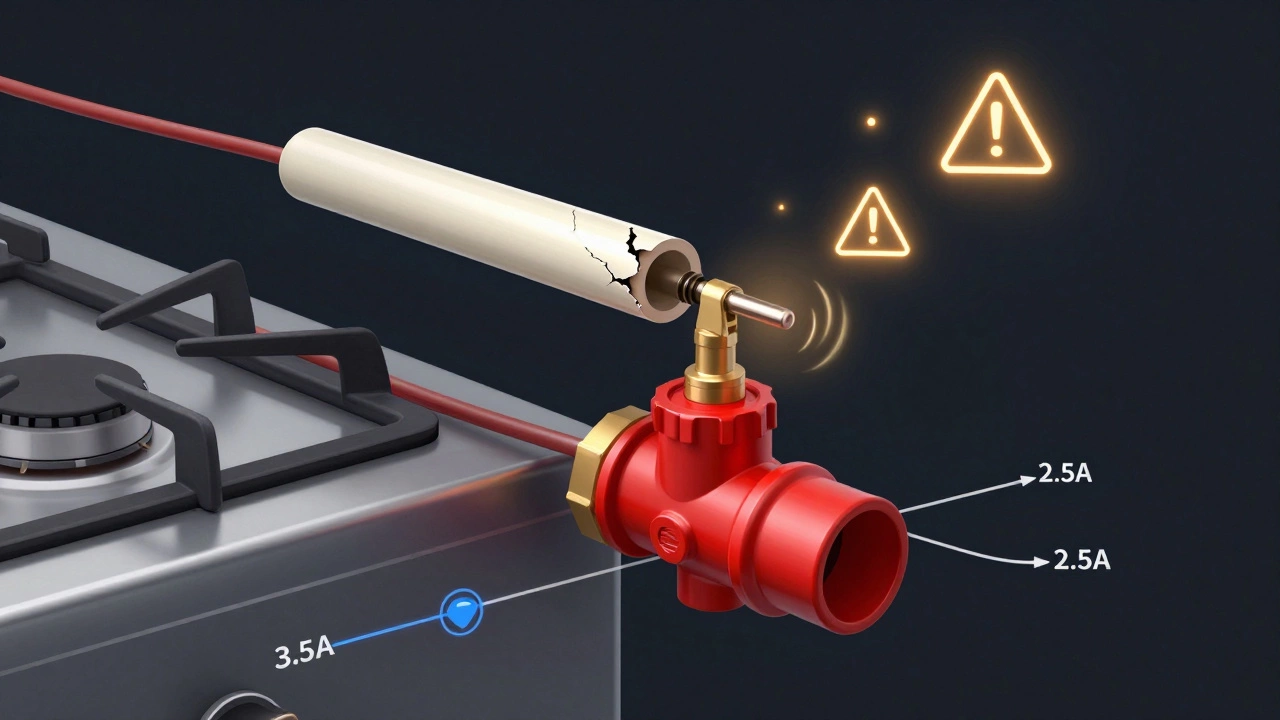
Sometimes the igniter works long enough to light the flame, but then the flame dies after a few seconds. This happens because the igniter is too weak to keep the gas valve open. The valve stays open only as long as the igniter is hot enough to draw the right amount of electrical current. A new igniter pulls about 3.2 to 3.5 amps. When it’s failing, it might only pull 2.5 amps or less. The safety valve senses the drop in current and shuts off the gas. So you get a quick flash of flame, then nothing. This isn’t a thermostat issue-it’s the igniter not holding its load.You See a Glowing Igniter But No Flame
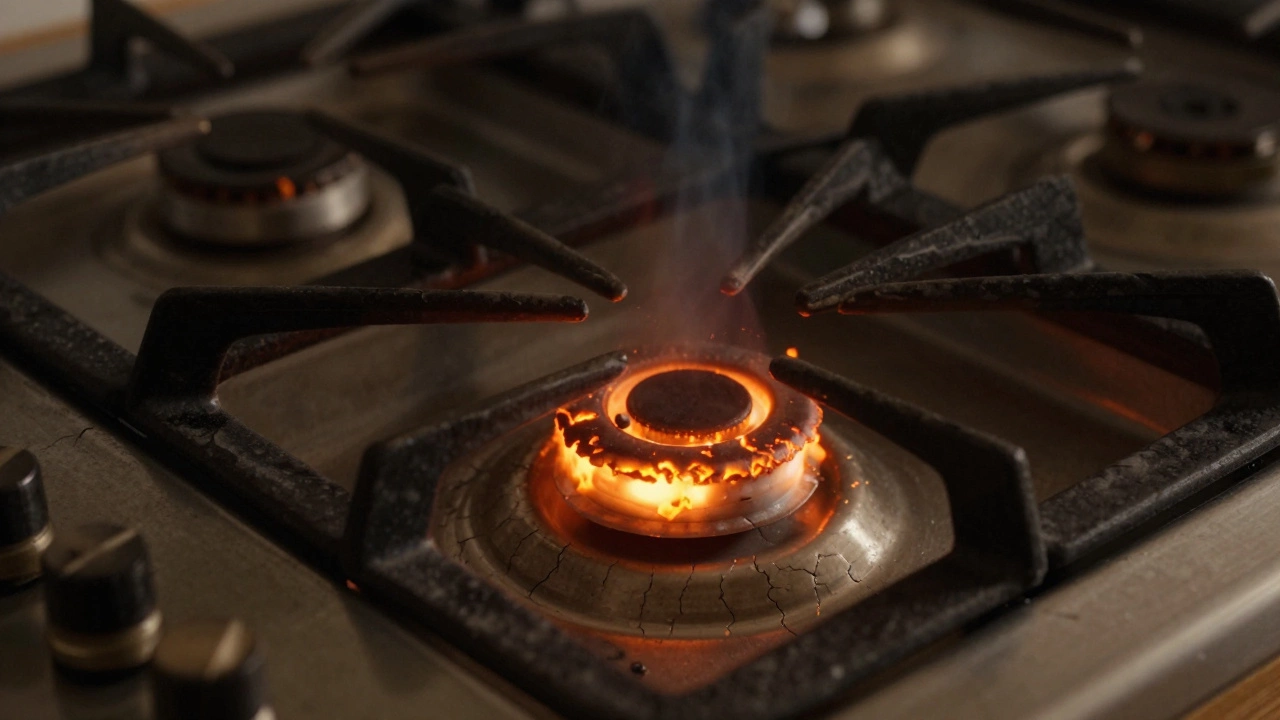
Open the oven door and turn it on. Look at the bottom of the oven near the back. You should see the igniter glow bright orange or yellow, like a tiny heating coil. If it glows dimly, or only glows in patches, or doesn’t glow at all, it’s bad. A healthy igniter glows with a solid, even orange light. A failing one might flicker, glow red instead of orange, or glow only on one end. If you see no glow at all, check the power first-but if the oven has power and the broil element works, the igniter is likely dead.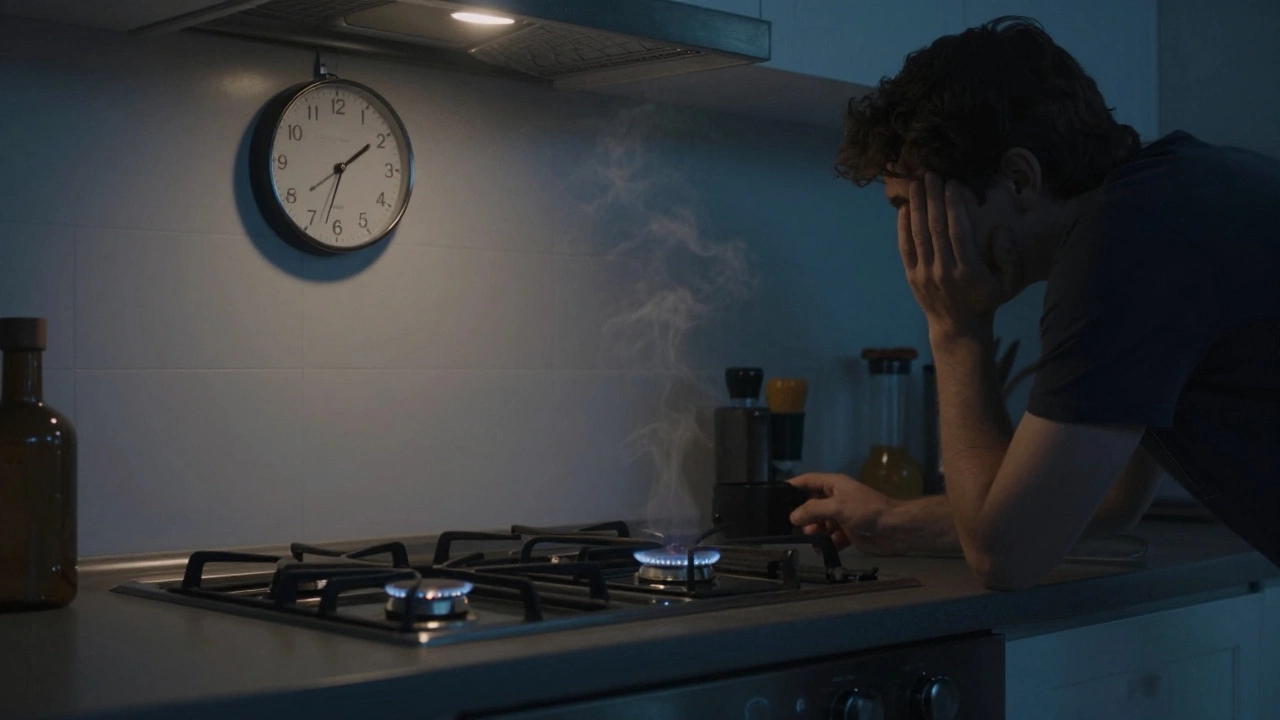
The Oven Only Works on Broil, Not Bake
Some gas ovens have two igniters-one for bake, one for broil. If the broil function lights up fine but the bake function doesn’t, the bake igniter is probably the one that’s failed. The broil igniter is usually located at the top of the oven cavity, while the bake igniter sits at the bottom. If only one side fails, it’s almost always because that specific igniter has worn out. Replacing just the faulty one fixes the issue-no need to replace both unless they’re both old.Clicking or Buzzing Sounds Without Ignition
You might hear a clicking or buzzing noise coming from the oven when you turn it on. That’s not the igniter-that’s the gas valve trying to open. The igniter is supposed to heat up first, then the valve opens. If the igniter is broken, the valve just keeps trying to open, making noise. It’s like a door lock that keeps clicking but never turns. That sound means the system is stuck in a loop, waiting for a signal that never comes. It’s not normal. And it’s a sign the igniter is no longer sending the right electrical signal.Older Oven? Igniter Is Likely the Issue
Gas oven igniters typically last 5 to 8 years. If your oven is 10 years old or more, and you’re having ignition problems, the igniter is the most likely cause. It’s not a complex part-it’s a ceramic rod with a heating coil. Over time, the coating wears off, the material cracks, or the electrical resistance changes. Even if it still glows, it may not be hot enough. Replacing it is one of the cheapest and easiest fixes for a gas oven. Parts cost under $50, and installation takes less than an hour for most DIYers.