Your refrigerator has been humming in the corner of your kitchen for seven years. Then, one Tuesday morning, it stops cooling. The milk turns sour, and you’re staring at a bill from a technician that makes you hesitate. The big question isn’t just about fixing a broken part; it’s about whether you are throwing good money after bad. In 2026, with energy prices fluctuating and new models becoming smarter than ever, the math behind keeping an older appliance alive gets tricky.
Most people operate on a rule of thumb: if the repair costs more than half the price of a new unit, buy new. But that formula is outdated. It doesn't account for the rising cost of electricity, the environmental impact of manufacturing a new machine, or the specific reliability of the brand you own. Let’s break down the real numbers so you can make a decision that saves you money and stress.
The Half-Rule Is Dead: Why You Need New Math
For decades, the advice was simple. If the repair bill hit 50% of the replacement cost, toss the old fridge. Today, that logic fails because refrigerators have changed. A basic top-freezer model in 2019 might have cost $600. In 2026, entry-level models often start closer to $800 or $900 due to supply chain shifts and stricter energy regulations. Meanwhile, labor rates for certified technicians in places like Vancouver have risen significantly.
Consider this scenario. Your compressor dies. This is the heart of the fridge. Replacing it involves pulling the unit out, evacuating the gas lines, installing a new pump, and recharging the system. A technician might charge $400 to $600 for parts and labor. If your current fridge is a standard model, a new equivalent costs around $900 plus delivery and installation fees, which can add another $150. The total new cost is roughly $1,050. The repair is $500. That looks like a win for repair, right?
Not necessarily. You have to factor in the next five years. An older compressor runs less efficiently. It draws more amps per hour. Over time, that inefficiency adds up on your utility bill. If the repair extends the life by only two years before another major failure, you’ve spent $500 plus higher electric bills. Buying new gives you a fresh warranty and modern efficiency standards.
| Cost Factor | Repairing 7-Year-Old Unit | Buying New Entry-Level Model |
|---|---|---|
| Immediate Outlay | $300 - $600 (depending on part) | $800 - $1,100 (unit + delivery) |
| Energy Efficiency | Lower (older motor tech) | Higher (Inverter compressors) |
| Warranty Coverage | 90 days on parts/labor | 1 year full / 5-10 years sealed system |
| Risk of Future Failure | High (other parts aging) | Low |
What Actually Breaks After Seven Years?
Seven years is a specific milestone. It’s past the "infant mortality" phase where defects show up early, but it hasn't reached the end of the typical lifespan yet. Most residential refrigerators last between 10 and 15 years. At seven years, your fridge is in its prime, provided it was maintained well. However, certain components wear out faster than others.
The most common failures at this age involve the evaporator fan, the start relay, or the door seals. These are low-cost repairs. Replacing a start relay might cost you $50 in parts and $100 in labor. That is almost always worth fixing. It buys you several more years of service without breaking the bank.
On the other hand, if the issue is the control board or the sealed system (compressor and condenser coils), the stakes get higher. Control boards are sensitive to voltage spikes and moisture. When they fail, they often take the whole system offline. While a board replacement is cheaper than a compressor swap, it signals that the electronics are aging. If the board fails again in three years, you’ll be paying for a second repair on a dying machine.
The Energy Tax: Hidden Costs of Old Appliances
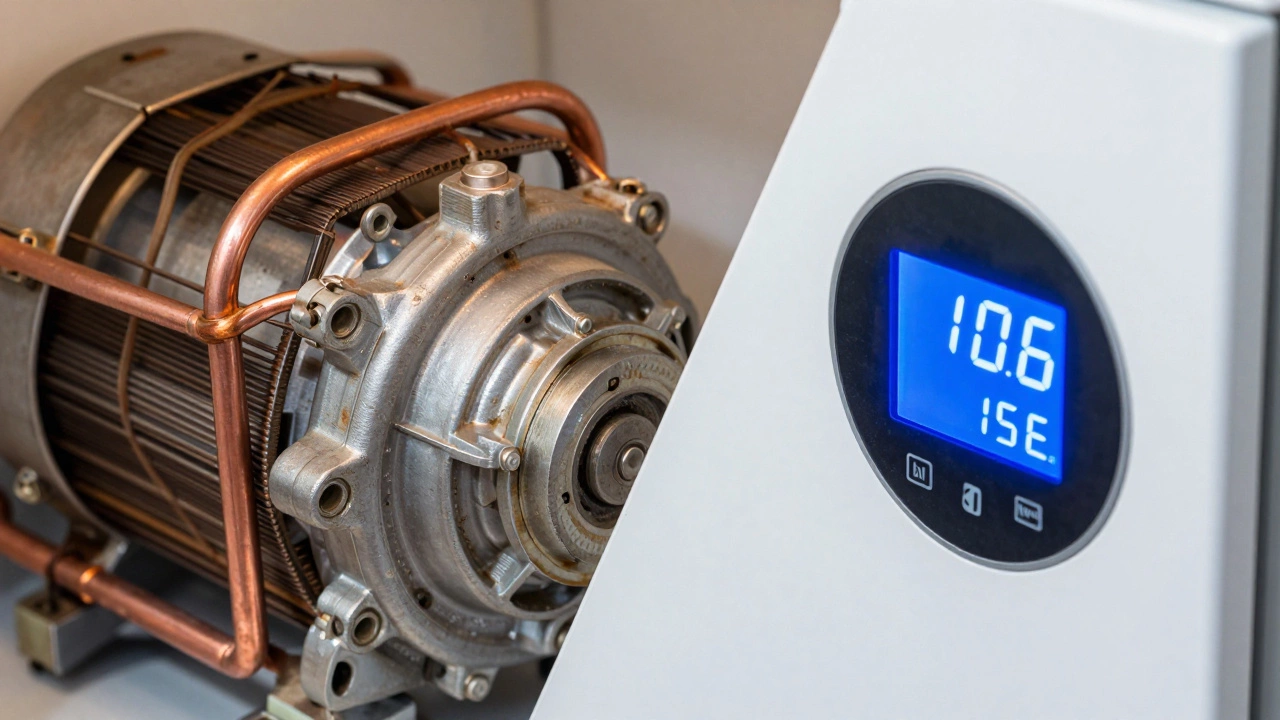
We rarely think about the running cost of our appliances until we see the bill. In 2026, energy efficiency standards have tightened considerably. A refrigerator manufactured in 2019 likely uses an older generation of compressor technology. Modern units use inverter compressors that adjust their speed based on demand rather than cycling on and off aggressively.
An older fridge might consume 400 to 500 kilowatt-hours per year. A new Energy Star-rated model might drop that to 300 kWh. At current average electricity rates, that difference could save you $30 to $50 annually. It doesn’t sound like much, but over five years, that’s $150 to $250 back in your pocket. More importantly, newer units maintain temperature more consistently, which means less food spoilage. How many times have you thrown away spoiled meat because the freezer dipped slightly above zero? That waste adds up quickly.
Brand Reliability Matters More Than Age
Not all seven-year-old fridges are created equal. The brand you own plays a massive role in this decision. Some manufacturers build units with proprietary parts that become scarce or expensive after five years. Others use standardized components that are easy and cheap to replace.
If you own a premium brand known for longevity, such as Sub-Zero or Viking, repairing a seven-year-old unit is almost always the right move. These machines are built to last 20+ years. A repair at year seven is minor maintenance. However, if you own a budget-friendly brand that prioritized low upfront cost over durability, the internal components may already be fatigued. For these brands, the seven-year mark is often the beginning of the decline curve. Once one major part fails, others follow soon after.
Check your user manual or online forums for your specific model number. Search for "[Model Number] common failures." If you see threads complaining about recurring issues with the ice maker or the water filter housing, that’s a red flag. It suggests a design flaw that won’t be fixed by a single repair.
Environmental Impact: To Toss or Not to Toss?
There is a strong argument for repairing from an environmental standpoint. Manufacturing a new refrigerator requires significant resources: steel, plastic, glass, and rare earth metals for the electronics. Transporting a heavy appliance from the factory to your home generates carbon emissions. Disposing of an old fridge involves dealing with refrigerants, which are potent greenhouse gases if not handled correctly.
If the repair is minor-like a thermostat or a fan motor-fixing it is the eco-friendly choice. You extend the life of the existing product and avoid the waste stream. However, if the repair involves replacing the sealed system, the environmental benefit shrinks. You are investing heavily in a machine that will still need to be discarded in 3 to 5 years. In that case, buying a highly efficient new unit might offset the initial manufacturing footprint through lower long-term energy consumption.
When to Definitely Pull the Trigger on Replacement
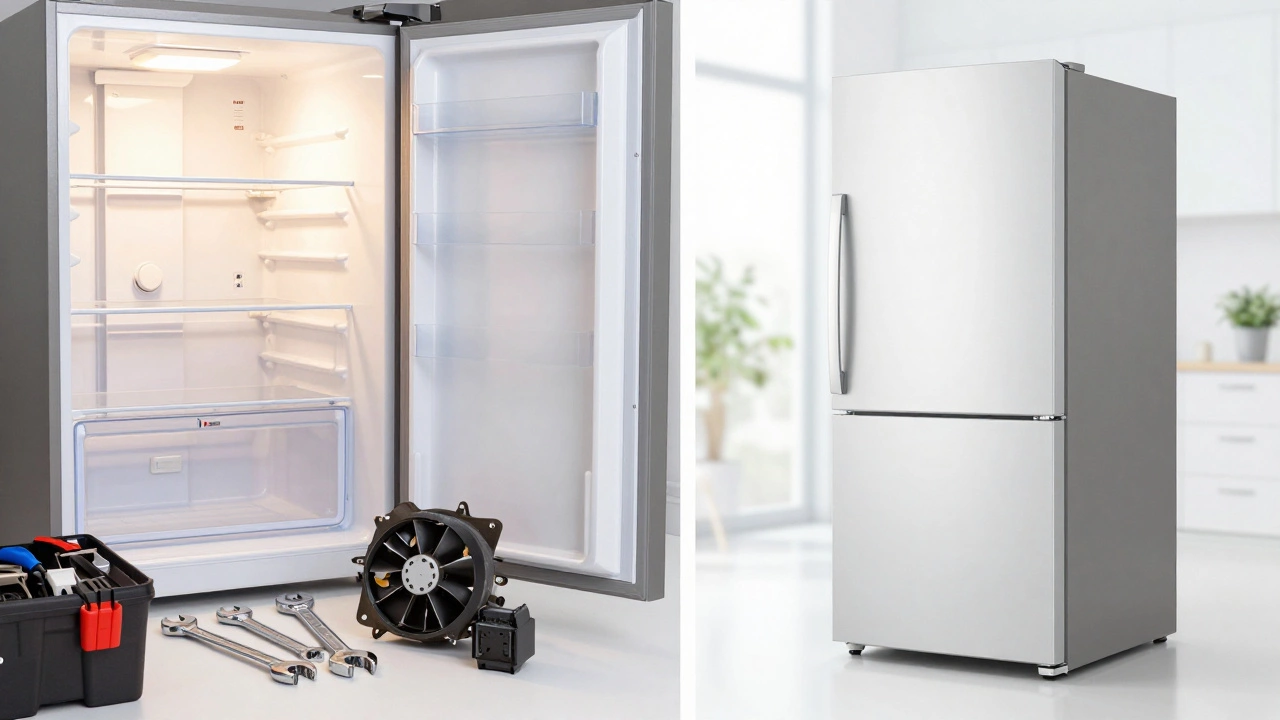
Knowing when to walk away is just as important as knowing when to fix. Here are the clear signs that you should stop spending money on your current fridge:
- The compressor is failing. This is the most expensive repair. Unless it’s a high-end unit, don’t do it.
- You’ve repaired it twice in the last two years. This indicates systemic degradation. The machine is tired.
- The interior is damaged. Cracked shelves, rusted liners, or broken hinges affect usability and hygiene. These aren’t covered by mechanical warranties.
- Your needs have changed. If you’ve had a baby, started cooking more, or downsized, your storage requirements may no longer match the old unit’s capacity. A new fridge offers better organization and features.
- Noise levels are unacceptable. Older fans and motors get louder. If the hum is disrupting your kitchen environment, a new inverter-driven model will be whisper-quiet.
Making the Final Decision: A Simple Checklist
Stand in front of your fridge and run through this mental checklist. Be honest about the answers.
- What is the exact repair cost? Get a written quote. Don’t guess.
- How much is a comparable new unit? Include delivery and haul-away fees.
- Is the repair under 50% of the new cost? If yes, lean toward repair. If no, lean toward replace.
- Does the fridge look and smell good? Aesthetic decay matters in a kitchen.
- Do you plan to stay in this home? If you’re moving in a year, repair might make sense to keep the property value stable. If you’re staying long-term, invest in quality.
Ultimately, a seven-year-old refrigerator is in a gray zone. It’s not ancient, but it’s not new. The decision comes down to the specific failure point and your personal tolerance for risk. If it’s a small part, fix it. If it’s the heart of the machine, let it go. Your future self will thank you for avoiding the headache of a breakdown during holiday prep or a hot summer weekend.
How long should a refrigerator last?
The average lifespan of a refrigerator is between 10 and 15 years. High-end models can last 20 years or more, while budget models may start failing sooner. At seven years, your unit is roughly halfway through its expected life.
Is it worth fixing a compressor on a 7-year-old fridge?
Generally, no. Compressor replacement is expensive, often costing $400-$600. Since the compressor is the core component, its failure often signals the end of the appliance's useful life, especially for mid-range brands. It is usually more economical to buy a new unit with a fresh warranty.
What are the most common fridge repairs?
Common repairs include replacing the evaporator fan motor, the start relay, the thermostat, or the door seals. These are relatively inexpensive fixes compared to compressor or control board replacements and are often worth doing to extend the life of the appliance.
Do new refrigerators save enough money on electricity?
Yes, modern refrigerators with inverter compressors are significantly more efficient. They can save $30-$50 per year on electricity compared to older models. Over a 10-year period, this can amount to $300-$500 in savings, helping to offset the higher purchase price of a new unit.
Should I repair my fridge if I'm selling my house?
If the repair is minor and keeps the kitchen functional, it may help with staging and buyer perception. However, major repairs are rarely recouped in home sales. Buyers often prefer to choose their own appliances. Focus on cosmetic cleanliness rather than expensive mechanical fixes if you are selling soon.