Dishwasher Repair vs. Replacement Calculator
Make Your Decision
Calculate whether repairing your dishwasher makes more financial sense than buying a new one based on your specific situation. This tool uses the industry standard 50% rule to help you decide.
Recommendation
RepairBased on the 50% rule and your inputs, repairing your dishwasher is the better choice. Your current repair costs are less than 50% of the new appliance cost.
Key factors:
- Age: 0 years
- Repair cost: $0
- Current repair cost is 0% of new appliance cost
Your dishwasher is humming along, but something feels off. The dishes are still dirty. It’s louder than usual. Or maybe it just stopped working altogether. You’re left wondering: should you fix it, or just buy a new one?
There’s no one-size-fits-all answer, but there are clear signs that point one way or the other. Most people wait too long to make a decision-either clinging to a broken machine or replacing it too early. The key is knowing what’s normal wear and what’s a death sentence for your appliance.
How old is your dishwasher?
Dishwashers don’t last forever. The average lifespan is 10 to 12 years, according to manufacturer data and appliance repair professionals. If yours is older than that and starting to act up, replacement is usually the smarter move.
Why? Because parts for older models become scarce. A 15-year-old dishwasher might need a pump or control board that’s no longer manufactured. Even if you find one, the labor cost to install it often hits $200 or more. That’s close to the price of a new entry-level dishwasher.
Check the serial number on the inside of the door. Most brands include the manufacture date in the code. If you’re unsure, a quick Google search with the model number will tell you when it was made. If it’s pushing 10 years old and you’re spending more than $150 on repairs, it’s time to think about replacement.
Is it leaking?
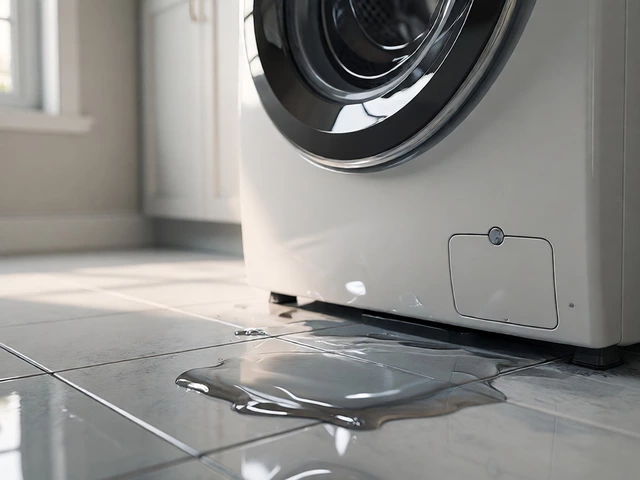
A little drip after a cycle? Maybe it’s just a loose door seal. But constant pooling on the floor? That’s a red flag.
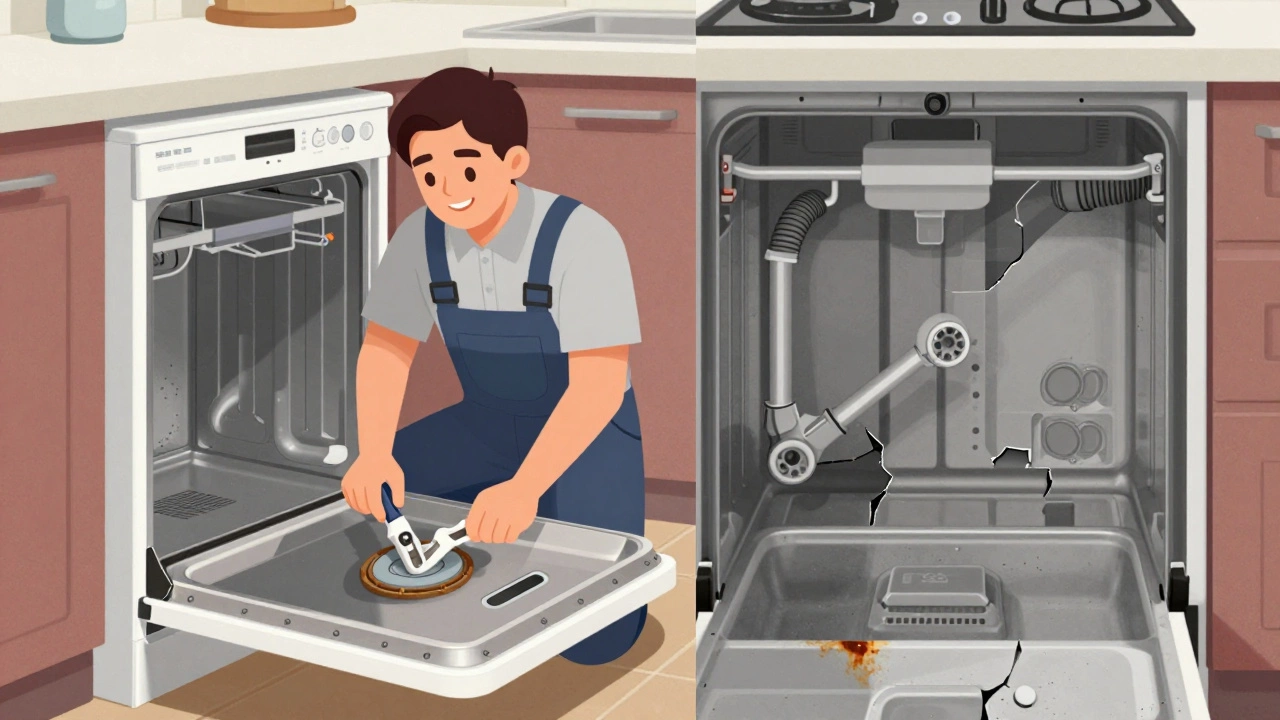
Leaking can come from a few places: a worn door gasket, a cracked tub, or a failing pump seal. Replacing the gasket costs $20 and takes 20 minutes. Easy fix. But if the tub itself is cracked-especially near the bottom-you’re looking at a $400+ repair. That’s not worth it. The tub is the core of the machine. If it’s damaged, the whole unit is compromised.
Try this: run an empty cycle with food coloring in a cup on the bottom rack. Watch where the color shows up. If it’s coming from the bottom seam or around the pump area, you’ve got a structural issue. No repair will fix that permanently.
Are your dishes coming out dirty?
Dirt on your plates isn’t always a sign of a broken dishwasher. Sometimes it’s user error-overloading, blocking spray arms, or using the wrong detergent. But if you’re doing everything right and the dishes are still grimy, the problem is internal.
Check the spray arms. Are they clogged? Clean them out with a toothpick. If they spin freely and still don’t spray water evenly, the pump might be weak. A failing pump won’t generate enough pressure to clean effectively.
Also check the filter. Most modern dishwashers have a self-cleaning filter, but if it’s clogged with grease or food bits, it’ll ruin the whole cycle. Clean it monthly. If cleaning the filter and spray arms doesn’t help, and you’ve tried multiple cycles with good detergent, the issue is likely the pump or circulation system. Repairing a pump can cost $150-$300. If your dishwasher is over 8 years old, that’s a bad investment.
Is it making strange noises?
Some noise is normal. A low hum, a gurgle, the sound of water spraying-those are fine. But grinding, screeching, or loud banging? That’s not.
A grinding noise usually means the pump or motor is failing. A screeching sound often points to a worn-out bearing in the spray arm assembly. Banging could mean a loose part inside or a broken impeller.
These aren’t simple fixes. Replacing a motor or pump isn’t a DIY job for most people. And the parts alone can cost $200-$400. Labor adds another $100-$200. That’s more than half the price of a new dishwasher. If you’re hearing these sounds regularly, especially with an older unit, replacement is the only logical choice.
Is it rusting or showing visible damage?
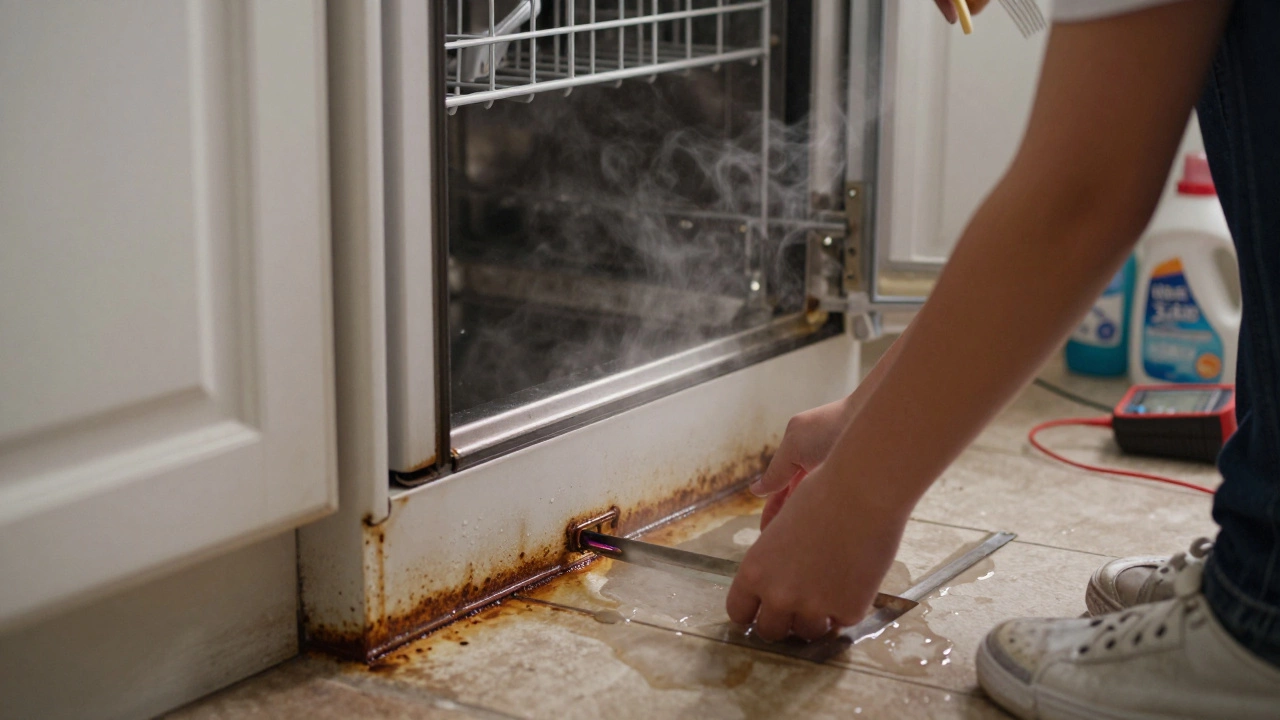
Minor surface rust on the door frame? That’s cosmetic. You can sand it and touch it up with appliance paint. But if you see rust inside the tub, around the spray arms, or on the racks, that’s serious.
Rust inside the tub means the enamel coating has worn away. Once metal is exposed to water, rust spreads fast. It can contaminate your dishes, cause leaks, and eventually eat through the metal. Replacing the tub isn’t an option-it’s not sold separately. You’d have to replace the whole unit.
Same goes for cracked plastic parts. A broken rack tine? Easy fix. A cracked door panel? Maybe. But if the inner tub has cracks, or the door latch is broken and won’t seal, you’re dealing with structural failure. No repair will restore safety or efficiency.
Is it using too much water or electricity?
Older dishwashers use up to 15 gallons per cycle. Modern Energy Star models use 3-4 gallons. That’s a 75% reduction.
If your water bill has spiked suddenly and you haven’t changed your habits, your dishwasher might be leaking internally or running inefficient cycles. Same with electricity. If your unit is taking two full cycles to clean a load, it’s wasting energy.
A 10-year-old dishwasher might cost $60 a year to run. A new Energy Star model? Around $25. That’s $35 saved annually. In five years, you’ve paid for half the cost of a new unit. Factor in water savings, and the math gets even better.
How many repairs have you already made?
This is the biggest clue. The 50% rule is a standard in appliance repair: if you’ve spent more than half the cost of a new unit on repairs over the past year, it’s time to replace it.
Example: You paid $250 to fix the pump last year. Then $120 to replace the heating element. That’s $370. A new dishwasher costs $500-$800. You’ve already spent 50-75% of the replacement cost on repairs. That’s not a repair job-it’s throwing money away.
And here’s the thing: once one part fails in an old machine, others are close behind. The motor is stressed. The wiring is aging. The control board is overheating. Fixing one thing just delays the next breakdown.
What’s the cost difference?
Let’s break it down with real numbers from 2025 Vancouver prices:
| Option | Cost Range | Time to Complete | Warranty |
|---|---|---|---|
| Minor repair (gasket, filter, spray arm) | $80-$150 | 1-2 hours | 30-90 days |
| Major repair (pump, motor, control board) | $250-$500 | 2-4 hours | 90 days |
| New entry-level dishwasher | $500-$700 | Same day | 1 year |
| New Energy Star model | $700-$1,000 | Same day | 1-2 years |
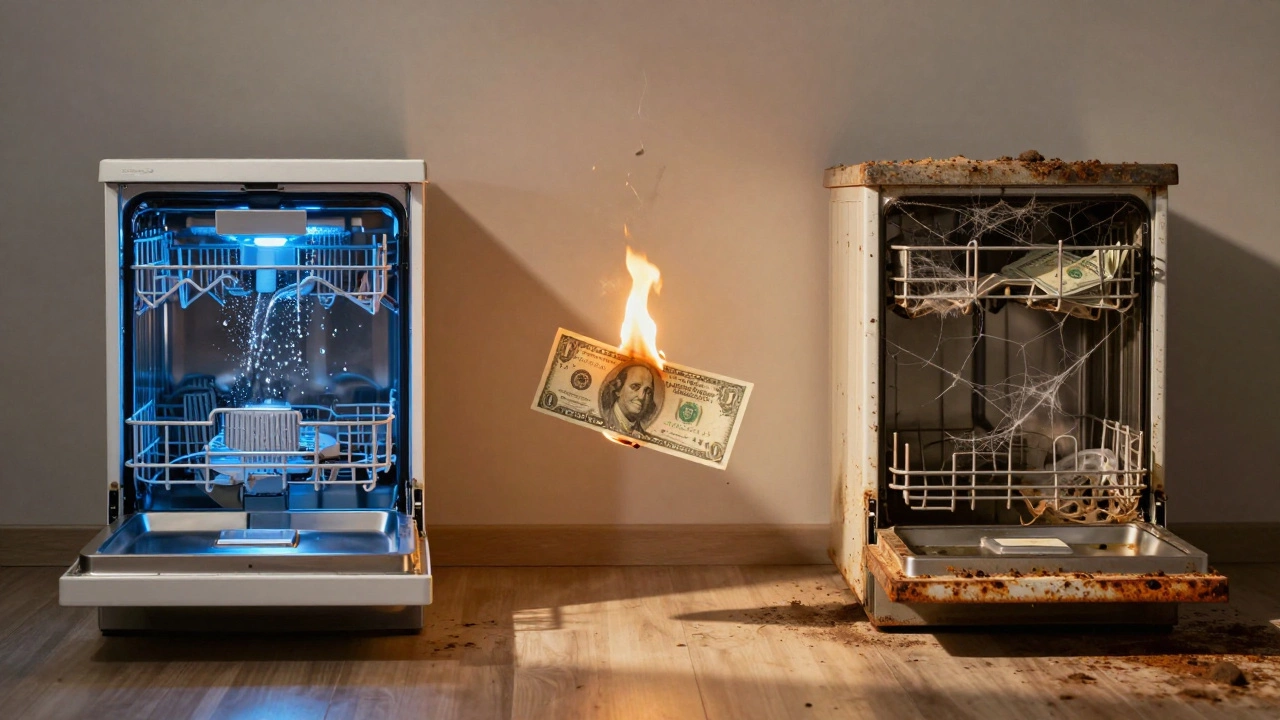
Notice something? A major repair can cost almost as much as a new basic model. And the new one comes with a warranty, better efficiency, quieter operation, and modern features like soil sensors and delayed start.
When to replace it immediately
You should replace your dishwasher right away if:
- It’s leaking water onto the floor constantly
- It’s rusting inside the tub or on the racks
- It’s making grinding or screeching noises
- It’s over 10 years old and needs a major repair
- You’ve spent more than $300 on repairs in the last year
- It takes two cycles to clean a full load
These aren’t signs of wear-they’re signs of failure. Keeping a broken dishwasher running isn’t saving money. It’s risking water damage, mold, and higher utility bills.
When to repair it
Repairing makes sense if:
- It’s under 8 years old
- The issue is a simple part like a door seal, filter, or spray arm
- The repair cost is under $150
- You’re planning to move in the next 2-3 years
Even then, ask yourself: if you were buying this dishwasher today, would you pay $200 to fix it? If the answer is no, then don’t fix it. Buy a new one.
What to do next
Here’s a quick checklist to help you decide:
- Find the model and manufacture date. Is it older than 10 years?
- How many repairs have you made in the last year? Total cost?
- Is there visible rust or cracks inside?
- Are dishes coming out dirty even after cleaning the filter and spray arms?
- Is the machine loud or leaking?
- Have your water or electricity bills gone up?
If you answered yes to two or more of these, replacement is the better choice. If you answered yes to one or none, try a repair.
Don’t wait until it stops working completely. A broken dishwasher doesn’t just inconvenience you-it can flood your kitchen. Get it checked now. Whether you fix it or replace it, acting early saves money, time, and stress.