Oven Circuit Breaker Issues: Why It Trips and How to Fix It
When your oven circuit breaker, a safety device that cuts power to your oven if it detects an electrical overload. Also known as a circuit breaker for cooking appliances, it’s one of the first things to check when your oven won’t turn on. It’s not always a broken element or a faulty thermostat—sometimes, the problem is right at the source: the breaker that powers your oven.
A circuit breaker, a protective switch that stops electricity flow during overloads or short circuits trips for a reason. Maybe your oven’s heating element is drawing too much current. Maybe a loose wire is sparking inside the wall. Or maybe you’ve plugged too many high-power devices into the same circuit—like a microwave, toaster, and oven all running at once. That’s a common mistake in older kitchens where circuits weren’t built for today’s energy-hungry appliances.
You can test the breaker yourself. Go to your fuse box, find the switch labeled "oven" or "cooker," and see if it’s flipped to the middle or off position. If it is, turn it all the way off, then back on. If it trips again right away, there’s a serious issue—don’t keep resetting it. That’s a sign of a failing element, a damaged wire, or a bad control board. These are the same problems covered in posts about electric oven not working, a symptom often tied to power supply faults like tripped breakers or wiring failures and oven repair, the process of diagnosing and fixing electrical and mechanical faults in household ovens.
Most people assume their oven is broken when it stops heating. But if the lights still work in the kitchen and the clock on the oven is on, the issue is likely not the oven itself—it’s the power getting to it. That’s why checking the breaker is the fastest, cheapest fix you can do. No tools needed. Just your eyes and a little caution.
If resetting the breaker doesn’t help, or if it keeps tripping, you’ll need to look deeper. A tripped breaker, a safety response to electrical overload or fault in a circuit that won’t stay on usually means something inside the oven is drawing too much power. The heating element might be shorting out. The thermostat could be stuck. Or the wiring behind the oven might be frayed. These are all issues we’ve seen hundreds of times in Weymouth homes.
Don’t ignore a tripping breaker. It’s not just inconvenient—it’s a fire risk. Overloaded circuits can overheat walls and insulation. That’s why many of the posts in this collection focus on electrical safety, not just repair. You’ll find guides on how to tell if your oven element is bad, how to test for power issues, and when to call a technician instead of guessing.
What you’ll find below aren’t just random fixes. These are real, tested steps from homeowners and technicians who’ve been there. Whether you’re trying to reset your oven after a power surge, checking for a blown fuse, or deciding if it’s time to replace the whole unit, the articles here give you the facts without the fluff. No jargon. No guesswork. Just what actually works.
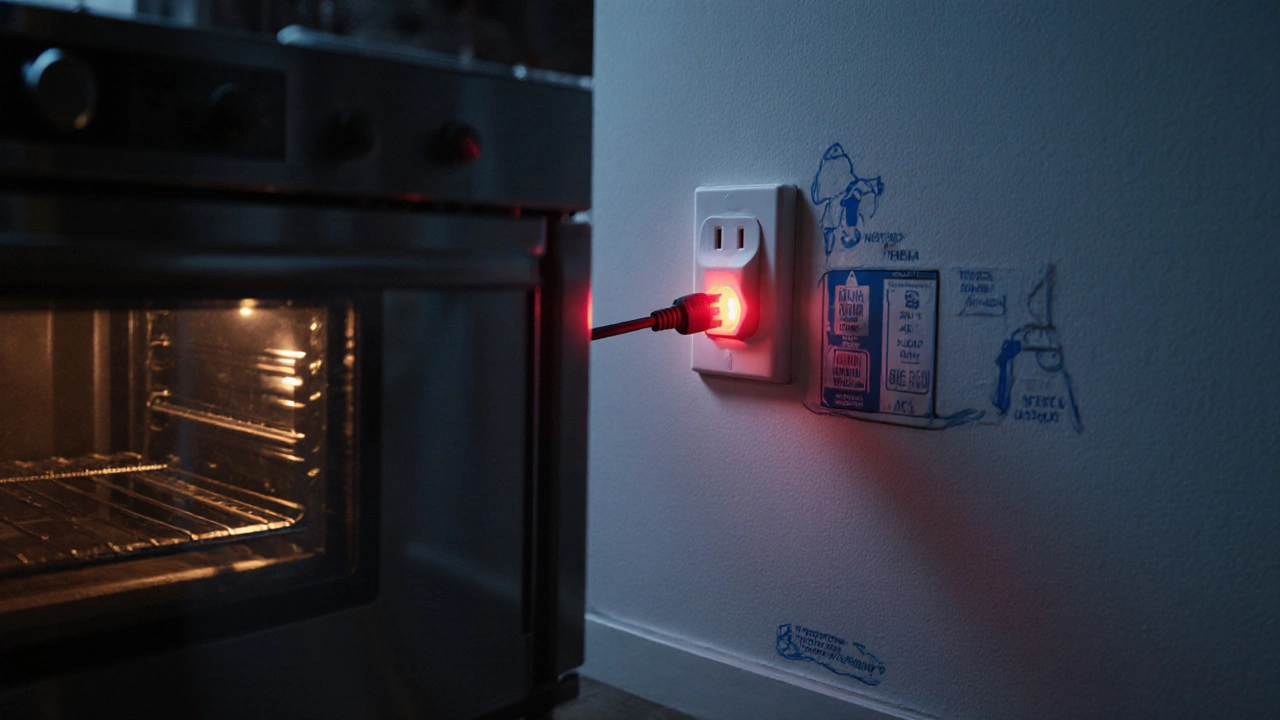
Can You Just Plug in a New Electric Oven? What You Must Know Before You Plug It In
- Alden Wilder
- Nov 16 2025
- 0 Comments
You can't just plug in a new electric oven like a toaster. It needs a dedicated 240-volt circuit, proper wiring, and the right breaker. Skipping these steps risks fire, damage, or failure.
View More
Why Did My Electric Oven Suddenly Stop Working? Common Causes and How to Fix Them
- Alden Wilder
- Nov 13 2025
- 0 Comments
Your electric oven suddenly stopped working? Common causes include a tripped breaker, broken heating element, faulty thermostat, or failed control board. Learn how to diagnose and fix it yourself before calling a technician.
View More