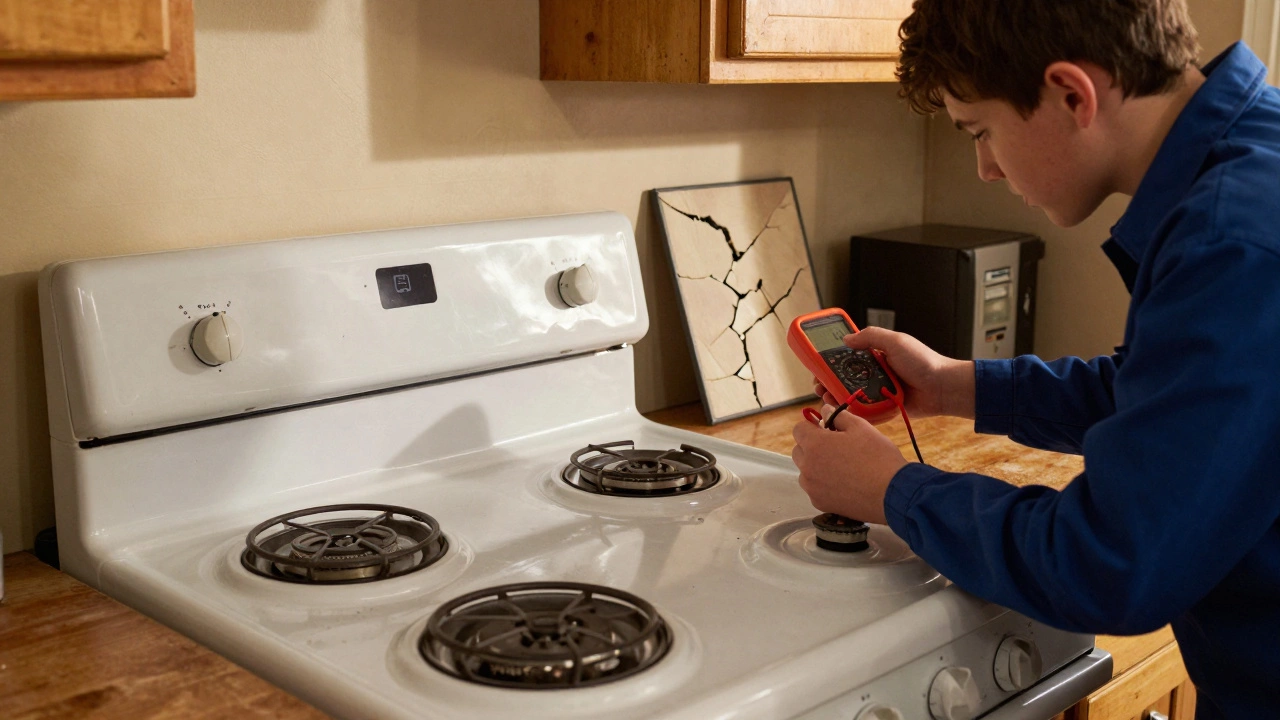
You turn the knob. Nothing happens. The burner doesn’t glow. The oven doesn’t heat. Your first thought? Electric stove repair-but is it even worth it?
It’s not just about the broken element. It’s about your wallet, your time, and whether you’re throwing good money after bad. In Vancouver, where winters are long and cooking habits are stubborn, people face this choice every week. Some fix it. Others replace it. Here’s what actually matters when you’re standing in front of a dead stove, wondering what to do next.
How old is your electric stove?
Age is the first real filter. If your stove is under five years old, repair is almost always the smarter move. Modern stoves use standardized parts, and manufacturers still support them. A faulty control board or burner coil? Those cost $80 to $150 to replace, and a technician can swap them in under an hour.
But if your stove is 10 years or older? That’s the danger zone. Parts become scarce. Manufacturers stop making them. Even if you find a replacement, it might be a used part from a salvage yard-no warranty, no guarantees. I’ve seen stoves from 2012 with broken igniters that cost $220 to fix… and the technician admitted he had to order the part from a supplier in Ontario because no one in BC stocks them anymore.
Here’s the rule of thumb: if the repair costs more than half the price of a new entry-level stove, walk away. A basic electric range runs $600 to $800 new. So if your repair quote hits $350 or more, you’re flirting with a bad deal.
What’s actually broken?
Not all stove problems are equal. Some fixes are cheap and easy. Others are red flags.
- Broken burner coil: $50-$120. Easy fix. Takes 20 minutes. Common on all models.
- Faulty infinite switch: $70-$150. Controls heat levels. If one burner won’t turn down, this is likely the culprit.
- Failed oven thermostat: $100-$180. Oven runs too hot or too cold? This could be why.
- Broken control board: $200-$400. The brain of the stove. If multiple functions fail at once-burners, oven, clock-it’s probably this.
- Wiring damage or burnt terminals: $150-$300+. This is serious. If wires are melted or the junction box is charred, it’s a fire risk. Often means the whole unit is aging out.
Here’s what I’ve seen in real homes: a couple in North Vancouver had their oven stop heating. The technician found a $95 thermostat. They fixed it. Three months later, the clock died. Then the right rear burner stopped. They replaced the whole stove six months after the first repair. That’s not saving money-that’s paying twice.
How much does electric stove repair cost?
Service calls in Vancouver typically run $80 to $120 just to show up. That’s before any parts or labor. So if the technician says, “It’s the control board,” and quotes $380 total, you’re paying $260 for the part and $100 for labor. That’s a lot for a 12-year-old appliance.
Compare that to buying a new one. A Frigidaire or GE basic electric range with self-cleaning and a digital display? Around $700. You get a full warranty. You get energy efficiency. You get a brand-new oven light, door seal, and interior coating that doesn’t flake off after five years.
And here’s something most people forget: new stoves are 20-30% more energy efficient than models from 10 years ago. If you cook often, that adds up. A family using an old stove might pay $150 extra per year in electricity compared to a new one. Over five years? That’s $750-more than the price of a new appliance.
Is your stove even worth fixing?
Let’s run a quick reality check. Ask yourself these three questions:
- How often do you use it? If you’re a weekend baker or occasional stir-fry cook, maybe it’s fine to live with one broken burner. But if you cook three meals a day, a malfunctioning stove is a daily hassle.
- Do you plan to stay in your home? If you’re moving in two years, why spend $300 on a stove you’ll leave behind? A new stove can be a selling point. An old, patched-up one? Buyers notice.
- Is it safe? Smoke, burning smells, flickering lights when you turn it on? These aren’t just inconveniences. They’re warning signs. If your stove’s wiring is degraded, it could start a fire. No repair fixes that kind of aging.
One client in Burnaby had a 15-year-old stove with a cracked oven door. The technician said he could replace the glass for $180. But the door frame was warped. The seal didn’t close properly. The oven lost heat. He fixed the glass, but the oven still didn’t bake evenly. He ended up replacing it three months later. The total cost? $400 for the repair + $750 for the new stove. He could’ve just bought the new one from the start.
When replacement is the only smart choice
There are times when repair isn’t just a bad idea-it’s dangerous.
- Your stove has a cracked ceramic cooktop. Cracks let moisture in. That can short the wiring. Not safe.
- The oven door doesn’t seal. Heat escapes. You’re wasting energy. And the glass might shatter under high heat.
- There’s rust inside the oven cavity. That means moisture got in. That’s a sign of poor ventilation or water damage. It’s not just the stove-it’s your kitchen.
- The control panel is flickering or showing error codes you can’t find in the manual. That’s usually a sign the main board is failing. And if that’s gone, other parts won’t be far behind.
Also, if your stove is plugged into an old 240V circuit that’s shared with another appliance, you’re asking for trouble. New stoves need a dedicated circuit. If your home’s wiring is from the 80s or earlier, replacing the stove might mean upgrading your electrical panel too. That’s $1,000+ extra. Now you’re looking at $1,700 to fix your kitchen. That’s a full renovation budget.
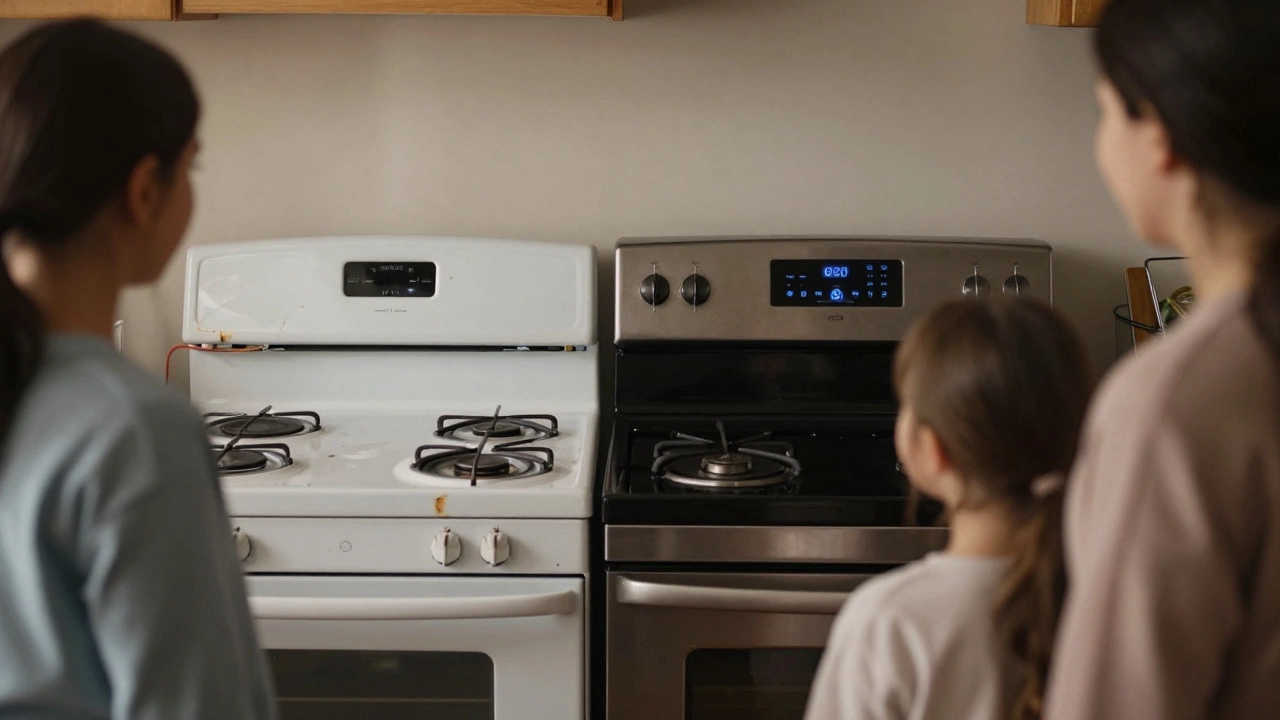
What to look for in a new stove
If you’re replacing, don’t just grab the cheapest one. Look for these features:
- Self-cleaning oven: Saves hours of scrubbing. Worth the $50-$100 extra.
- Even heat technology: Some brands use convection fans or dual heating elements. Makes baking consistent.
- Induction-ready options: Even if you don’t want induction now, some new stoves have compatible cooktops. Future-proofs your kitchen.
- Energy Star rating: Look for the blue label. Saves money over time.
- Warranty: At least one year on parts and labor. Some brands offer 5-year limited coverage.
Brands like Whirlpool, Frigidaire, and GE have solid reliability records in Canada. Avoid no-name online brands that ship from China. You’ll get a $400 stove that breaks in 18 months. And good luck finding a technician who’ll service it.
Final call: repair or replace?
Here’s a simple decision tree:
- If your stove is under 5 years old and the repair is under $200 → Repair.
- If your stove is 5-8 years old, the repair is under $150, and you use it daily → Repair, but keep an eye on it.
- If your stove is 8+ years old, repair costs over $200, or you’ve had multiple issues in the last year → Replace.
- If you see smoke, burning smells, or damaged wiring → Replace immediately.
There’s no shame in replacing a stove. Appliances aren’t meant to last forever. They’re designed to be replaced. And if you wait too long, you’re not saving money-you’re risking safety, wasting energy, and stressing yourself out every time you need to cook dinner.
Fixing an electric stove makes sense in a few cases. But most of the time, the real savings come from walking away and buying new.
Is it cheaper to repair or replace an electric stove?
It depends on age and repair cost. If the repair is under $200 and your stove is under 5 years old, repair is cheaper. But if the repair costs more than half the price of a new stove ($350+), replacement is usually the better long-term value. New stoves also save on energy bills and come with warranties.
How long does an electric stove usually last?
Most electric stoves last 13 to 15 years with normal use. But after 10 years, parts become harder to find, efficiency drops, and breakdowns become more frequent. Many homeowners choose to replace around year 10 to avoid costly repairs and unreliable performance.
Can I fix an electric stove myself?
You can replace burner coils or infinite switches if you’re comfortable with basic tools and electrical safety. Always unplug the stove first. But don’t touch the control board, wiring, or oven heating elements unless you’re trained. Mistakes here can cause shocks or fires. Most repairs are best left to certified technicians.
Why is my electric stove not heating?
Common causes include a faulty heating element, broken infinite switch, failed thermostat, or a damaged control board. If only one burner isn’t working, it’s likely the coil or switch. If the whole oven won’t heat, the thermostat or control board is probably the issue. A technician can test these with a multimeter.
Should I buy a new stove with induction?
If you’re replacing your stove anyway, induction is worth considering. It heats faster, uses less energy, and is safer because the surface doesn’t get hot. But you’ll need compatible cookware-magnetic pots and pans. If you already have those, induction saves money over time. If not, you’ll need to buy new pots, which adds $150-$300 to the cost.
When your stove dies, it’s not just an appliance problem. It’s a moment to rethink how you cook, how much you’re spending on energy, and whether your kitchen still works for your life. Don’t let pride or fear of spending keep you stuck with a broken stove. Sometimes, the best repair is a new start.