Boiler Repair Cost Estimator & Decision Tool
Estimated Total Cost:
*Includes estimated parts, labor, and diagnostic fees.
Select a component and enter boiler age to see the cost estimate and repair recommendation.
Quick Cost Breakdown
- Service Call/Diagnostic Fee: $80 - $150
- Minor Repairs (Sensors, Thermostats): $150 - $300
- Moderate Repairs (Pump, Fan): $300 - $600
- Major Repairs (Heat Exchanger, PCB): $600 - $1,200+
The First Visit: Understanding the Diagnostic Fee
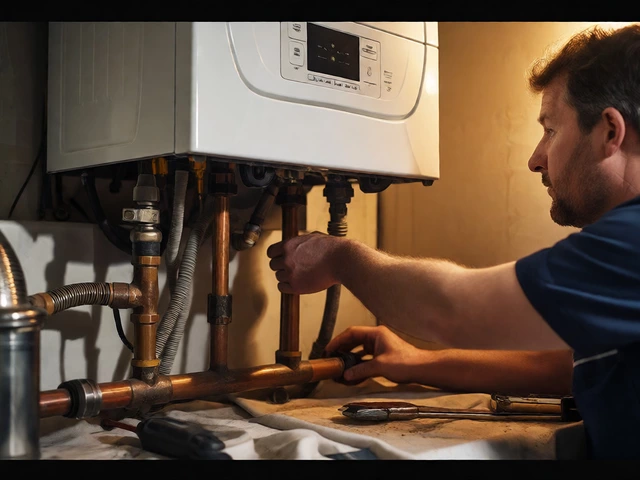
Before a technician even opens the panel on your unit, you'll likely pay a call-out fee. Boiler Repair is the process of troubleshooting and fixing malfunctions in a central heating system to restore warmth and hot water. This typically involves a licensed professional visiting your home to identify the fault.
In most cities, this diagnostic fee ranges from $80 to $150. Think of this as a "brain fee." You're paying for the expert's time to navigate the complex circuitry and plumbing of your system. Some companies will waive this fee if you agree to go ahead with the repair, while others keep it as a standalone charge. If you have a Maintenance Contract, this visit is often covered, which is why many homeowners prefer annual plans over one-off emergency calls.
Common Boiler Failures and Their Price Tags
Not all breaks are created equal. A leaking pipe is a different beast than a fried circuit board. Here is how the costs usually shake out based on the part that failed.
The Small Stuff: Sensors and Thermostats
If your boiler is running but the temperature is off, or it's refusing to ignite, it might be a faulty sensor or a dead Thermostat. These parts are relatively cheap. Replacing a pressure sensor or a temperature probe usually costs between $150 and $300, including labor. It's a straightforward swap that takes an hour or less.
The Mid-Range: Pumps and Fans
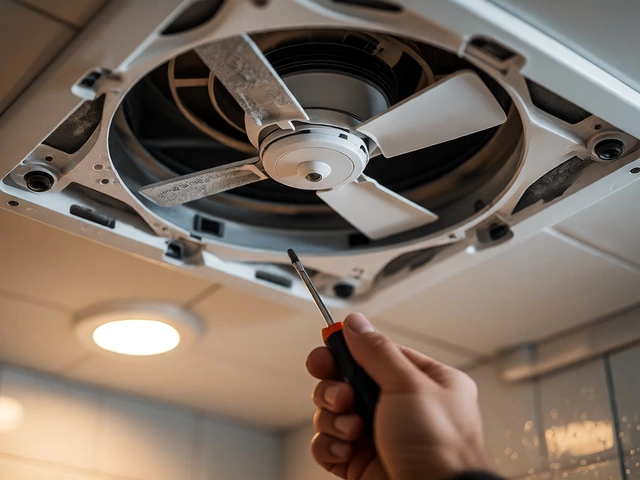
When you hear a loud grinding noise or your radiators are only warm at the bottom, the Circulator Pump is often the culprit. This pump pushes hot water through your home. Replacing it is more invasive and usually costs between $300 and $600. Similarly, if the fan that pushes exhaust gases out of the flue fails, your boiler will shut down for safety. A new fan assembly generally falls into this same price bracket.
The Big Hits: PCBs and Heat Exchangers
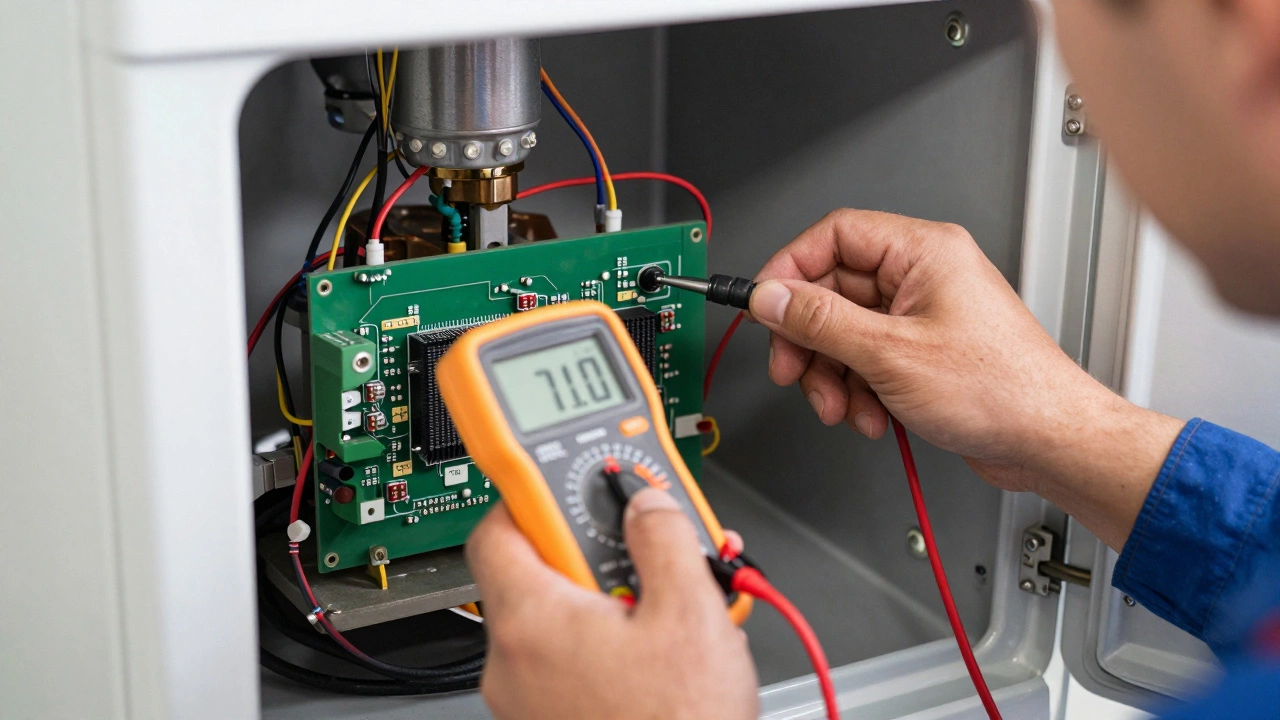
The PCB (Printed Circuit Board) is the brain of the boiler. If a power surge fries the board, you're looking at a replacement cost of $600 to $1,000. It's an expensive part with high mark-ups from manufacturers.
Then there is the Heat Exchanger. This is the core component where the heat from the fire is transferred to the water. If it cracks or corrodes, the repair is massive. Depending on the boiler model, this can cost $800 to $1,500. In many cases, if the heat exchanger goes on an old unit, it's actually cheaper to replace the entire boiler than to fix the part.
| Component | Average Part Cost | Average Labor | Total Estimated |
|---|---|---|---|
| Thermostat/Sensor | $50 - $100 | $100 - $200 | $150 - $300 |
| Circulator Pump | $150 - $300 | $150 - $300 | $300 - $600 |
| Fan Assembly | $200 - $400 | $100 - $200 | $300 - $600 |
| PCB (Main Board) | $400 - $800 | $150 - $300 | $550 - $1,100 |
| Heat Exchanger | $500 - $1,000 | $300 - $500 | $800 - $1,500 |
Factors That Push the Price Up
Why did your neighbor pay $200 while you're being quoted $500 for the same part? A few things play a huge role in the final invoice.
Emergency Timing: If you call a technician at 2 AM on a Sunday, expect to pay an "emergency premium." This can easily add $100 to $300 to the base labor rate. Regular business hours are always cheaper.
Boiler Brand: Some brands are simply more expensive to maintain. High-efficiency condensing boilers often have more complex electronics and specialized parts that cost more than the basic cast-iron models of twenty years ago. Proprietary parts from specific manufacturers can't be bought at a general hardware store, forcing you to pay the technician's markup.
Accessibility: If your boiler is tucked away in a tiny crawlspace or located on a roof, the technician will spend more time just getting to the machine. Labor isn't just about turning a wrench; it's about the time spent on the job. If they have to dismantle half a wall to reach a pipe, your bill will reflect that effort.
Repair vs. Replace: The $500 Rule
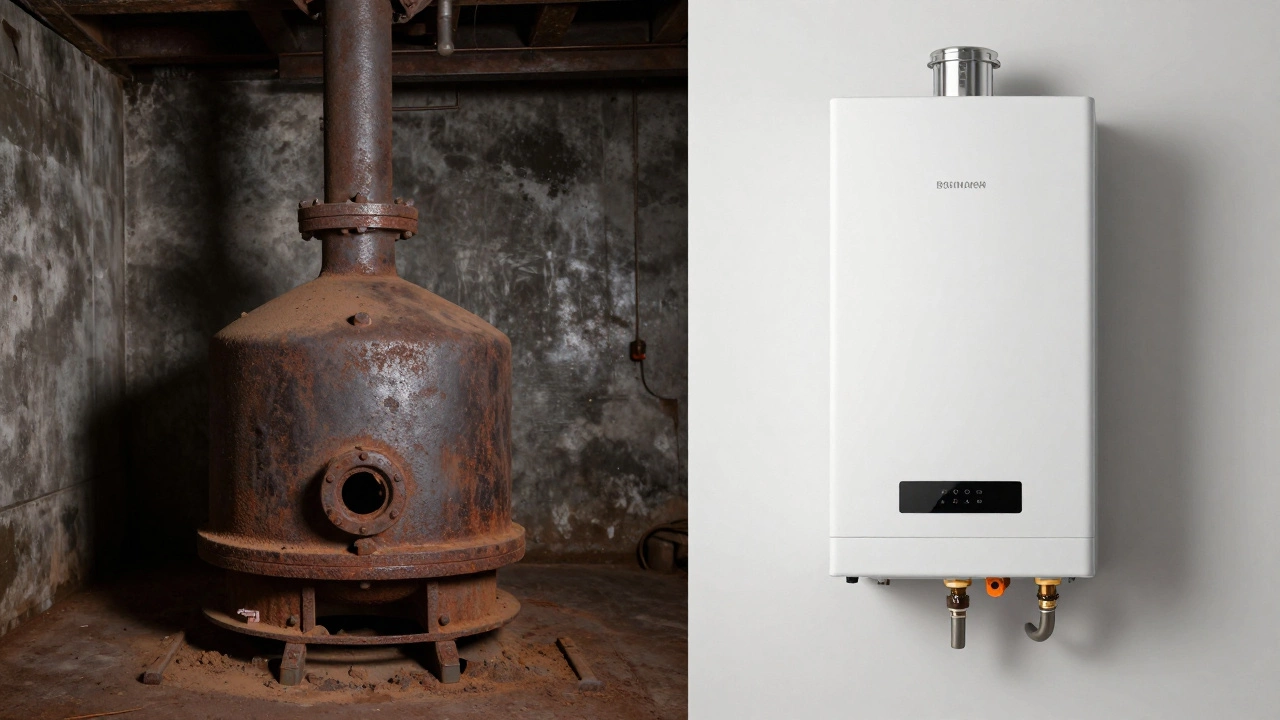
At some point, throwing money at an old boiler is like putting a new engine in a car with a rusted-out frame. How do you know when to stop fixing and start replacing? Many HVAC pros use a rough rule of thumb: if the repair cost exceeds 50% of the cost of a new unit, or if the boiler is over 15 years old and the repair is more than $500, it's time to shop for a new one.
Consider the efficiency gains. An old boiler from 2005 might operate at 60% efficiency, meaning 40% of the energy you pay for is literally disappearing up the chimney. A modern Condensing Boiler can reach 90% to 98% efficiency. The money you spend on a new unit often pays for itself in reduced monthly energy bills within three to five years.
How to Lower Your Repair Bills
The best way to avoid a $1,000 surprise is to spend a little bit of money now. Annual servicing is the most effective way to keep costs down. A technician can spot a fraying wire or a leaking seal before it causes a total system failure.
Check your water pressure once a month. Many boilers shut down simply because the pressure has dropped too low. You can often fix this yourself by using the filling loop to top up the system-a five-minute job that costs zero dollars but saves you a $100 diagnostic visit. Also, keep your area clean. Dust and debris clogging the intake vents can cause the boiler to overheat, leading to premature part failure.
Why is my boiler repair so expensive?
Boiler repair costs are high because they require specialized certifications (like Gas Safe or HVAC licensure) for safety. Additionally, many parts are proprietary and must be sourced directly from the manufacturer, which adds to the cost of the materials.
Can I fix my boiler myself to save money?
You can handle simple tasks like bleeding radiators or topping up system pressure. However, you should never attempt to open the combustion chamber or touch gas lines. This is incredibly dangerous and can lead to carbon monoxide leaks or explosions. Always hire a pro for internal repairs.
What is the most common boiler part to fail?
The most common failures are typically the ignition electrodes, pressure sensors, and circulator pumps. These parts undergo constant heat and mechanical stress, making them the most likely candidates for replacement over the life of the system.
Does home insurance cover boiler repairs?
Standard home insurance usually does not cover general wear-and-tear repairs. However, if your boiler was damaged by a covered event-like a fire or a burst pipe caused by freezing-insurance might pay. Some people also buy separate "home warranties" specifically to cover appliance and boiler breakdowns.
How long does a typical boiler repair take?
Simple repairs like replacing a sensor usually take 1 to 2 hours. More complex jobs, such as replacing a pump or a PCB, typically take 3 to 5 hours. If a major part like a heat exchanger needs replacing, it could take a full day or require a second visit if the part isn't in stock.
Next Steps Depending on Your Situation
If you have no heat and no hot water: Turn off the power to the boiler immediately if you smell gas. Call an emergency technician and ask for a flat-rate diagnostic fee before they come out.
If your boiler is making strange noises but still working: Don't wait for it to die. Schedule a non-emergency service call. It is significantly cheaper to replace a bearing in a pump now than to replace the entire pump after it seizes and damages other components.
If you are budgeting for a new home: Set aside roughly $150 per year for boiler maintenance. If the system is over 10 years old, start a "boiler fund" now so you aren't hit with a $4,000 surprise in the middle of winter.